
Last updated November 15, 2026
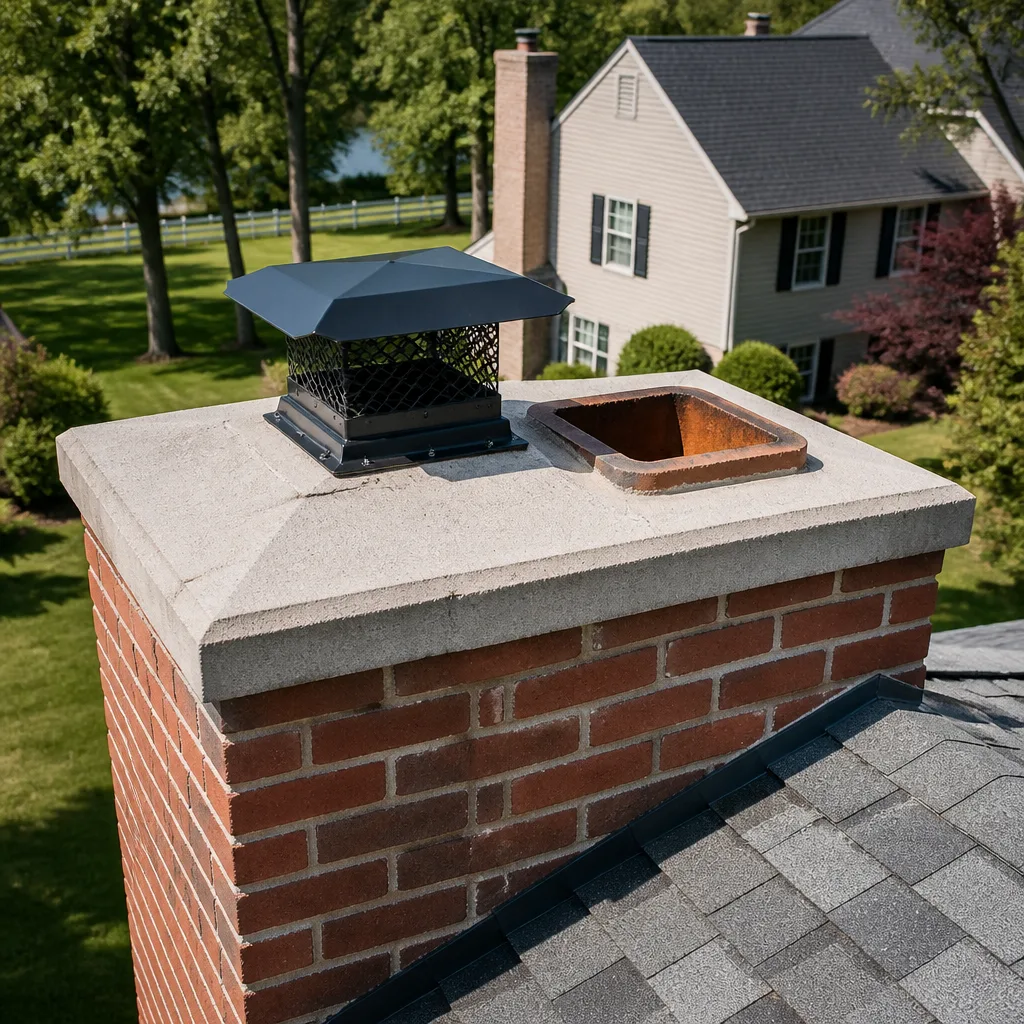 Sweep & inspection
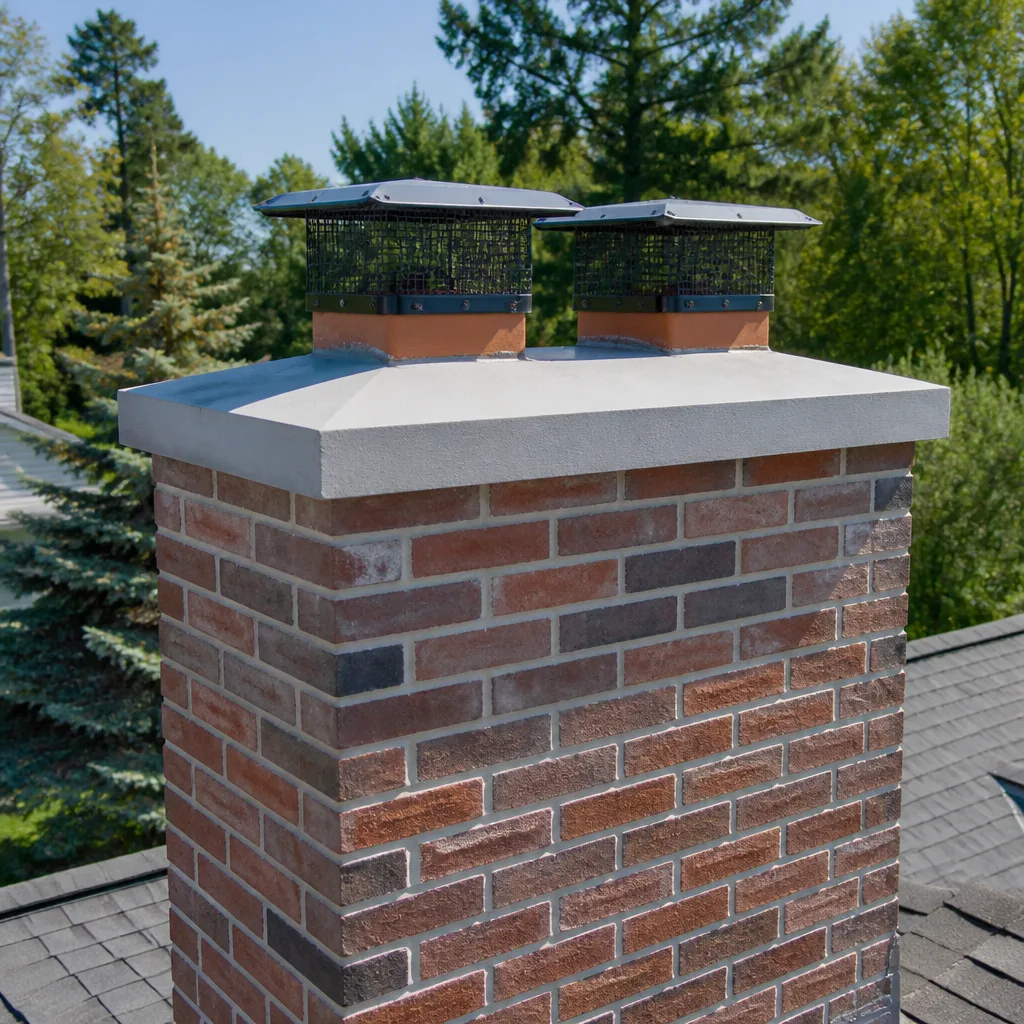 Caps & crowns
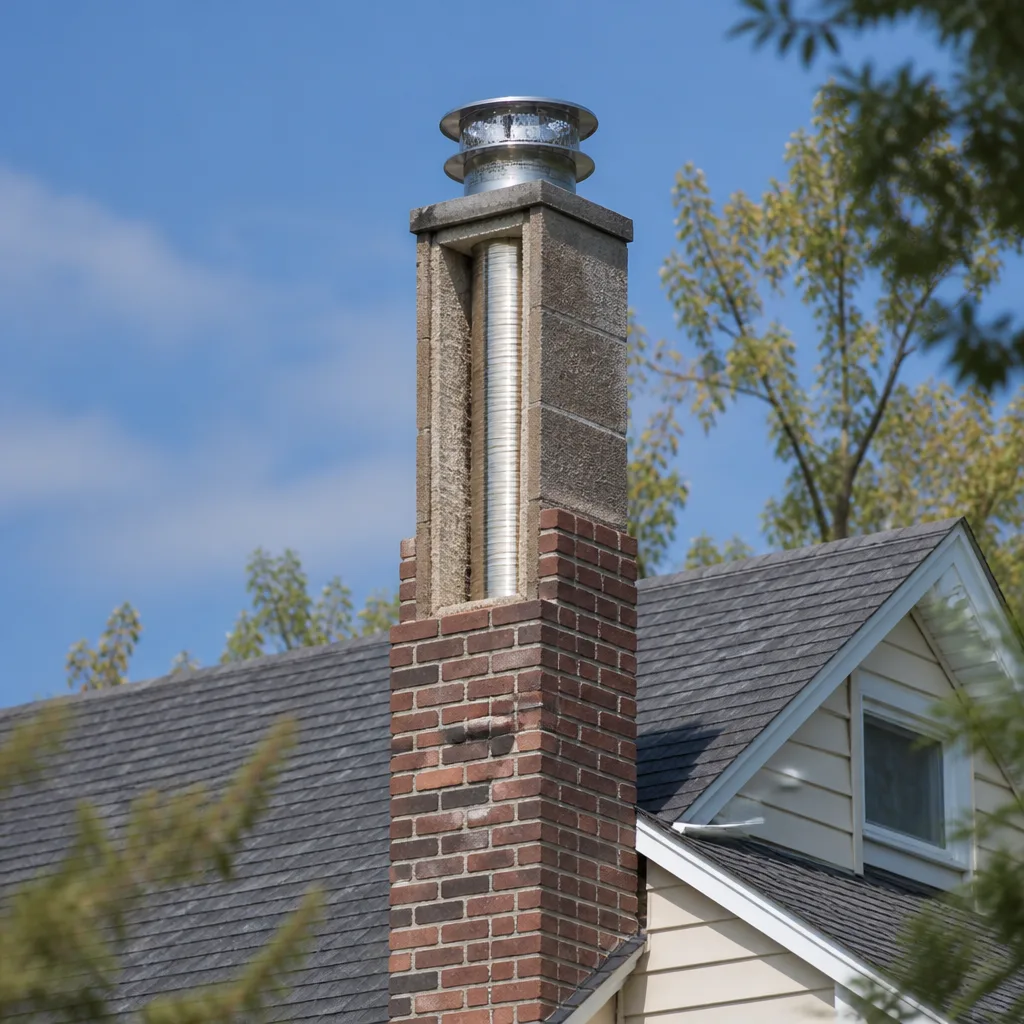 Flue relining
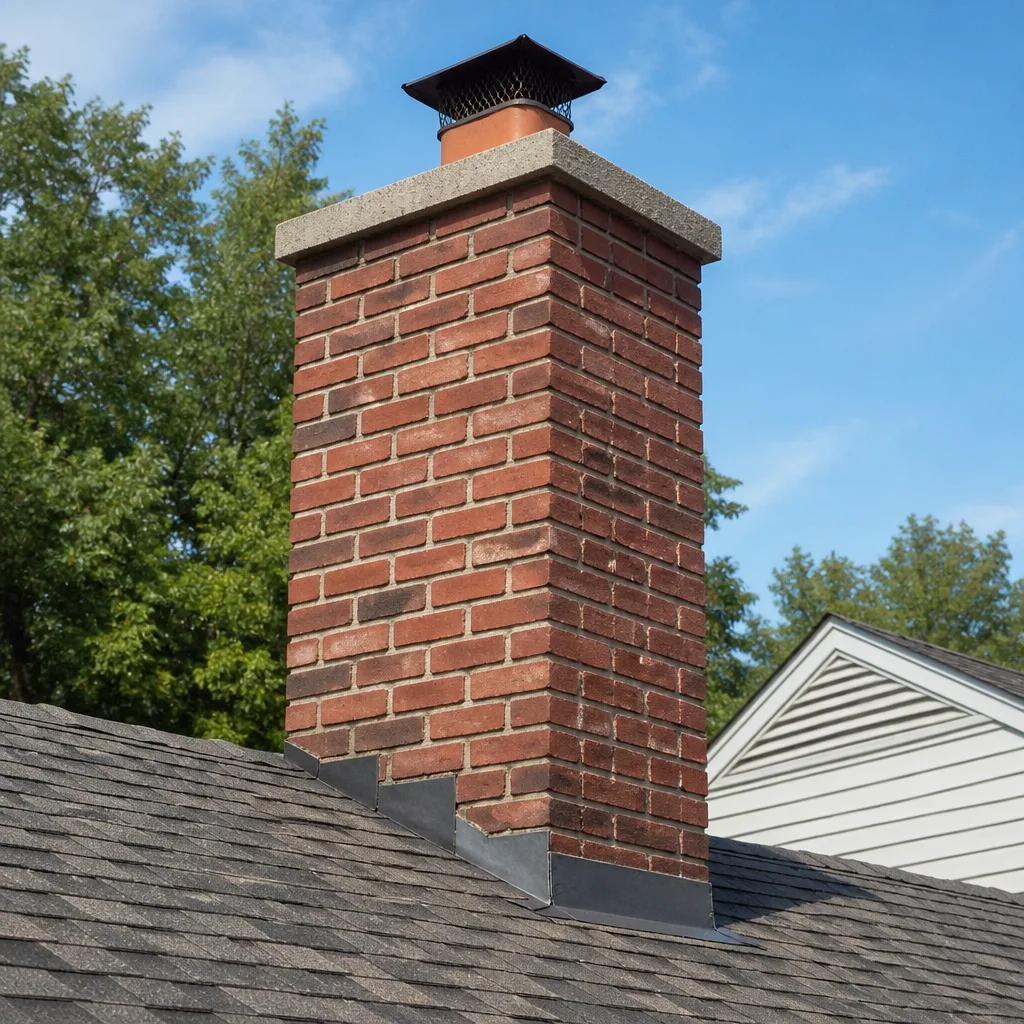 Masonry repair
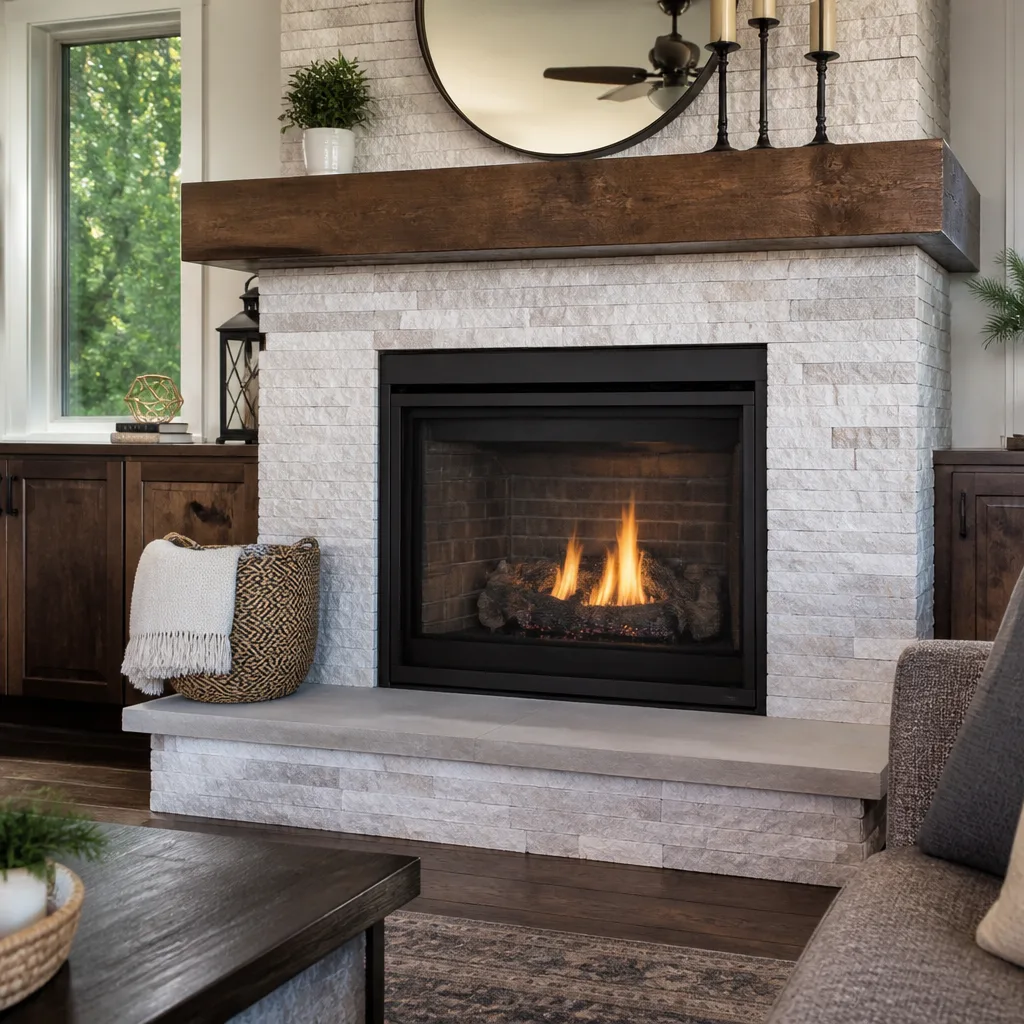 Gas fireplace service
Level 1 sweep and inspection to the NFPA 211 annual standard - flue, crown, cap, and flashing checked and photographed
Chimney sweep logs do not sweep chimneys. They loosen some creosote - which then falls where a brush and vacuum still have to collect it.
The Complete Guide to Chimney Cleaning in Lewisville
Most homeowners in Lewisville think a chimney cleaning is about removing soot. It isn’t. Soot is the easy part, the dark powder a brush knocks loose in minutes. The real work is managing creosote, a carbon deposit that forms when wood smoke condenses on the cooler walls of the flue. Creosote changes physical form as it builds, moving through three distinct stages, and each stage demands a completely different removal method. A brush handles one of those stages well. It fails at the other two. This guide explains what’s actually accumulating inside your flue, how North Texas burning habits speed up the process, and why the right cleaning method has to match the deposit you’ve got.
Quick Answer
Chimney cleaning in Lewisville means removing creosote and soot from the flue, firebox, and smoke chamber, then inspecting the whole system for damage. How often you need it depends on how much you burn and what you burn: a household burning regularly through the cooler months should book a sweep once a year, while light or occasional burners can stretch that. The cleaning method itself isn’t one-size-fits-all. Stage 1 creosote comes off with standard brushing, Stage 2 needs rotary or chemical treatment, and Stage 3 glazed creosote often requires resurfacing or relining. A proper job matches the tool to the deposit.
Styles & brands we work with
- Sweep & inspection
- Caps & crowns
- Flue relining
- Masonry repair
- Gas fireplace service
Table of Contents
- The Three Stages of Creosote and Why They Matter
- Why North Texas Burn Seasons Accelerate Creosote Buildup
- How Pecan and Post Oak Change Your Deposit Type
- Level 1 vs Level 2 Inspections: What Each One Covers
- Clay Tile vs Stainless Liners and How They Handle Creosote
- The Tools That Separate a Diagnostic Clean From a Cosmetic One
- How Often Should You Schedule a Sweep?
- What Actually Happens During a Chimney Cleaning
The Three Stages of Creosote and Why They Matter
Creosote is the central character in any conversation about chimney cleaning, and it behaves nothing like soot. It starts as a vapor in the smoke, then condenses on the flue walls as a sticky, flammable residue. Over time and repeated burns, it hardens and transforms. The stages aren’t just about thickness. They measure how difficult the deposit is to remove and how much fire risk it carries.
Stage 1 creosote is the fluffy, flaky, soot-like coating you can often see from the damper. It’s soft enough that a standard poly brush removes most of it. This is the stage most homeowners picture when they think about chimney cleaning, and it’s the only stage a basic brush-only sweep reliably handles.
Stage 2 creosote is where things get serious. The deposit becomes a hard, shiny, tar-like crust bonded to the flue wall. Brushing alone skips over it. Removal requires either a rotary whip system that spins against the surface, or a chemical treatment that softens the crust before it’s swept. Stage 2 is also the stage most likely to sit unnoticed in a Lewisville chimney, because it doesn’t look dramatic from the firebox.
Stage 3 creosote is the glaze-like, tar-hardened form. It looks almost like black glass coating the flue. No brush removes it, and no chemical treatment fully dissolves it. In many cases the only reliable fix is resurfacing the flue interior or installing a new liner system. Stage 3 is highly combustible and is the most common culprit behind chimney fires.
- Stage 1: Soft, flaky, brush-removable. Low immediate risk if kept in check.
- Stage 2: Hard, tar-like crust. Needs rotary or chemical removal. Fire risk climbs.
- Stage 3: Glazed and tar-hardened. Usually requires resurfacing or relining. Highest fire risk.
Every so often we get called to a Lewisville home where years of buildup have reached Stage 3, and the homeowner is surprised because the fire always seemed to draw fine. It usually does draw fine, right up until the deposit narrows the flue enough to choke the draft or ignites. That’s the trap creosote sets. It hides in plain sight.
Why North Texas Burn Seasons Accelerate Creosote Buildup
Lewisville doesn’t have a long, cold winter that keeps a fire burning steadily for months. It has a mild, erratic pattern: a few genuinely cold nights, then a warm spell, then cold again. That inconsistency does more to accelerate creosote than a steady burn ever would. The reasons come down to how a fire behaves when it’s started, stopped, and restarted.
A fire that runs hot and clean burns off much of what would otherwise condense. A fire that’s lit for an evening, allowed to smolder down, then re-lit a week later never reaches that clean-burn temperature long enough to matter. The smoldering phase, plus the cool-down, is exactly when creosote vapor condenses on flue walls. In a mild climate with frequent starts and stops, that cycle repeats many more times per season than it would in a place with a continuous deep winter. The result is faster Stage 2 accumulation, the hard crust that a simple brush can’t touch.
We also see it in how Lewisville homes are used. A fireplace that’s decorative three weeks out of four gets lit for company on a cool evening, burns low, and gets shut down early. Those cool, smoky, short fires are the worst offenders for deposit quality. Homes where the wood stove runs continuously through cold spells actually build cleaner flues, because the heat stays high and the vapor burns off.
There’s one more local factor worth naming. When the season ends and the fire goes unused for the warm months, whatever deposit has built up sits there undisturbed. It doesn’t wash away or break down. By the time the next cool season arrives, several months of condensed creosote is waiting, often a full stage harder than it was when the fire last burned. Book the sweep before the season, not mid-season, and you’re clearing the accumulated deposit before it has a chance to harden further.
How Pecan and Post Oak Change Your Deposit Type
The wood you burn directly shapes the creosote that forms. In this part of Texas, two hardwoods show up again and again in firewood piles: pecan and post oak. Both are dense, hot-burning woods, and both carry behavioral quirks worth knowing when you plan a cleaning schedule.
Post oak is the steady performer. It’s dense, burns long and hot, and produces good coals. A properly seasoned post oak fire reaches the temperatures that keep creosote from condensing heavily. Burn it dry and hot, and you’ll build thinner, less hazardous deposit. Burn it green or damp, and you’ll build the opposite, plus more smoke and more condensation.
Pecan is trickier. It’s a hard, dense wood that burns hot, but it also tends to throw more sparks and pop, and its bark and inner moisture content can create more smoke in the early part of a fire. If pecan isn’t fully seasoned, the extra smoke means extra condensed vapor on the flue walls. Pecan that’s dried properly and burned hot behaves well; pecan that’s rushed into the firebox builds deposit faster than a clean-burning hardwood should.
Seasoning matters more than species. Wood that reads wet or heavy, or that hisses and steams at the ends when it hits the fire, isn’t ready. Moisture turns to steam, steam cools the flue, and cool flue walls catch creosote. In our experience across Lewisville, wood that’s been split and stacked dry for a full summer burns dramatically cleaner than wood that’s been sitting under a tarp for a month.
- Burn seasoned wood that has dried well past its cut date. Dry wood means less smoke and less condensation.
- Split and stack early so air reaches the wood and moisture leaves it before you need it.
- Avoid mixing in softwoods heavily. They burn fast and cool, and cool burns build creosote.
- Keep fires hot. Small, hot fires beat long smoldering ones for flue health.
- Check after heavy pecan seasons. If pecan dominates your pile, book a sweep a little sooner than usual.
The practical takeaway: the wood is half the story of your deposit. Season it well, burn it hot, and you’ll keep your flue in the cleaner stages longer. Get sloppy with moisture and heat, and you’ll reach Stage 2 faster than the wood species alone would suggest.
Level 1 vs Level 2 Inspections: What Each One Covers
Chimney inspections aren’t all the same, and the difference matters as much as the difference between cleaning methods. The recognized standard comes from NFPA 211, the code that governs chimney and venting systems. It lays out three inspection levels, and two of them come up constantly for Lewisville homeowners.
A Level 1 inspection is the basic check that accompanies a routine cleaning. It covers the readily accessible parts of the system: the firebox, damper, accessible flue length, and the exterior chimney components visible from the ground and rooftop. The inspector looks for blockages, basic deterioration, and heavily combustible deposit. It does not include camera scanning of the full flue interior. Level 1 fits a chimney that’s been maintained regularly and hasn’t changed use, in a home that’s not being sold or having a new appliance connected.
A Level 2 inspection goes further. It includes everything a Level 1 covers plus a video scan of the full flue interior with a chimney camera, checking for cracks, gaps, offset joints, missing mortar, and improper liner connections. Level 2 is the right call when the chimney has changed in some way: a new appliance installed, a building change, a switch in fuel type, or a property sale or transfer. It’s also the correct response after a chimney fire, or when the fire has been drawing poorly and no one knows why.
- Routine annual cleaning with no known issues calls for a Level 1 inspection.
- New liner, new insert, or new appliance calls for a Level 2 video scan.
- Recent chimney fire or draw problem calls for a Level 2 to find the cause.
- Home sale or property transfer calls for a Level 2.
- Significant flue damage found at Level 1 escalates to Level 2 for the full picture.
In our experience, the homeowners who end up facing unexpected liner costs are the ones who only ever got a quick brush and never a proper inspection. A chimney sweep done right includes inspection as part of the visit, not as a separate upsell. If a technician brushes your flue and never looks inside it, you’ve had a cosmetic clean, not a diagnostic one. When a Level 2 scan shows a real problem, we walk the homeowner through the footage so they can see what we see.
Clay Tile vs Stainless Liners and How They Handle Creosote
Older masonry chimneys in the Lewisville area often have clay tile liners, while newer systems and many retrofitted homes use stainless steel. The two handle creosote very differently, and knowing which you have tells you a lot about how your chimney will behave over time.
Clay tile liners are fired clay flue tiles set with mortar joints in the masonry. They do their job well, until they don’t. The mortar joints between tiles crack with repeated heating and cooling, and those cracks become spots where creosote can seep into the masonry body behind the liner. Clay tile is also less forgiving of rotary cleaning. A stiff rotary whip on good clay tile is fine, but brittle or already-cracked tile can break under aggressive cleaning, which compounds the problem. Aging tile plus a slow-building Stage 2 or Stage 3 deposit is one of the most common repair scenarios we run into in Lewisville.
Stainless steel flexible liners, like a DuraFlex flexible liner system, resist creosote differently. The steel surface is smoother, which gives condensed creosote less to grip, and the liner runs as a continuous pipe with no joints for deposit to catch on. Stainless liners handle rotary cleaning well and hold their integrity through it. When a clay flue is cracked or badly glazed, a DuraFlex stainless system is often the practical path to a safe, properly sized flue again.
There’s a middle option that doesn’t come up often enough: ceramic flue resurfacing. Products like HeatShield are used to restore a damaged clay flue interior by resurfacing the surface with a ceramic material, addressing cracks and sealing the flue without a full liner replacement. It’s a technically demanding process, and having a company that knows the material changes what’s possible. On a flue that’s damaged but structurally sound, resurfacing can extend liner life and restore proper draft where a full replacement would otherwise be the answer.
- Clay tile: good when intact, vulnerable to cracked joints and seepage, less tolerant of aggressive rotary cleaning.
- Stainless steel: smoother surface, no joints to catch creosote, handles rotary cleaning and resists glazing better.
- Resurfacing: restores a damaged clay flue interior with a ceramic coating, addressing cracks without full replacement.
The Tools That Separate a Diagnostic Clean From a Cosmetic One
Here is where most chimney cleanings split into two categories. One is a cosmetic clean: a brush goes up and down, loose soot comes out, the firebox gets wiped, and the technician leaves. The other is a diagnostic clean, where the tools are matched to the deposit and the results are verified. The difference is visible if you know what to look for.
Rotary systems are the first marker. A rotary cleaning tool spins against the flue walls using flexible rods, whipping Stage 2 creosote off surfaces a hand brush can’t reach. Disposable poly brushes and flexible rods have their place on Stage 1, but they’re no match for hard crust. A technician who only brings a brush to a Stage 2 flue is going to skim the surface and leave the dangerous layer behind.
Chemical treatments come in when the deposit has reached hard Stage 2 or is bordering on Stage 3. A softening agent is applied to the crust, given time to work, and then the rotary system breaks down what’s been loosened. It’s a two-pass approach and it takes longer, which is exactly why it doesn’t show up in a quick low-cost clean.
Video scanning is the third marker. A chimney camera run through the flue interior verifies what the cleaning actually accomplished and catches problems a straight-on look would miss: hidden cracks, offset joints, gaps in the liner, and pockets of deposit below the inspection point. Without video, nobody can tell you the flue is genuinely clean. With it, you can see for yourself.
- Stage assessment first: identify which creosote stage is present before deciding on tools.
- Rotary or chemical removal for Stage 2 and hardening Stage 3 deposits, matching method to crust.
- Video scan post-clean to verify the flue interior and document what was found.
- Written report with photos or footage the homeowner keeps.
We work with professional-grade brands like Olympia Chimney and Famco for the components that go with the cleaning when repair is needed, and material knowledge matters here. The cleaning method has to match the deposit, and the repair recommendation has to match what the flue actually needs. That’s the difference between reading a flue and guessing at one. Our technicians have up to 14 years of experience, and most of that experience is in reading exactly this kind of evidence.
How Often Should You Schedule a Sweep?
There’s no single number that fits every Lewisville home, but there’s a reliable rule of thumb. If you burn regularly through the cooler months, book a cleaning once a year. If your fireplace is decorative and only gets lit a few times a season, you can stretch that, but you should still have the flue checked annually. Frequency isn’t about time alone; it tracks how much you burn, how you burn it, and how the flue responds.
Several things push you toward the “sooner” end of that range. Burning green or unseasoned wood, running long low smoldering fires, a fire that’s been drawing poorly, a recent chimney fire, or a flue you haven’t had inspected in a while all make a professional look more important, not less. In a North Texas climate where the season is shorter and fires start and stop, the deposit can accumulate more aggressively than the calendar suggests.
- Regular burns, several times a week in season: annual sweep.
- Occasional burns, a few times a month: annual check, sweep as deposit warrants.
- Decorative use, a handful of fires a year: annual inspection, cleaning as needed.
- Any chimney fire, poor draw, or new appliance: immediate inspection, regardless of schedule.
One practical habit worth building: schedule the sweep before the season starts, not after the first cold snap. Pre-season cleaning clears the summer’s accumulated deposit and catches problems while there’s still time to fix them, rather than after they’ve had months to harden.
What Actually Happens During a Chimney Cleaning
If you’ve never had a proper cleaning done, it helps to know the sequence. It’s not a mystery, and knowing the steps makes it easier to judge whether you’re getting a diagnostic clean or a quick sweep.
- Setup and protection. Floor coverings, drop cloths, and a sealed or contained work zone keep soot out of the room.
- Stage assessment. The technician examines the firebox, damper, and accessible flue to gauge what deposit is present and which stage it’s reached.
- Deposit removal. Brushes, and rotary or chemical treatment as needed, matched to the stage found. The firebox, smoke chamber, and smoke shelf are cleaned too, not just the flue.
- Video inspection. A chimney camera verifies the flue interior and flags cracks, gaps, and remaining deposit.
- Report and photos. Findings are documented with footage or stills the homeowner can review, and recommendations are made based on what’s actually there.
- Repair decisions, only if needed. If problems are found, repairs are discussed with the evidence in front of the homeowner, not just a recommendation on a clipboard.
The purpose of all this is straightforward: a chimney repair recommendation should never come out of nowhere. It should come with visible evidence, a clear explanation of why it’s needed now rather than later, and an honest answer when work can safely wait. We also include a camera inspection with a written and photo report, so the homeowner isn’t relying on our word alone.
Common Mistakes to Avoid
- Assuming a brush-only clean is enough. A standard brush handles Stage 1 creosote well, but it can’t remove Stage 2 crust or Stage 3 glaze. If a technician never assesses the deposit stage before choosing tools, the dangerous layer stays put.
- Skipping the inspection because you got a “cleaning.” In our experience, the homeowners who face surprise repair costs are the ones who only ever got a sweep. A chimney inspection is what catches hidden deterioration before it turns into a bigger job.
- Burning unseasoned wood to save a little effort. Green or damp wood burns cool and smoky, and cool smoke is what condenses on the flue as creosote. It’s the fastest route from Stage 1 to Stage 2.
- Letting long, low, smoldering fires stand in for a hot burn. A slow fire feels cozy, but it keeps the flue cool and builds up deposit, especially with the frequent start-stop pattern of a mild North Texas winter.
- Ignoring poor draft. A fire that smokes into the room or struggles to draw is telling you something about the flue. Treat it as a reason for inspection, not a quirk to live with.
- Choosing a generalist handyman over a chimney specialist. A technician without the right rotary, chemical, and video equipment cannot match a cleaning method to the deposit stage in your flue.
- Waiting until the season to book. Pre-season cleaning clears summer buildup before it hardens and catches problems before the first cold snap.
See the difference
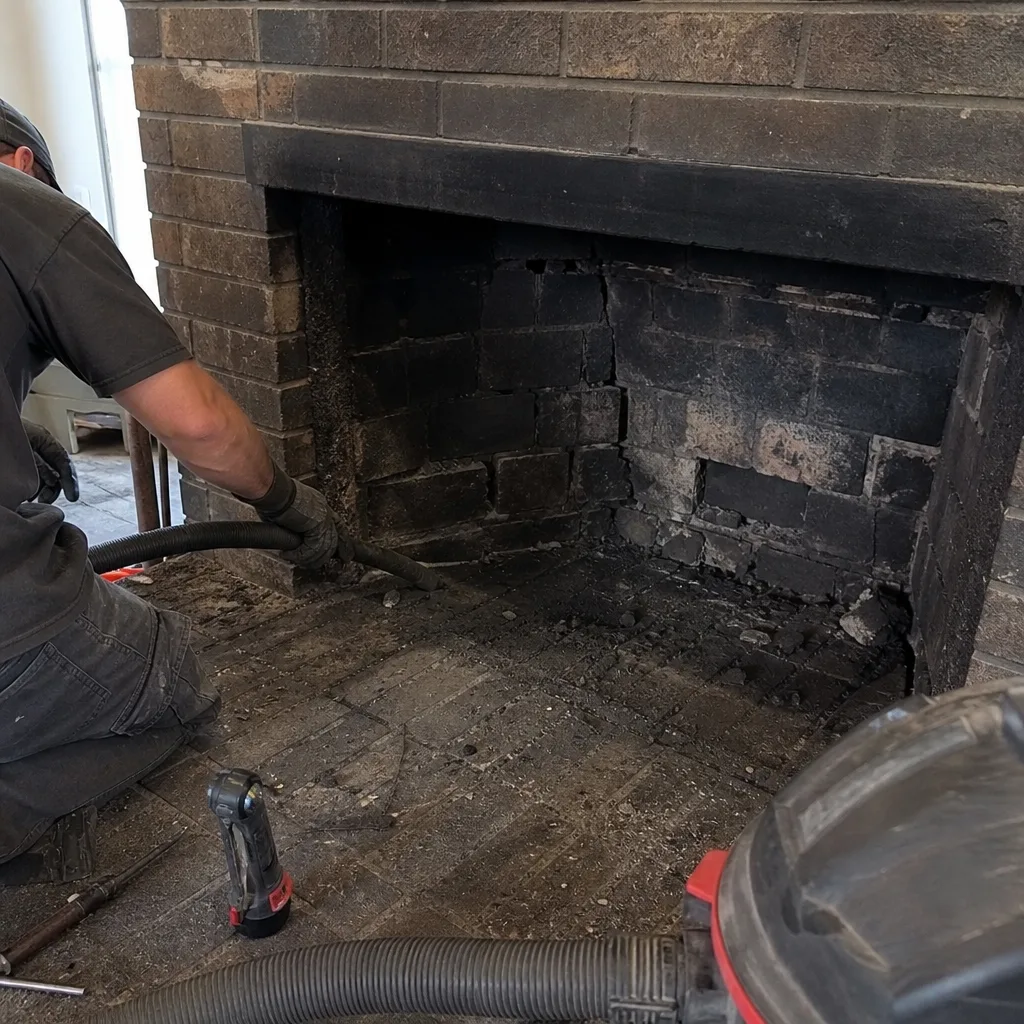 Before
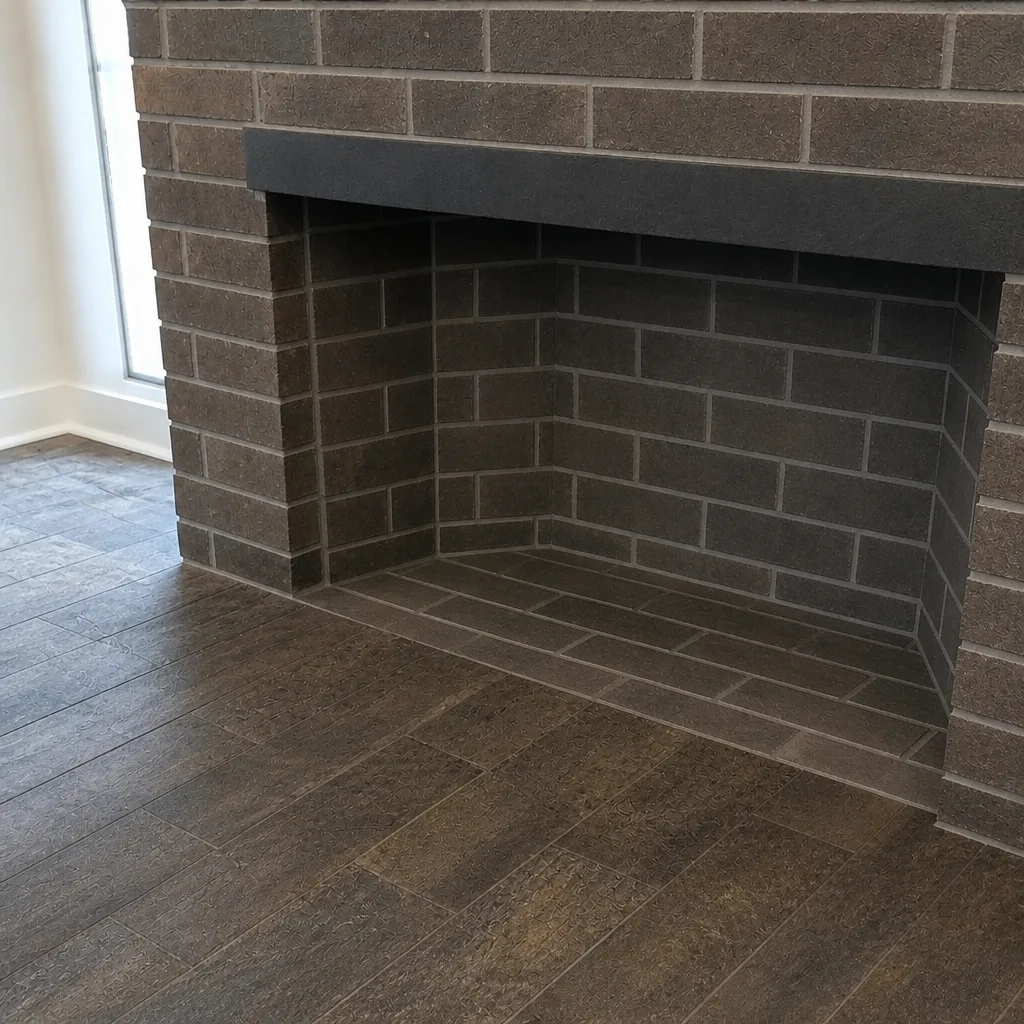 After
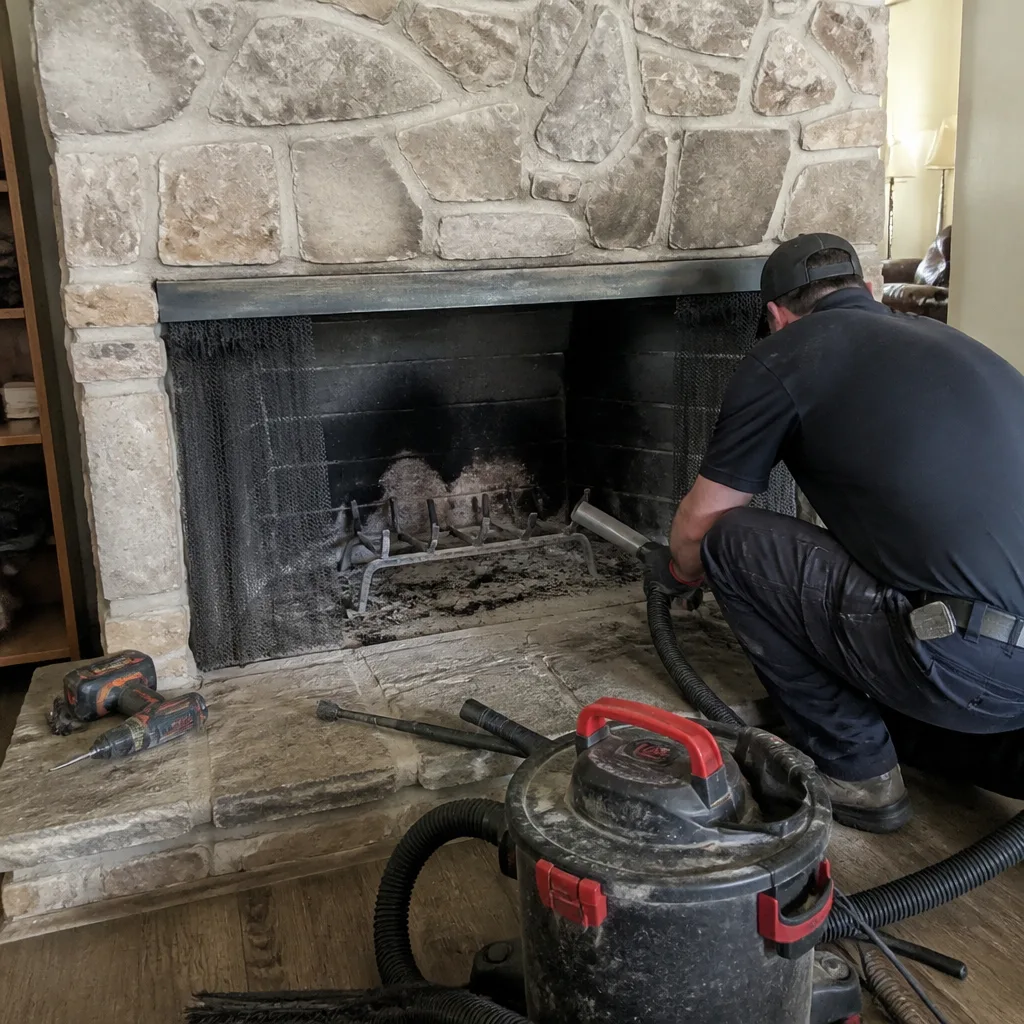 Before
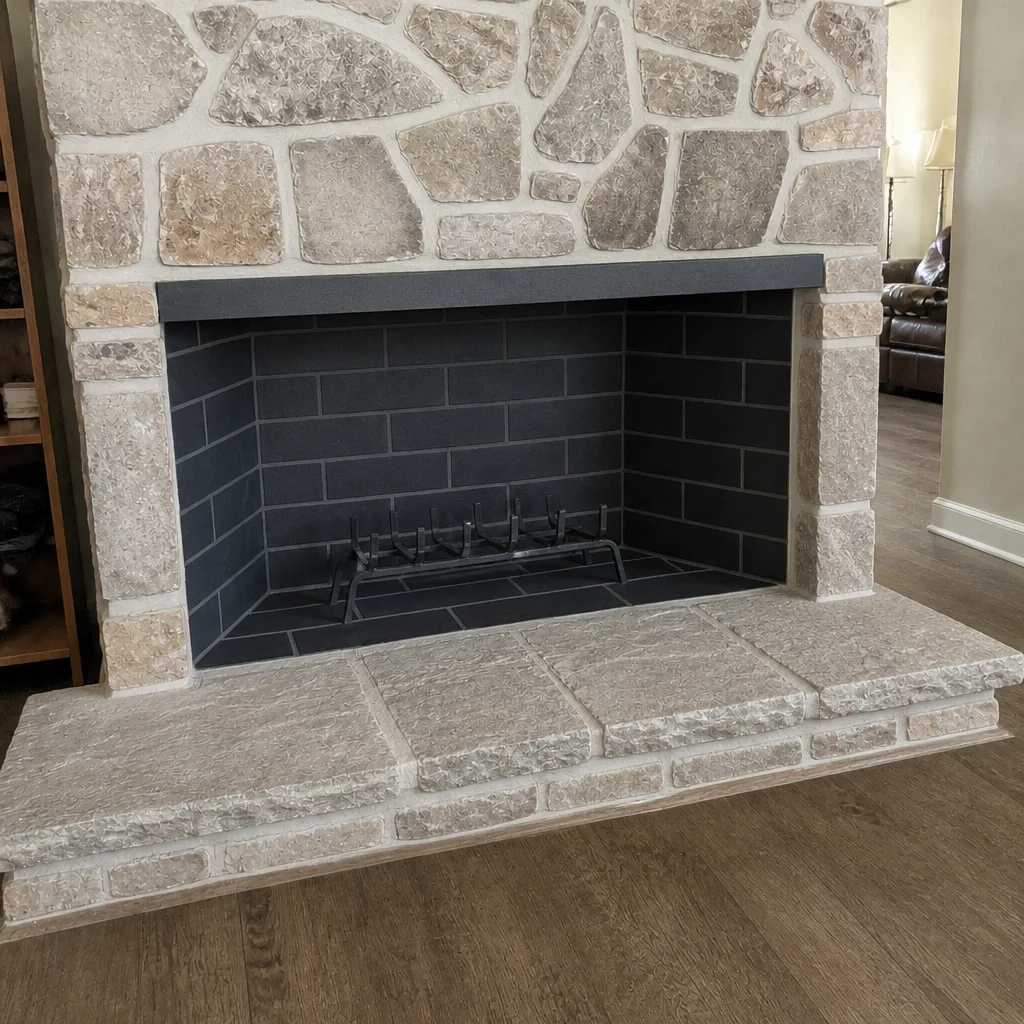 After
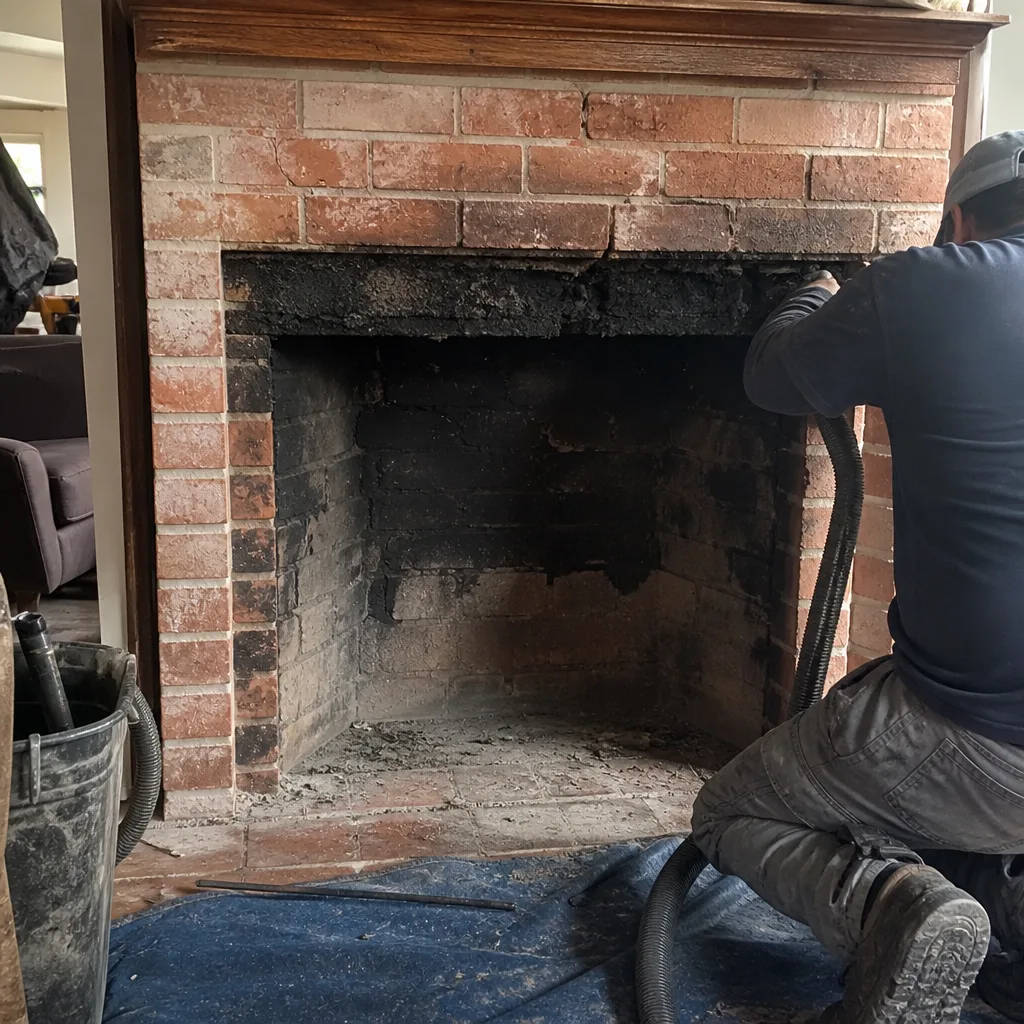 Before
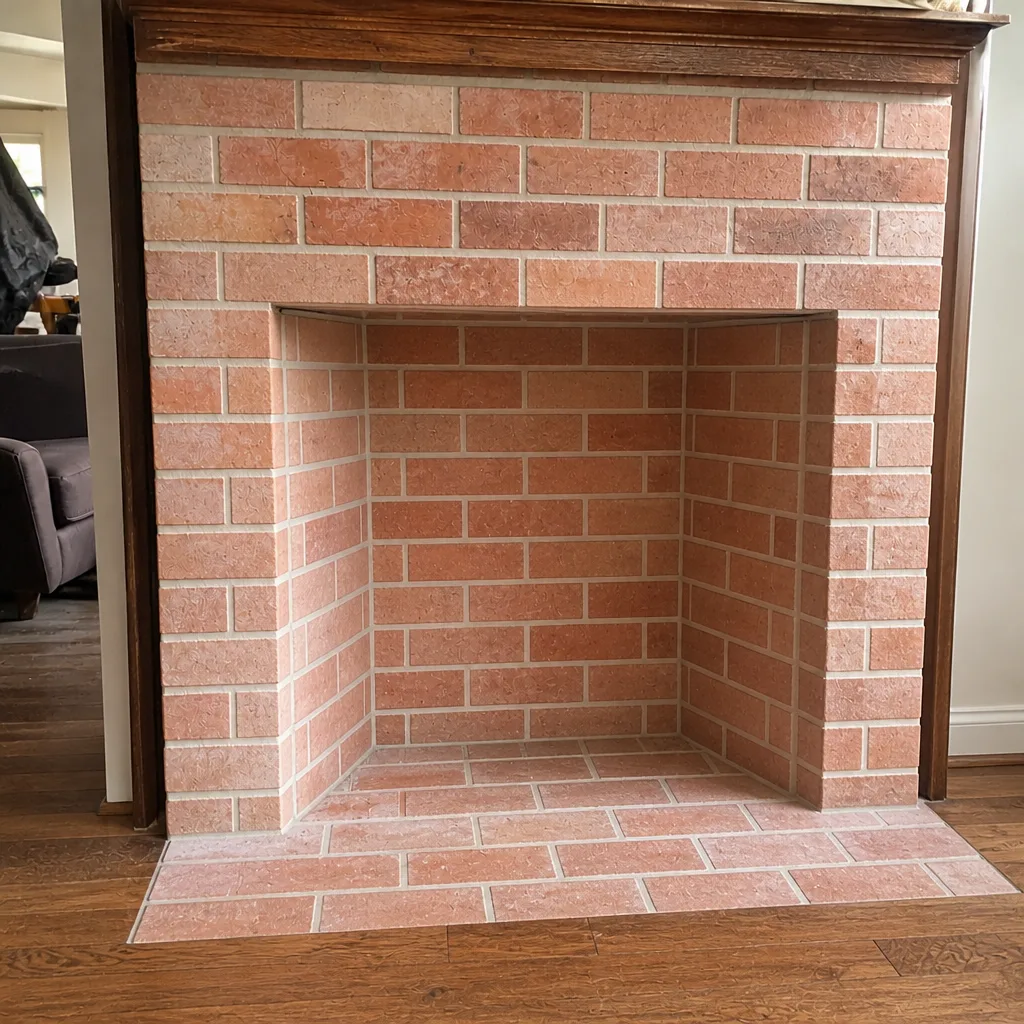 After
When to Call a Professional
Some situations clearly need a trained professional on site rather than a homeowner’s own check. Book a call if your fire draws poorly, if you’ve seen or smelled smoke coming from the chimney in places it shouldn’t, if you’ve had a chimney fire, or if the firebox has visible cracks, crumbling mortar, or a damaged damper. A new appliance installation, a home sale, or a change in fuel type all call for a Level 2 inspection. Any sign of glazed or tar-hardened creosote on the flue walls is also reason to bring in someone equipped to handle Stage 3 material. These aren’t coffee-time checks. The flue is a life-safety system, and a bad call on its condition has real consequences.
We perform cleaning, inspection, and repair as one full-service sequence, so a problem found at the sweep can be handled without a different crew coming back later. A sweep without an inspection misses hidden deterioration, which is why we connect both steps by default. Lewisville Chimney Sweep offers free estimates in Lewisville – call (888) 424-2086. We answer 24/7. Fast dispatch from 7am to 7pm, Sunday through Friday.
Frequently Asked Questions
Chimney cleaning typically runs in the range of a standard sweep, with pricing set per job by a written estimate after we’ve seen the flue and assessed the creosote stage. Stage 2 and Stage 3 deposits take longer and use more equipment, so the estimate reflects the real work needed rather than a flat rate. The estimate is free, and the written quote sets the final price before any work begins. Call (888) 424-2086 for an exact quote – estimates are free.
A chimney that burns regularly through the cooler months should be swept once a year, and any chimney should be inspected annually. North Texas’s short, start-and-stop burn season can speed up creosote accumulation, so annual inspection matters even when the fire rarely runs. If you burn green wood, smolder fires, or notice poor draft, book sooner than the annual mark. Call (888) 424-2086 to book a sweep – estimates are free.
Not always. A liner replacement is recommended only when a video inspection shows damage that resurfacing can’t address, such as badly cracked or separated clay tile or a badly glazed flue. Where the flue interior is structurally sound but damaged, ceramic resurfacing with a product like HeatShield can be an option instead of full replacement. A DuraFlex flexible stainless liner is the standard solution when the existing flue is beyond resurfacing. Ask to see the footage; nothing should be recommended without camera evidence you can review for yourself. Call (888) 424-2086 – estimates are free.
Creosote keeps building and hardening while the deposits stay in the flue, moving from soft Stage 1 to hard Stage 2 to glazed Stage 3. The longer it sits, the harder and more expensive it becomes to remove, and the greater the fire risk the deposit carries. In our experience, the costliest jobs are the ones where a home has gone several seasons without a proper clean or inspection. Call (888) 424-2086 to schedule – estimates are free.
A Level 1 inspection covers the readily accessible parts of the chimney and accompanies a routine cleaning. A Level 2 inspection adds a video scan of the full flue interior and is required when the chimney has changed: a new appliance, a building change, a fuel switch, a sale, or after a chimney fire or draft problem. If you’re unsure which applies to your Lewisville home, a quick conversation will sort it out. Call (888) 424-2086 – estimates are free.
Yes. A wood-burning fireplace generates creosote and soot in the flue, while a gas insert leaves different deposits but still needs inspection of the venting and firebox. Both get the same diagnostic approach: an assessment, a cleaning method matched to what’s found, and a video inspection to verify the result. Call (888) 424-2086 to discuss your setup.
The Bottom Line
Chimney cleaning in Lewisville isn’t about clearing soot. It’s about identifying a creosote stage and using the tool that matches it. Stage 1 comes off with a brush, Stage 2 needs rotary or chemical treatment, and Stage 3 demands resurfacing or a new liner. The mild, uneven North Texas burn season and unseasoned pecan or post oak both push accumulation faster than a homeowner might expect. Pair a proper sweep with a video inspection, schedule it before the cold sets in, and you’ll know exactly what’s inside your flue instead of guessing at it.
If you’re due for a sweep or just want to know what’s really going on inside your flue, Lewisville Chimney Sweep can help. Find our full service offering at Lewisville Chimney Sweep, and if you’re new to the area, start with an overview of Lewisville. We work with professional-grade brands including Olympia Chimney and Famco, and we bring inspection-grade diagnostics to every job.
Call (888) 424-2086 for a free estimate. We answer 24/7. Fast dispatch from 7am to 7pm, Sunday through Friday. Nothing is recommended without camera evidence you can see for yourself, and if work can safely wait, we’ll tell you that too.
Written by the team at Lewisville Chimney Sweep.