
Last updated November 15, 2026
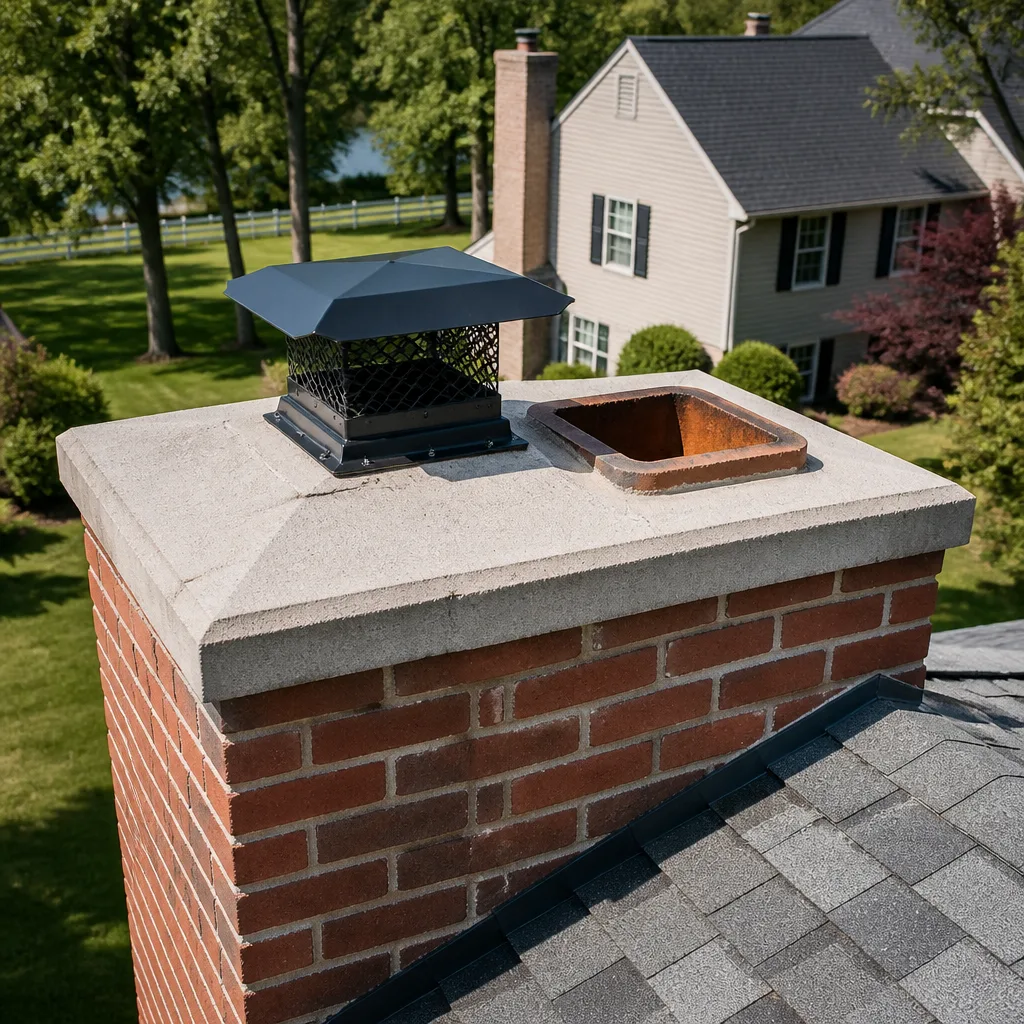 Sweep & inspection
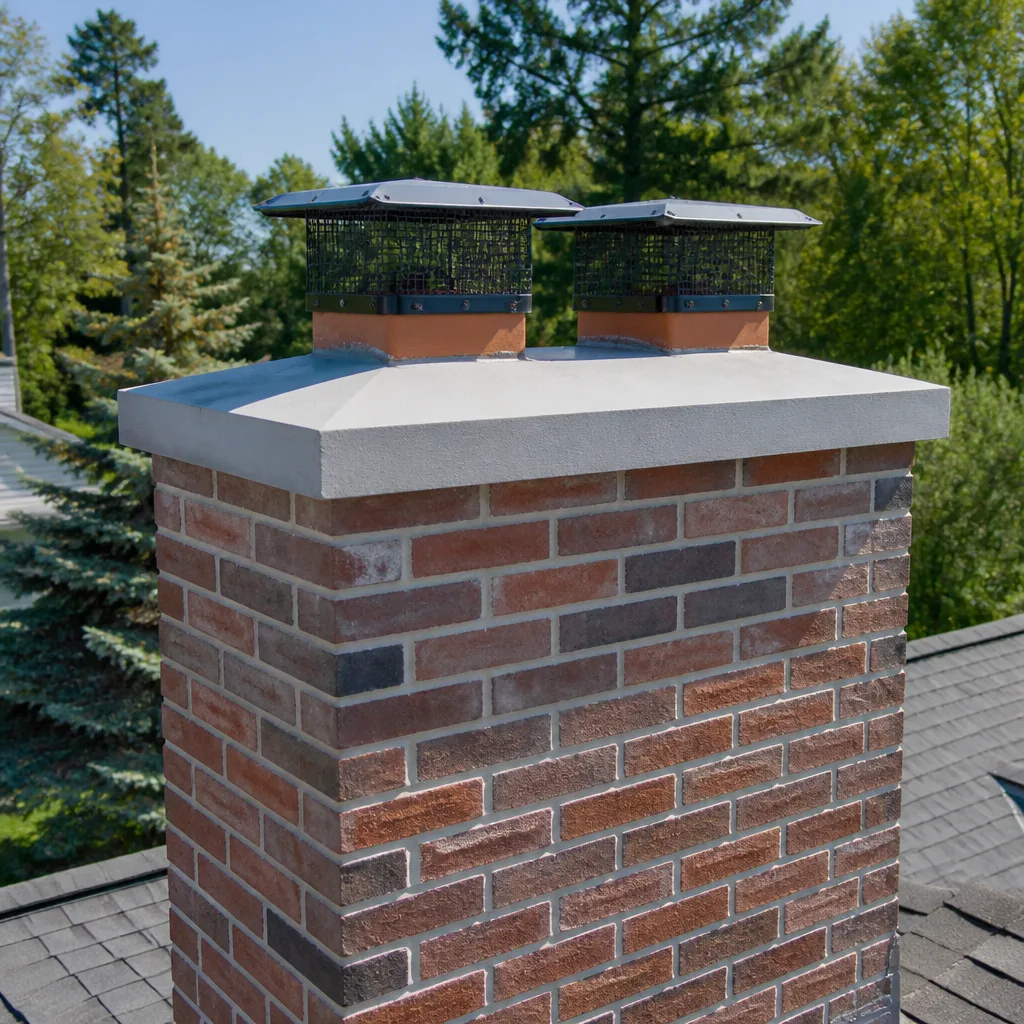 Caps & crowns
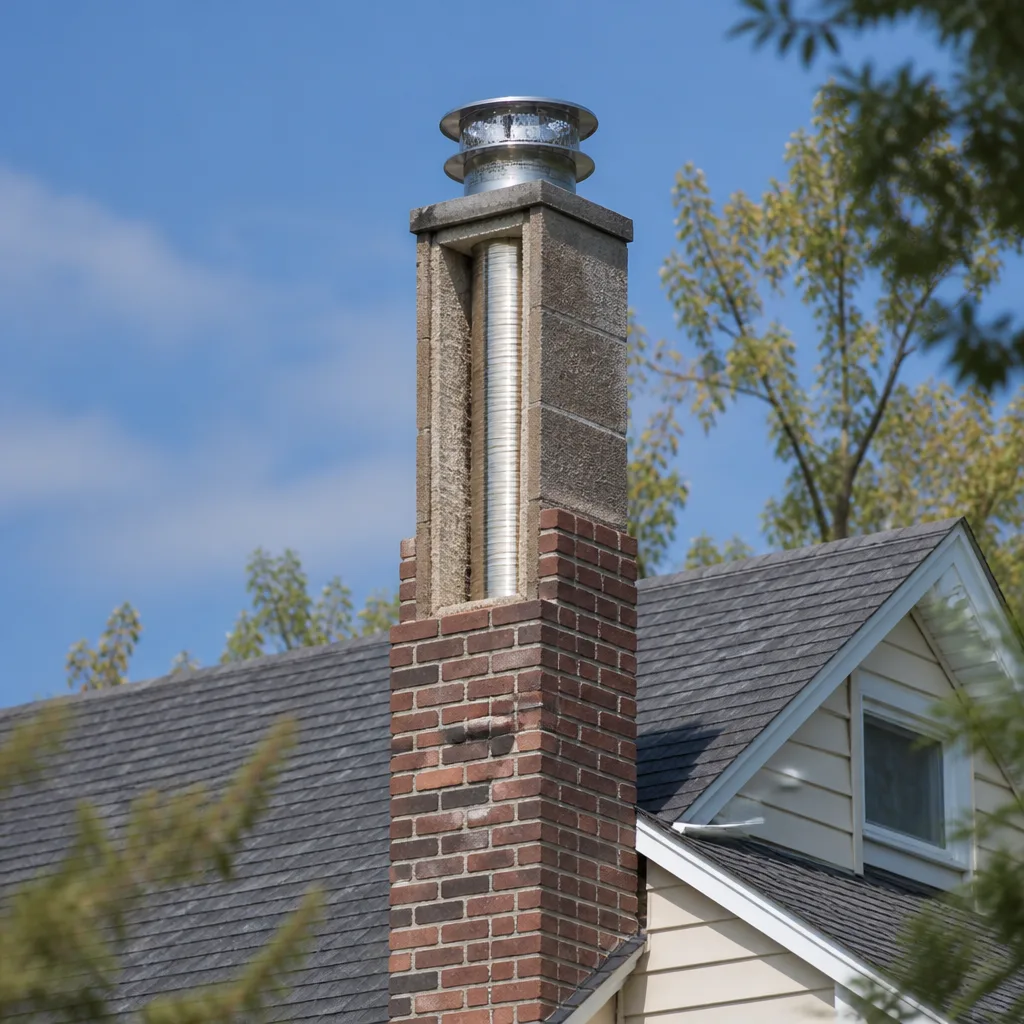 Flue relining
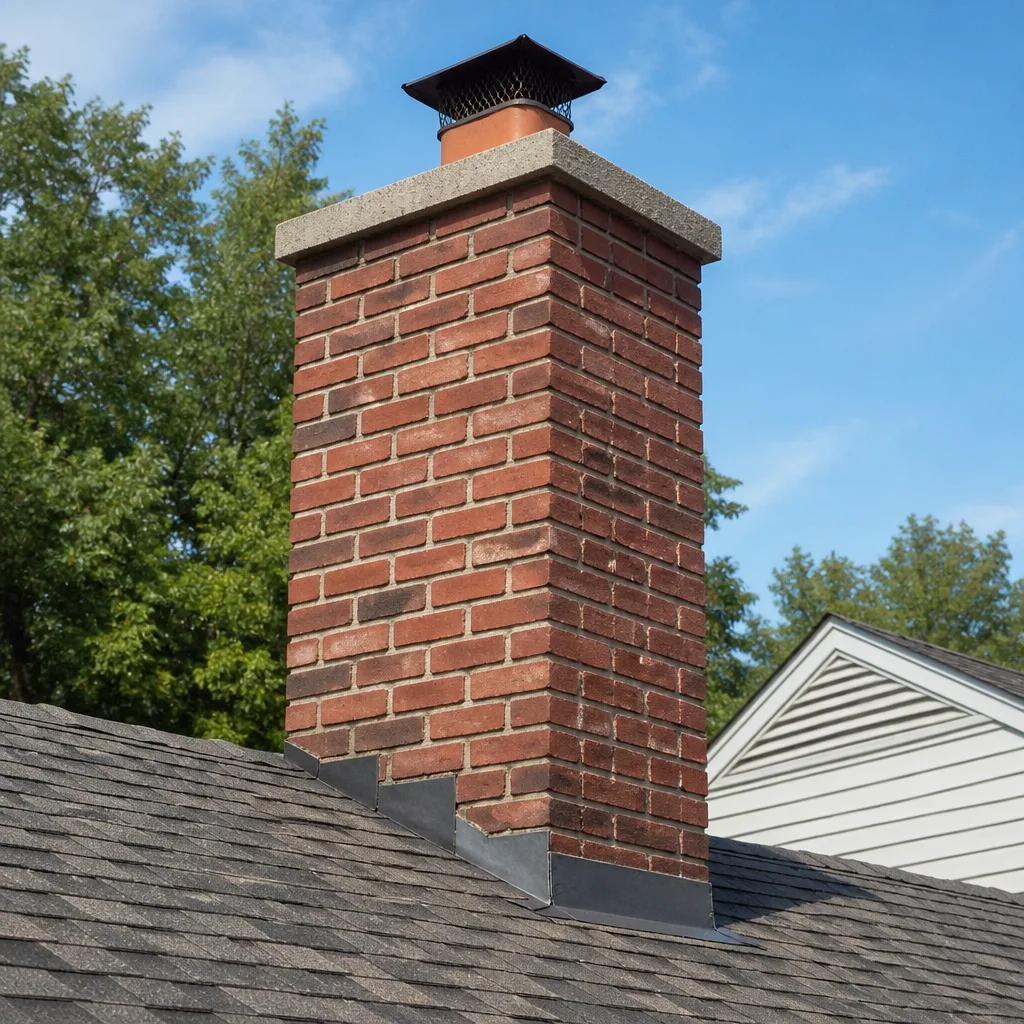 Masonry repair
 Gas fireplace service
Level 1 sweep and inspection to the NFPA 211 annual standard - flue, crown, cap, and flashing checked and photographed
Chimney sweep logs do not sweep chimneys. They loosen some creosote - which then falls where a brush and vacuum still have to collect it.
DIY vs Professional Chimney Cleaning: The Lewisville Homeowner’s Decision Guide
You can buy a chimney brush kit at any hardware store in Lewisville for less than the cost of a dinner out. That’s true, and it’s the reason so many homeowners assume a chimney sweep is a DIY job. But here’s the part the box doesn’t tell you: a stiff brush dragged through a flue you haven’t inspected can crack an already-stressed clay tile liner, and you won’t know the tile was stressed until it fails. The tool isn’t the problem. The missing information is. This guide draws the line precisely: which flues a homeowner can safely brush, what a brush kit genuinely cannot do, how the five-year math actually works out, and the specific questions that tell you which side of the line your Lewisville home is on.
Quick Answer
DIY chimney brushing is only realistic for a straight, single-story flue with a factory-built metal liner that you know is in good condition because a professional inspected it recently. For most Lewisville homes, which have clay tile liners, offset flues, or two-story chimney runs, professional cleaning is the safer and ultimately cheaper choice. A hardware-store brush removes loose soot; it cannot assess liner condition, clear a smoke shelf properly, or touch stage two or three creosote.
Styles & brands we work with
- Sweep & inspection
- Caps & crowns
- Flue relining
- Masonry repair
- Gas fireplace service
Table of Contents
- What a Hardware Store Brush Kit Actually Does
- Which Flue Configurations Make DIY Feasible
- What a Brush Kit Cannot Do: Creosote, Liners, and the Smoke Shelf
- The Five-Year Cost Comparison: Equipment, Time, and Risk
- The Liability Reality Most Homeowners Miss
- The Lewisville Decision Matrix: Six Questions That Decide It
- When to Call a Professional
- Frequently Asked Questions
What a Hardware Store Brush Kit Actually Does
A chimney brush kit is a simple machine built for a simple task. A round or square brush with stiff poly or wire bristles attaches to flexible fiberglass rods, and you push and pull it down the flue from the roof or up from the firebox. The bristles knock loose soot and light, flaky creosote off the flue walls, and gravity carries the debris down to a drop cloth you’ve taped over the fireplace opening. On a clean-lined, straight, single-story flue, it works. It’s been working for a hundred years.
Here’s what the kit does well:
- Removes loose soot from the flue walls, which is the bulk of what accumulates in a lightly used fireplace.
- Knocks off stage one creosote, the flaky, dusty, brushable layer that forms after a season of wood burning.
- Clears the visible flue opening and the immediate throat of the chimney.
What it doesn’t do is anything that requires knowing what’s actually inside the flue before the brush goes in. And in Lewisville, that’s the part that matters more than most homeowners realize. The housing stock here spans decades of construction, which means the flue you’re looking at could be a clay tile liner from a mid-century ranch, a poured refractory liner, or an insulated stainless system someone installed later. Each has a different tolerance for a stiff bristle and a different failure mode. A brush sized one inch too large on a cracked clay tile can widen a hairline fracture into a broken tile that drops debris into the firebox and opens a path for combustion gas.
That’s not a scare tactic. It’s the reason we ask what’s in the flue before we sweep it. You can’t size a brush to a liner you haven’t seen.
Which Flue Configurations Make DIY Feasible
There’s a real, narrow category of Lewisville homes where a homeowner can safely brush their own chimney, and it’s worth naming it precisely because “just call a pro” is lazy advice if it isn’t true.
DIY brushing is feasible when all of these are true
- The flue is straight and vertical from firebox throat to the top of the chimney, with no offsets or bends. A straight run means the brush and rods travel the path they were designed for.
- The chimney is single-story. A one-story run is short enough to reach from the roof with standard rod lengths and enough to keep the brush from snagging at a joint you can’t see.
- The liner is factory-built stainless, in good condition. A smooth, round stainless liner accepts a brush cleanly. This is the easiest liner to sweep safely.
- A professional inspected it recently and confirmed the liner has no cracks, gaps, or separations. This is the non-negotiable one. Without a recent inspection, you don’t know what you’re brushing, and you don’t know if the flue is safe to use at all.
- You have safe roof access with a stable slope, a solid surface, and no ice or snow. Mild winters help here, but the roof pitch is what it is.
DIY is not the answer when any of these are true
- Clay tile liners with visible cracks, spalling, or missing mortar joints. This is the most common liner type in older Lewisville masonry chimneys, and it’s the one a brush can damage rather than clean.
- Offset or angled flues. The brush will hang up at the bend, you’ll force it, and you’ll either damage the liner or leave half the flue uncleaned.
- Two-story or taller chimney runs. Rod length and control become a real problem, and the risk of losing grip on a rod from height is not worth the savings.
- Any gas insert. Gas appliances have their own venting requirements and shouldn’t be brushed with a wood-burning brush.
- Any chimney you haven’t had inspected. If you don’t know the liner type and condition, you don’t yet know which category you’re in.
That’s the whole line. It’s narrower than most DIY guides admit, and it’s drawn for a reason: the failure mode of brushing an uninspected flue is a damaged liner that costs more to fix than five years of sweeps would have cost.
What a Brush Kit Cannot Do: Creosote, Liners, and the Smoke Shelf
Even in the best-case DIY scenario, the brush kit only does about half a chimney cleaning. The other half is diagnosis, and diagnosis needs a camera and an inspection, not a brush.
Stage two and stage three creosote
Creosote forms in stages. Stage one is flaky and brushable. Stage two is a hardened, tar-like glaze that bonds to the flue wall, and a brush will skate over it without removing it. Stage three is a dense, puffy, concentrated deposit, the kind that fuels a chimney fire. Neither stage two nor stage three comes off with a hardware store brush. Both require chemical treatment and mechanical removal, often with specialized tools. In our experience, a Lewisville home with a slow-burning, poorly drafted, or unseasoned-wood fire will form stage two creosote within a season or two.
Liner condition assessment
This is the biggest gap. The brush goes in blind. A chimney camera shows you cracks, gaps, spalling, and separation you’d never see from the top or the firebox. That’s not a sales pitch for an inspection; it’s the difference between a flue that’s safe to burn in and one that’s venting combustion gas into a wall cavity. No brush tells you that.
Smoke shelf cleaning
The smoke shelf is a horizontal ledge just above the damper that redirects downdraft back up the flue. It collects soot and creosote that gravity pulls down from above, and it’s one of the most important spots for draft and one of the hardest to reach. A top-down brush doesn’t clean it; a bottom-up sweep with the right tool does.
Damper inspection
The damper has to open and close freely to control draft. Soot builds up on the hinge, and a stuck-open damper wastes heat up the flue. A brush kit doesn’t check it, and a homeowner from the firebox can’t always see the hinge condition clearly.
This is where we differentiate: a sweep without an inspection misses hidden deterioration, which is why we connect both steps in a single visit and work with professional-grade materials from brands like HeatShield and Olympia Chimney when a repair is actually needed.
The Five-Year Cost Comparison: Equipment, Time, and Risk
Here’s where the DIY math stops being a math problem and becomes an expected-value problem. On the surface, the numbers favor DIY. Add up the hidden costs and the picture changes. This is a per-use analysis over five years, assuming a homeowner who sweeps once a year.
DIY, itemized
- Brush and rod kit: $60 – $120 for a set sized for a residential flue.
- Drop cloths and tape: $15 – $30, some reusable.
- Creosote remover (for stage two): $20 – $40 per season, if you catch it early.
- Time: 1.5 – 3 hours per sweep, plus setup and cleanup.
- Risk: a liner crack from a mis-sized brush, a dropped rod from a height, or a creosote stage you can’t see and don’t remove. Repair cost for a damaged clay tile liner runs in the hundreds to low four figures depending on length and access.
Professional, itemized
- Sweep: a flat price agreed before booking, per visit.
- Inspection: camera inspection and a photo report, included in the visit.
- Time: your afternoon, not your ladder.
- No equipment to store, size, or replace.
- Risk of damage: carried by the business, not by you.
Over five years, the DIY equipment and consumables land somewhere in the $400 – $600 range before you count a single hour of your time or a single repair. A professional sweep, done once a year and inspected at the same time, costs roughly the same. That’s the part most DIY cost comparisons leave out: the equipment buys you the cleaning, but it doesn’t buy you the diagnosis. When you price the diagnosis separately, the gap closes to nothing. And a single avoided liner repair blows past the difference.
The honest conclusion is that DIY saves money only if nothing goes wrong and nothing was hidden. Those are two big ifs.
The Liability Reality Most Homeowners Miss
This is the section no DIY guide will write, and it’s the one that matters most when something goes wrong.
Homeowner’s insurance policies typically require reasonable maintenance and support claims with documentation. When a chimney fire damages a home, the adjuster will ask for the record: sweep receipts, inspection reports, dates. If the record shows no professional inspection and no documented maintenance, a claim can be reduced or denied depending on the policy language and the circumstances. That’s not a threat, it’s a paperwork reality, and it applies to Lewisville homeowners the same as anywhere else.
Here’s the decision: a DIY sweep produces no documented inspection. You know what you did, and you know what you found. When the adjuster asks, you have a story and a brush. A professional sweep produces a camera inspection and a photo report, which is evidence of maintenance and evidence of condition. If you ever need to make a claim, you have a date, a report, and a technician’s name on the record. That’s the difference between an incident you can document and one you can only describe.
We make a point of offering inspection as a standalone service, not just as a sales pitch bolted onto a cleaning appointment. You can call us for the inspection alone, decide what to do with the report, and we’ll tell you plainly when work can safely wait. That’s the honest version of the transaction: you get the information, you decide.
The Lewisville Decision Matrix: Six Questions That Decide It
The fastest way to know which side of the line you’re on is to answer six questions. Be honest with yourself about the answers you don’t know, because “I don’t know” is a real answer and it points straight to a professional.
1. How old is the chimney, and what’s the flue construction?
A 1960s Lewisville ranch with a clay tile liner is a different animal from a 2010s home with a factory-built stainless system. Clay tile is brittle and, if it’s cracked, sensitive to a stiff brush. Stainless is smoother and more forgiving. If you don’t know what’s in your flue, that’s a stop sign.
2. What kind of liner is in it?
Clay tile, cast-in-place, or stainless. Each has a different tolerance for brushing and a different failure mode. A cast-in-place liner (like the kind restored with HeatShield) is smooth and can be swept, but it also needs a condition check so you brush the right way.
3. When was the last professional inspection?
If it’s more than a year ago, or if you’ve never had one, book one before you go on the roof. Every other item on this list depends on the answer to this one.
4. What are you burning, and how often?
A season of well-seasoned hardwood burns cleaner than a few fires of green or unseasoned wood, which form creosote faster. If you burn softwood or unseasoned wood, or burn at low air settings, you’re in stage two territory sooner than the neighbor who burns seasoned oak with a hot fire.
5. Is the flue straight and the chimney reachable safely?
A straight, single-story run is the DIY-feasible case. An offset flue or a two-story roof is not. Look before you commit.
6. What’s the smoke doing?
If you get smoke in the room, a weak draft, or a smell when the fireplace is cold, that’s a symptom of a flue or liner issue. Symptoms point to a professional, not a brush.
Score yourself: if you answered “yes” to straight, single-story, stainless, recently inspected, and “no” to the symptom questions, you’re a candidate for DIY. Any “I don’t know” or any symptom, and you’re not. That’s the whole matrix, and it’s a decision about safety before it’s a decision about money.
Why Safety Comes Before the Brush
Work at height on a roof is the first hazard, and it’s the one most DIY guides skip. A chimney brush is a hand tool for a two-handed job, and it requires a stable footing on a pitched surface. A fall from a one-story roof is a serious injury. A fall from a two-story roof is worse. The mild winters here help: there’s rarely ice on a north-facing roof, and the roof surface is usually dry. But the pitch and the height don’t change.
The second hazard is what you can’t see from the top. The brush goes in blind, and if there’s a cracked tile, a separated liner joint, or a gap around a thimble, the brush can catch and the fracture widens. That’s the exact danger a professional inspection catches and a homeowner can’t.
The third hazard is the one that makes chimney work a life-safety category: carbon monoxide is invisible and odorless, and a compromised flue can vent it into the home instead of up the chimney. A brush kit cannot detect a compromised flue, no matter how carefully the sweep is done. That’s the honest reason to bring in a trained professional for the inspection even when you’re doing the cleaning. We’d rather check the flue and tell you it’s fine than assume it after a brush.
One more: don’t try to clean a gas insert or a gas-fired appliance. Those need a gas-qualified technician, and the venting requirements are different from a wood-burning flue.
How a Professional Sweep Works, Step by Step
If you want to know what you’re buying before you make the call, here’s the sequence. The details vary with the flue, but the order doesn’t.
- 1
Set up. Drop cloths go over the hearth and around the firebox. The work area stays clean; the soot goes into a vacuum, not into the room.
- 2
Inspect first. A camera inspection comes before the brush, not after. That’s the key difference from a sweep-only operation, and it’s what lets the technician size the brush and flag anything that shouldn’t be brushed.
- 3
Sweep the flue. The brush and rods run the length of the flue, and any stage two creosote gets chemical treatment and mechanical removal.
- 4
Clean the smoke shelf and damper. The parts a top-down brush misses get cleaned from the bottom, and the damper is checked for free operation.
- 5
Document. You get a camera inspection and a photo report. You can see what the technician saw, and you decide what happens next.
That’s what full-service means: sweep, inspect, and repair under one roof, so you’re not coordinating between a sweep-only contractor and a separate repair technician who has to come back next week. When a repair is actually needed, the materials matter, which is why we work with professional-grade brands like Gelco, Famco, and Olympia Chimney rather than whatever a generalist carries.
See the difference
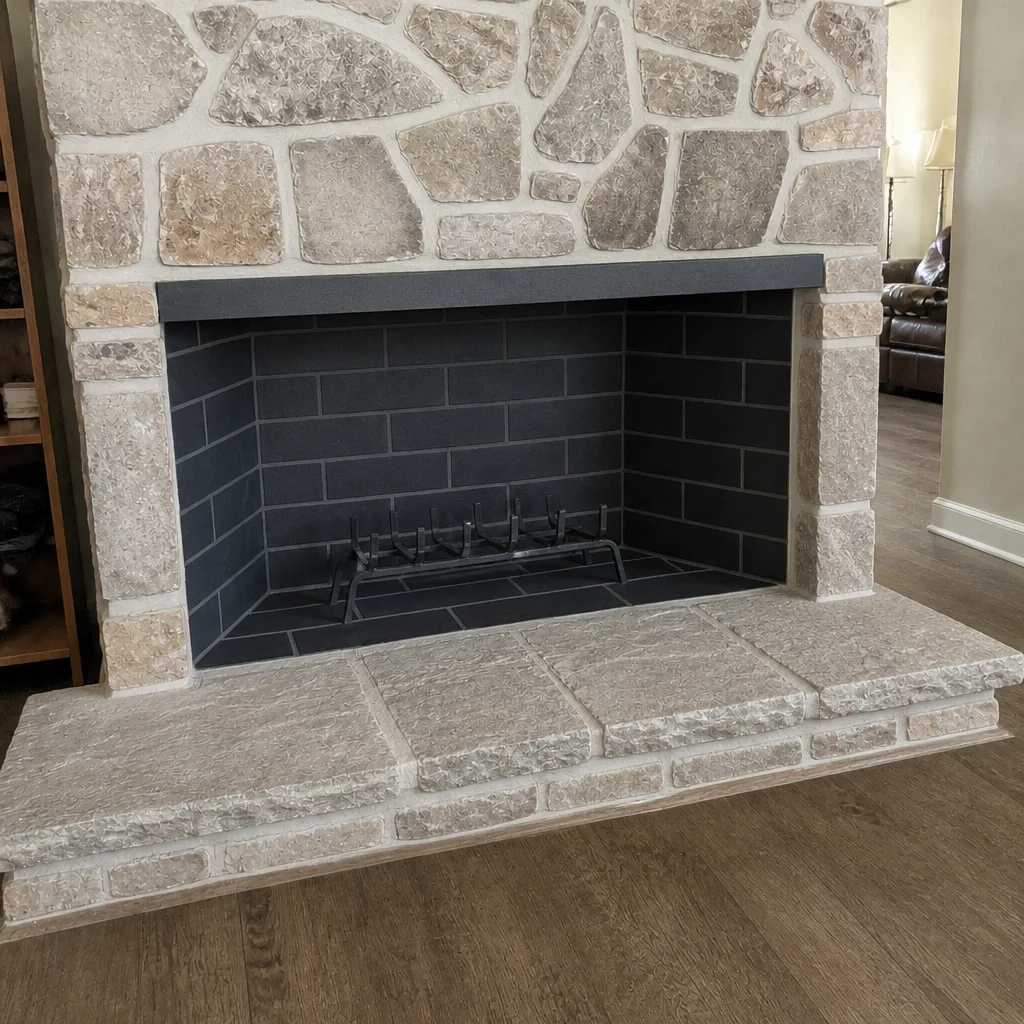
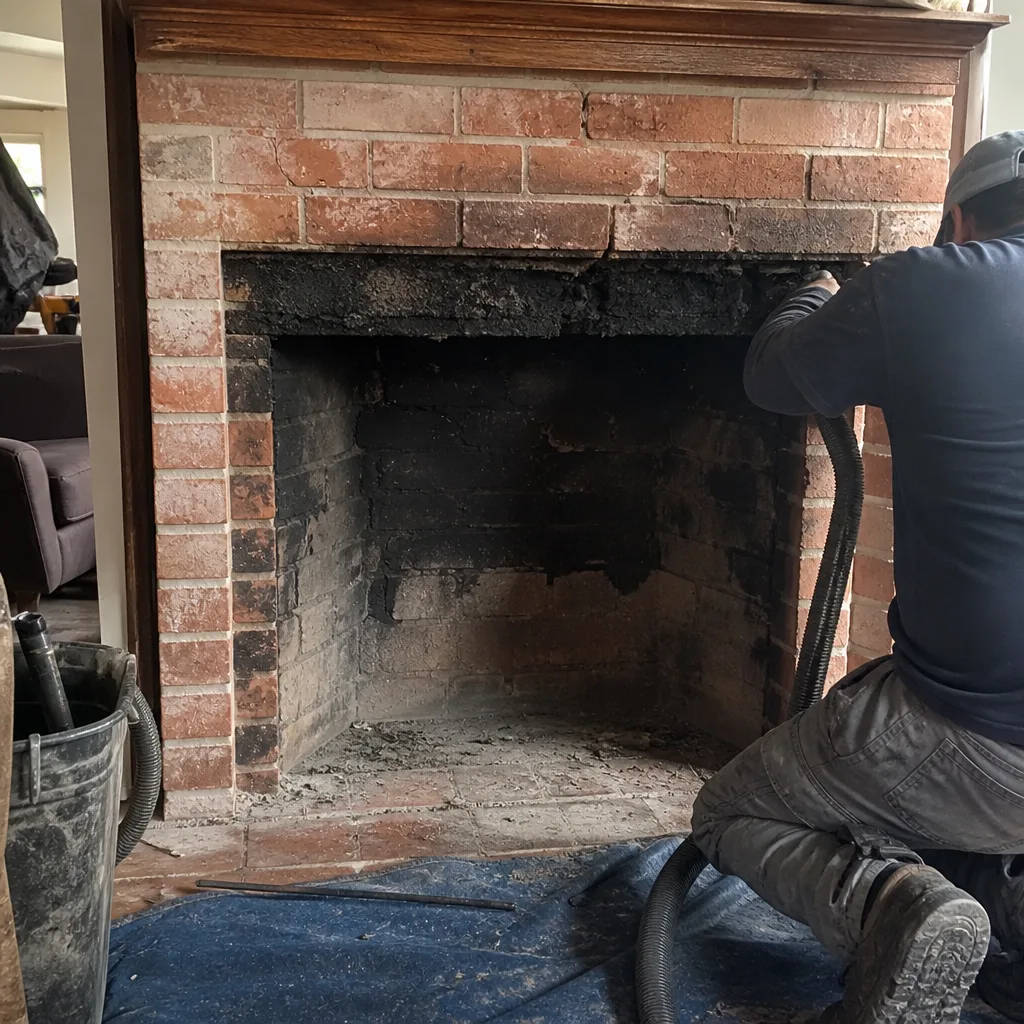
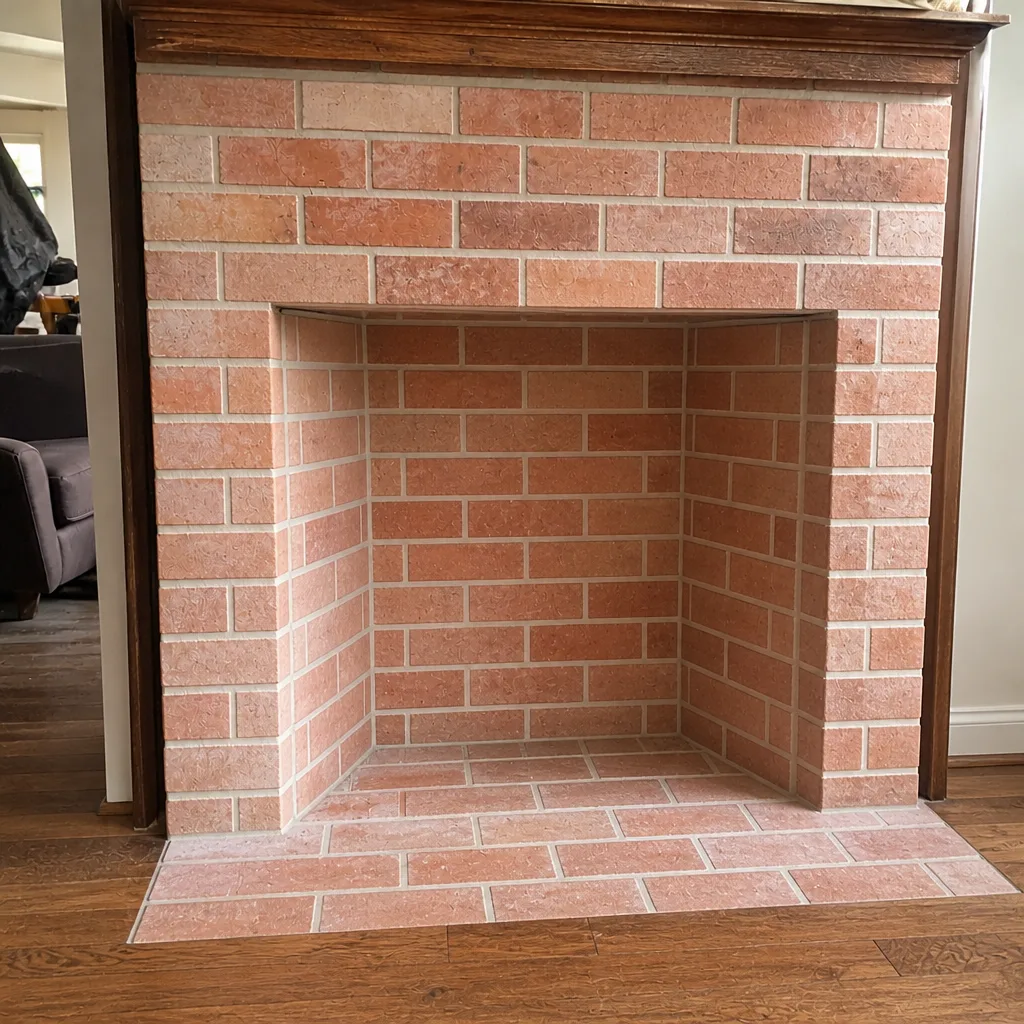
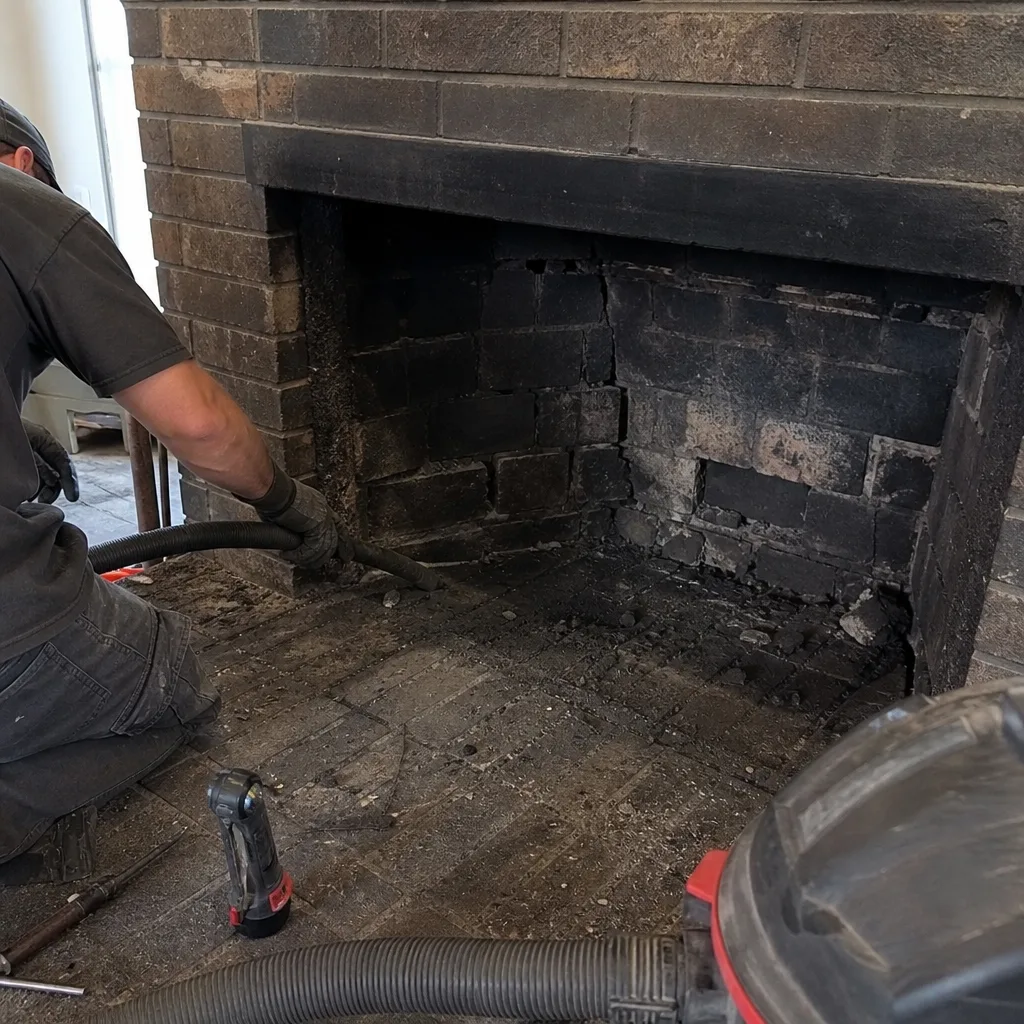 Before
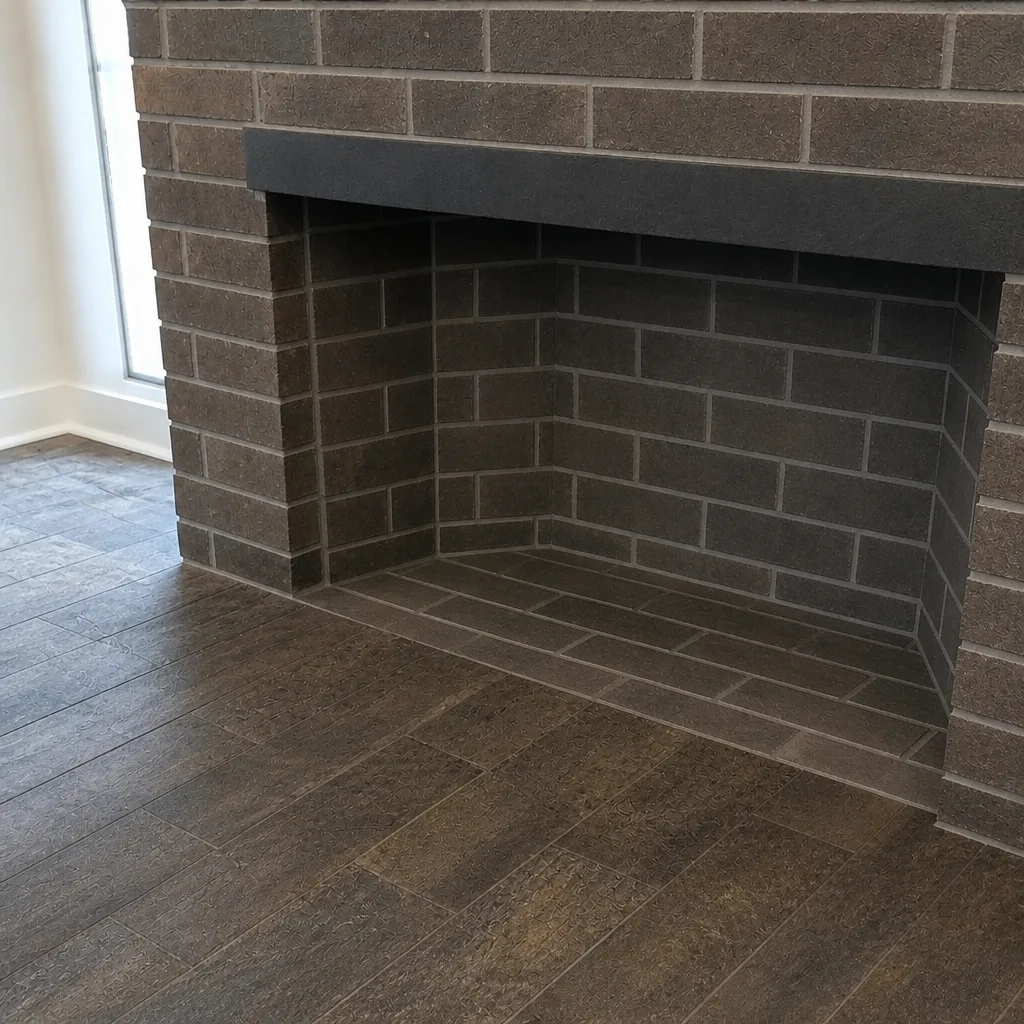 After
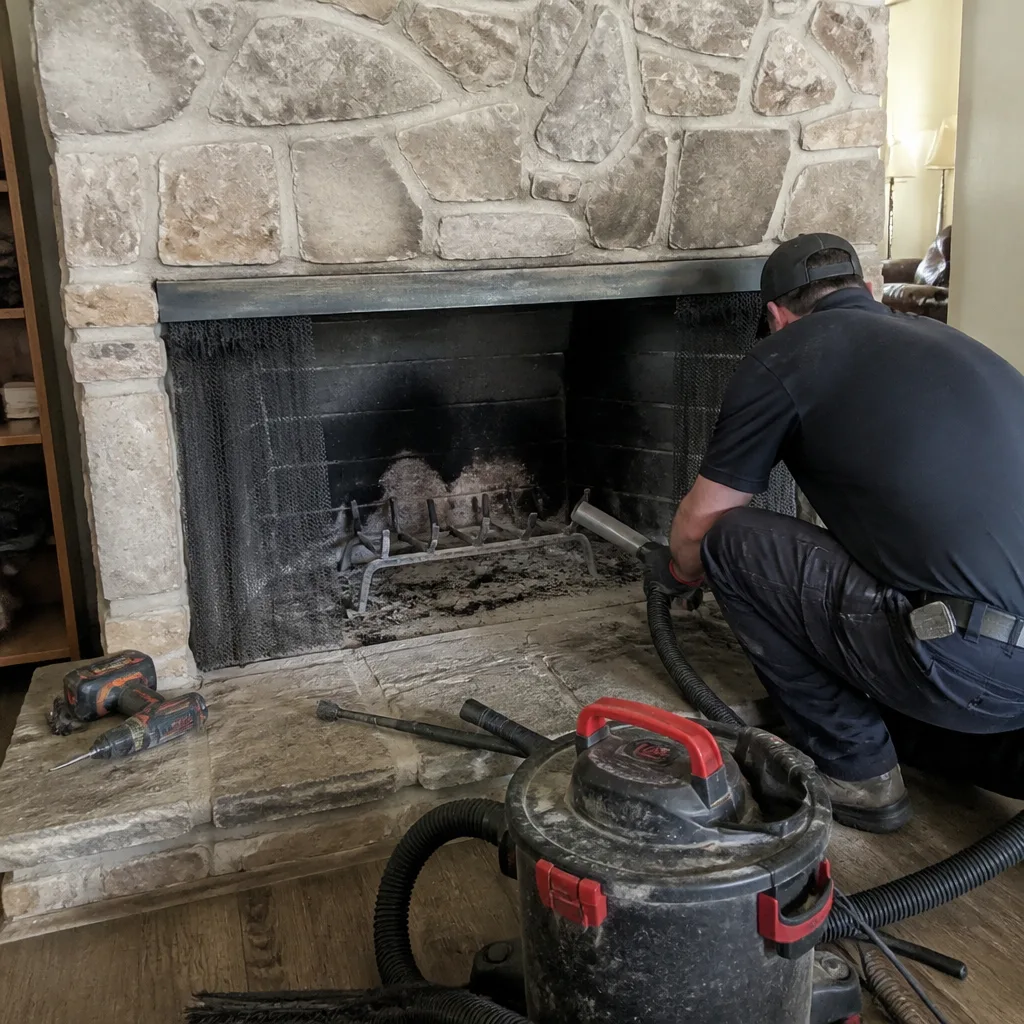 Before
 After
 Before
 After
Common Mistakes to Avoid
- Brushing a flue you haven’t inspected. The brush goes in blind, and a cracked clay tile can widen into a real repair. Book a camera inspection before you buy the kit.
- Using a wire brush on a stainless liner. Wire bristles are for clay and masonry; a stainless liner wants a poly brush. The wrong brush scratches the liner surface, and that’s a problem you created.
- Assuming a clean-looking firebox means a clean flue. The soot that matters is up the flue and on the smoke shelf, not in the firebox you can see. The inspection is the answer, not the view.
- Skipping the sweep because the fires “burned fine.” A chimney can vent correctly and still have stage two creosote glazed on the liner. Draft is not a cleaning test.
- Calling the first contractor without asking about the inspection. A sweep-only appointment with no camera inspection misses the diagnosis that makes the visit worth it.
- Chasing a rock-bottom price. A cut-rate sweep is often a cut-rate inspection. Ask what the price includes, and check whether a photo report comes with it.
- Ignoring a two-story roof because the ladder “will reach.” Reach and control are different problems. If the roof makes you hesitate, and the flue isn’t a clear single-story case, that’s the line.
When to Call a Professional
Call a professional when any of the following is true: the flue is clay tile, offset, two-story, or uninspected; the chimney has a gas insert; you smell smoke when the fireplace is cold, get a weak draft, or see soot falling into the firebox; or you can’t answer the six questions in the decision matrix with confidence. Call us for a free estimate. We’re licensed and insured, we bring a camera inspection and a photo report with every visit, and the price is flat and agreed before booking. Lewisville Chimney Sweep offers free estimates in Lewisville. Call (888) 424-2086. We answer 24/7. Fast dispatch from 7am to 7pm, Sunday through Friday. If the work can safely wait, we’ll say so, and you’ll have the report to prove why.
Frequently Asked Questions
Only if your flue is straight, single-story, stainless, and recently inspected, with a stable roof and no gas insert. A hardware-store brush kit works on that narrow case, but it can’t inspect the liner, clear the smoke shelf, or remove stage two creosote. If you don’t know your liner type or condition, a professional sweep is the safer call.
It’s a flat price per job, agreed before booking, and the written estimate sets the final number. That price includes a camera inspection and a photo report, which is what makes it worth more than a brush kit. Call (888) 424-2086 for an exact quote; estimates are free.
It can’t assess liner condition, remove stage two or stage three creosote, clean the smoke shelf properly, check the damper, or detect a compromised venting path. Those are the jobs that need a camera and an inspection. Brush kits remove loose soot; they don’t diagnose the flue.
Many policies require reasonable maintenance and support claims with documentation, and that documentation includes sweep and inspection records. Without a professional inspection on record, a chimney fire claim can be reduced or denied depending on the policy and the circumstances. The report is the record. That’s the practical reason to have one.
Most households are fine with an annual sweep and inspection, and heavy users may need more. If you burn softwood, unseasoned wood, or burn at low air settings, plan on a check earlier. The inspection tells you what’s actually there, which is more useful than a rule of thumb.
Creosote builds up, and a stage two or stage three deposit is the fuel a chimney fire needs. A compromised flue can also vent carbon monoxide into the home instead of up the chimney. Skipping a year is usually fine; skipping several, on an uninspected flue, is the risk this guide is trying to address.
The Bottom Line
DIY chimney brushing is technically possible for a straight, single-story, stainless flue in known-good condition, and for that narrow case, it’s a rational choice. For most Lewisville homes with clay tile liners, offset flues, or two-story heights, the brush can cause the damage it’s meant to prevent, and it never gives you the diagnosis you need. The five-year cost is close either way, the equipment buys the cleaning but not the inspection, and a professional inspection is often the record your insurer will want. The decision is about knowing what’s in the flue before you brush it. Our technicians have up to 14 years of experience, and we’re happy to walk you through what we find.
Call (888) 424-2086 for a free estimate. We answer 24/7. Fast dispatch from 7am to 7pm, Sunday through Friday. If you want to start with the basics, our Lewisville Chimney Sweep page is the place to begin, and our Lewisville service area page covers what’s typical for homes here. For the cleaning itself, our chimney sweep service is where to start, and when the inspection finds a repair, our chimney repair team takes it from there.
Written by the team at Lewisville Chimney Sweep.