
Last updated November 15, 2026
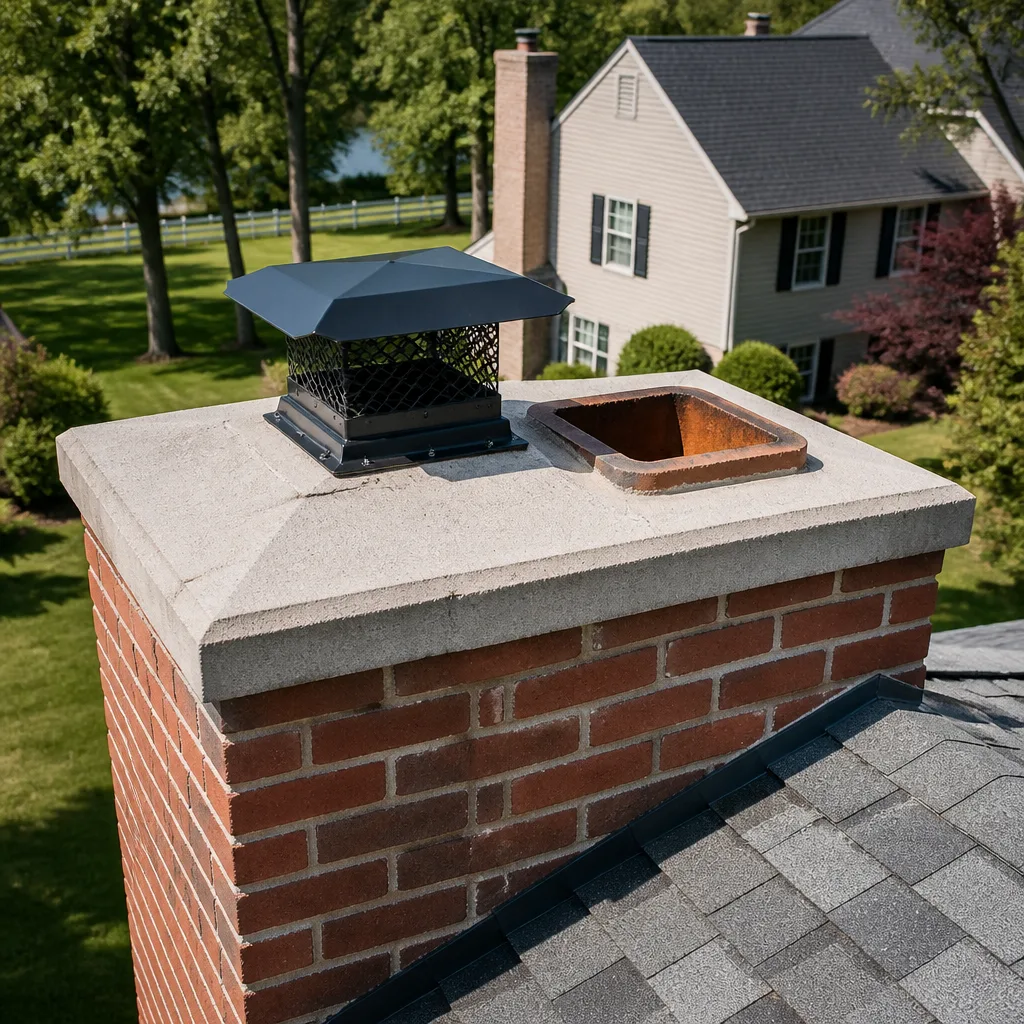 Sweep & inspection
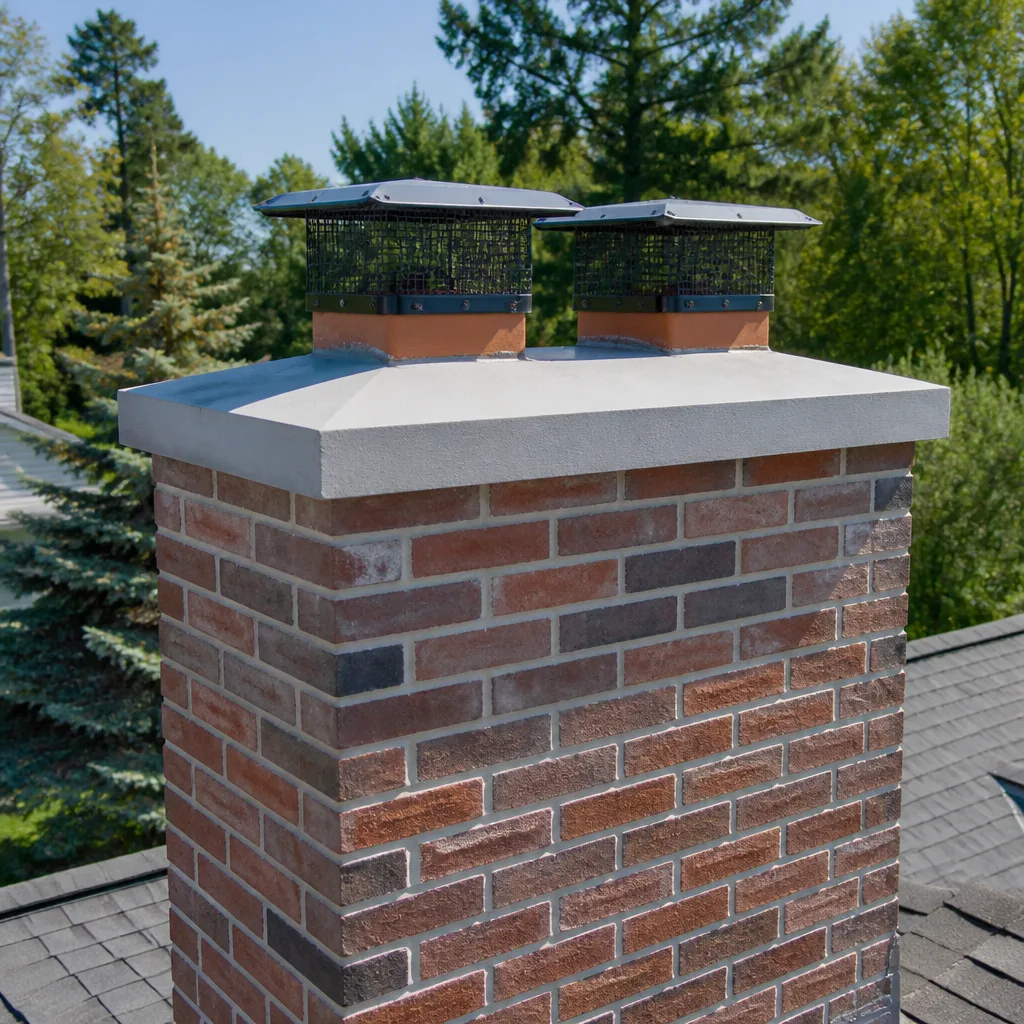 Caps & crowns
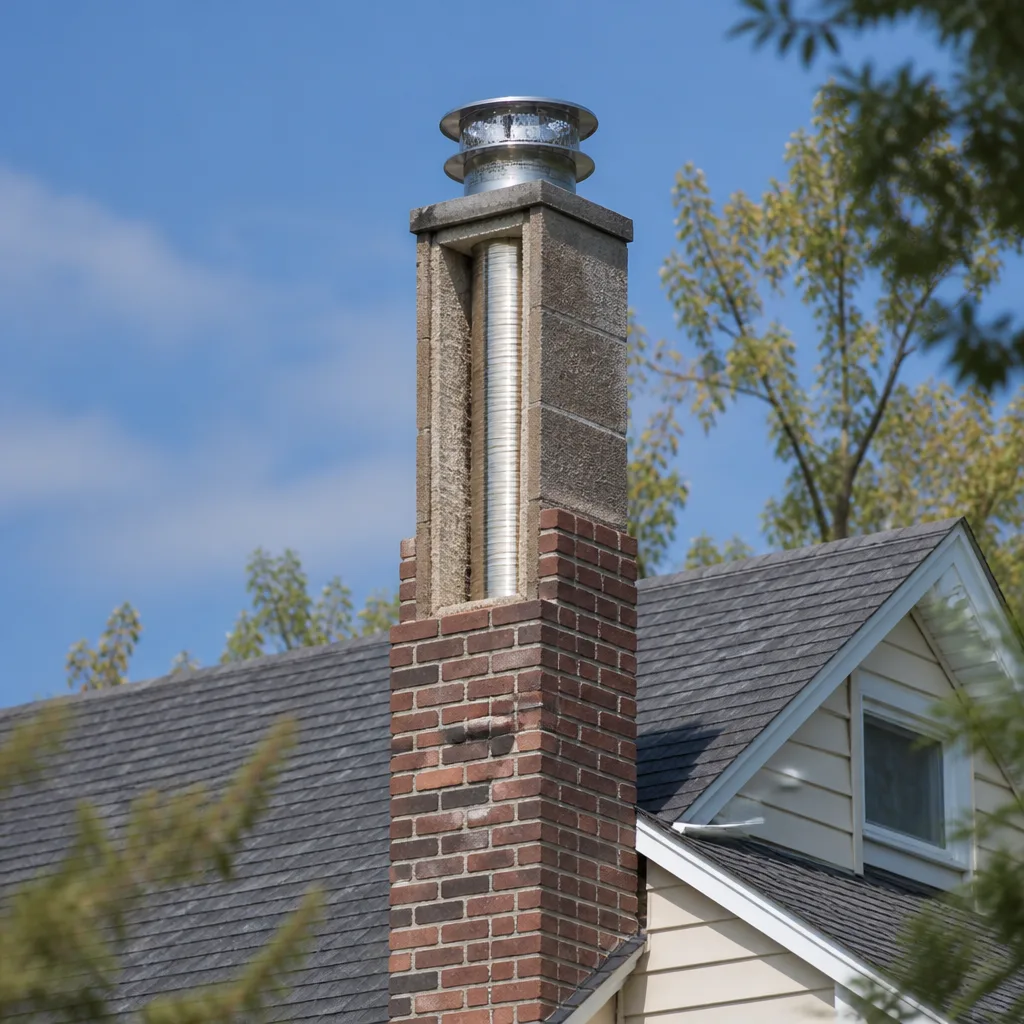 Flue relining
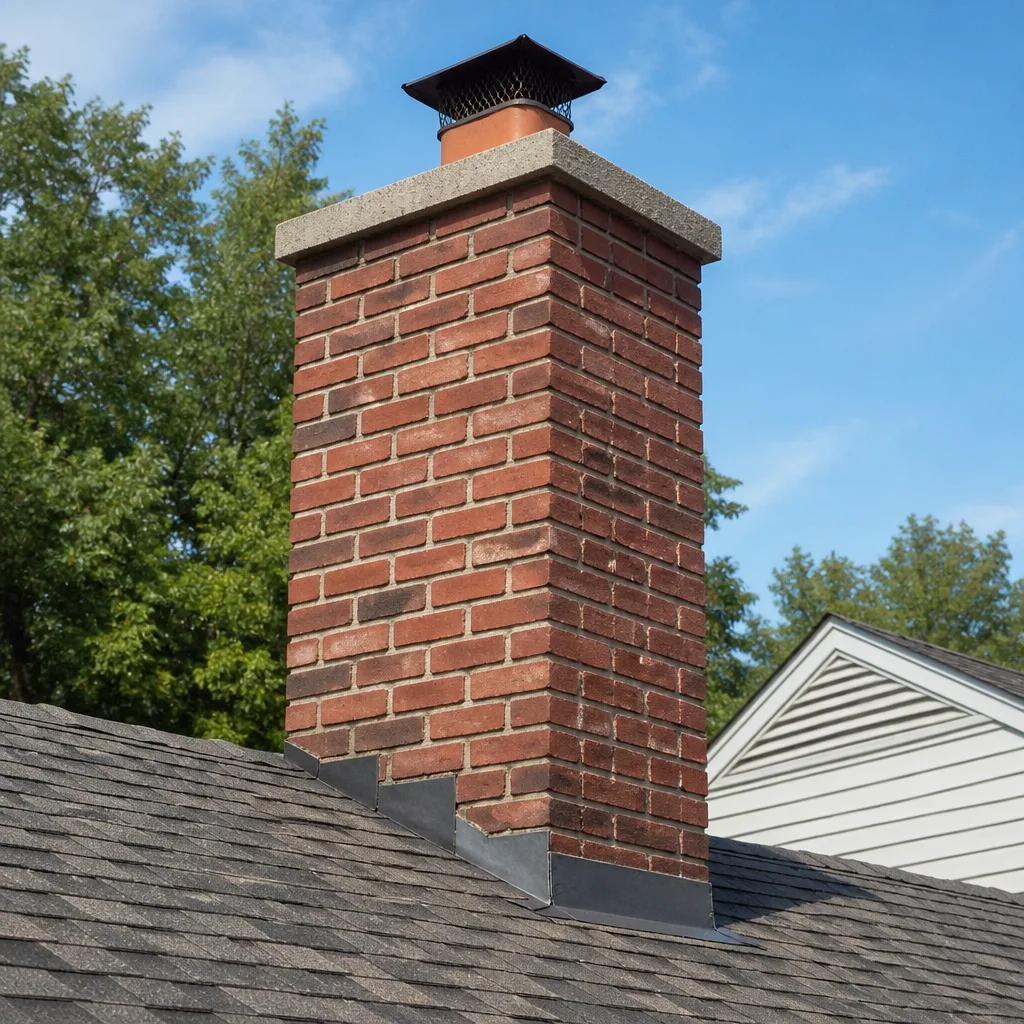 Masonry repair
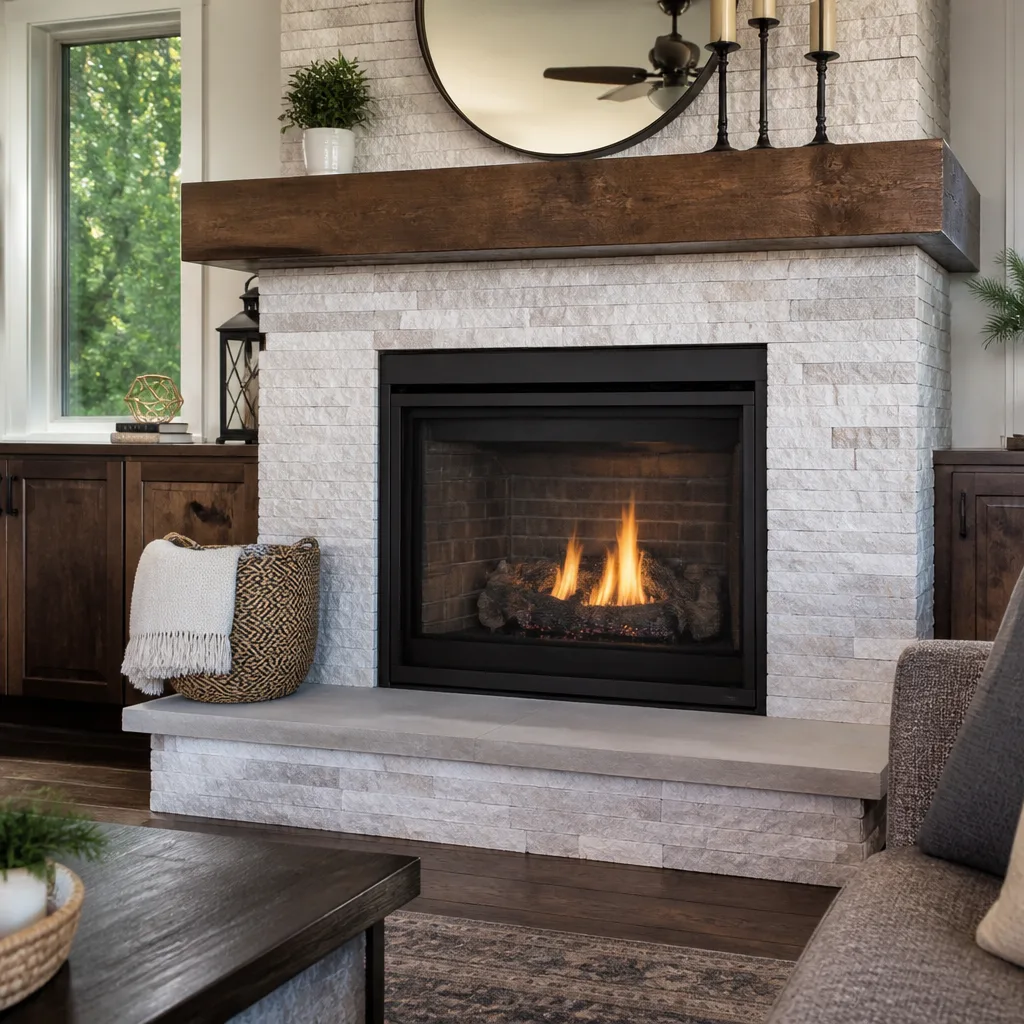 Gas fireplace service
Level 1 sweep and inspection to the NFPA 211 annual standard - flue, crown, cap, and flashing checked and photographed
Chimney sweep logs do not sweep chimneys. They loosen some creosote - which then falls where a brush and vacuum still have to collect it.
How to Hire a Chimney Cleaning Contractor in Lewisville: A Step-by-Step Guide
Texas does not license chimney sweeps. That means the person showing up at your door could be a CSIA-certified professional or someone who bought a brush set last month, and your invoice won’t tell you which. Most homeowners in Lewisville hire on price and a friendly phone voice, then discover months later that no one actually inspected the flue. This guide gives you a vetting framework built on what a contractor can explain, not what they claim. You’ll learn how to verify certification, which technical questions expose a generalist, and what a real post-service report looks like.
Quick Answer
To hire a chimney cleaning contractor in Lewisville, verify CSIA certification on the Chimney Safety Institute of America’s public database, ask five specific technical questions about inspection levels and repair materials, and confirm the quote includes a documented inspection report with photos. A qualified sweep will explain NFPA inspection levels and name the materials they use for repairs. A generalist will deflect. Price should never be your only filter, because in a market with no state licensing, similar prices can hide very different qualifications.
Styles & brands we work with
- Sweep & inspection
- Caps & crowns
- Flue relining
- Masonry repair
- Gas fireplace service
Table of Contents
- Why Texas Doesn’t License Chimney Sweeps (and What That Means for You)
- What CSIA Certification Actually Means and How to Verify It in Two Minutes
- The Five Technical Questions to Ask Before Booking
- Why “We Do Chimneys Too” Contractors Cost You Later
- Red Flags in Chimney Cleaning Quotes
- What a Legitimate Post-Service Report Should Include
- Step-by-Step: The Hiring Process From First Call to Final Report
- Lewisville-Specific Considerations
Why Texas Doesn’t License Chimney Sweeps (and What That Means for You)
Texas has no state-level licensing requirement for chimney sweeps. There’s no state exam, no state registry, and no license number to check. A general contractor with a brush kit and an LLC filing can legally advertise chimney cleaning in Lewisville alongside a technician who holds CSIA certification and has spent years learning flue dynamics. Both can charge roughly the same amount. The invoice looks identical.
This is the single most important fact in this guide. In states with licensing, the license itself filters out the least qualified operators. In Texas, that filtering job falls entirely on you as the homeowner. The good news is that the industry does have a credible voluntary credential, and it’s verifiable in about two minutes. The bad news is that many homeowners never think to check it.
What makes this harder in Lewisville specifically is the housing mix. The city has a real spread of older masonry chimneys, mid-century brick fireplaces, and newer construction with factory-built systems and gas inserts. Each type demands different knowledge. A sweep who’s only ever brushed a straightforward masonry flue may not know how to assess a factory-built system’s clearances, or how to recognize the early signs of a failed liner in an older home near Old Town. Generalists often don’t know what they don’t know, and that’s the risk you’re managing when you hire.
What you’re really vetting for is a contractor who can look at your specific chimney and explain what they see. That’s the standard this guide holds every candidate to.
What CSIA Certification Actually Means and How to Verify It in Two Minutes
CSIA certification is the closest thing the chimney industry has to a meaningful credential. The Chimney Safety Institute of America is a nonprofit that tests and certifies chimney sweeps, and the certification requires passing a written exam, agreeing to a code of ethics, and completing continuing education to maintain it. It’s not a one-time badge. It has to be renewed.
Here’s how to verify a contractor’s certification in under two minutes:
- Go to the CSIA website and open the “Find a Professional” or public database search.
- Enter the contractor’s name, or the company name if that’s what you have.
- Confirm the certification is current, not expired, and matches the company you’re actually hiring.
- If the person on the phone claims certification but doesn’t appear in the database, ask for their certification number directly. A certified sweep has one and won’t hesitate to share it.
The word “certified” gets used loosely. Some contractors are certified by other organizations, and some use the term to mean they attended a weekend course. Ask specifically about CSIA, and ask whether the individual technician doing the work is certified, not just the company owner. In our experience, a genuinely certified sweep welcomes the question because it separates them from the handymen competing for the same jobs.
The CSIA also publishes standards around inspection levels, which ties directly into the next section. A certified sweep will speak fluently about the difference between a Level 1, Level 2, and Level 3 inspection, because it’s part of what they were tested on. If you want to understand how inspection fits into the broader service picture, the chimney sweep page covers what a standard visit includes.
The Five Technical Questions to Ask Before Booking
These five questions separate a specialist from a generalist faster than any review or price quote. Ask them on the phone before you book. A knowledgeable answer will be specific. A deflection will be vague or change the subject.
1. “What NFPA inspection level will you perform, and why?”
A qualified sweep will explain that a Level 1 inspection is a visual check of readily accessible portions of the chimney with the standard tools, appropriate when the appliance or fuel type hasn’t changed. A Level 2 adds a video camera scan of the flue interior and is standard when you’ve bought a home, changed appliances, or had a chimney fire. A Level 3 involves opening concealed areas and is used when a problem requires access behind walls. If the answer is “we just clean it,” that’s a generalist.
2. “Do you include a camera inspection, or is that extra?”
The right answer explains that a camera scan is part of a proper Level 2 inspection and that you’ll see the footage. A sweep who never mentions a camera is likely doing surface cleaning only, which can miss a cracked liner entirely.
3. “What brands of liner and repair materials do you work with?”
This is where material literacy shows. A specialist will name professional-grade materials like a DuraFlex flexible liner system or HeatShield flue resurfacing, and can explain which is appropriate for your flue type. A generalist typically says they “can get whatever’s needed,” which often means a commodity liner spec’d incorrectly.
4. “What does the report look like when you’re done?”
Ask for specifics: photos, findings documented by inspection level, material recommendations with brand names. If the answer is “we’ll tell you what we found,” press for whether it’s written and whether it includes images.
5. “What qualifies you to recommend a repair over a cleaning?”
This tests whether they diagnose or just upsell. A good answer references observable evidence: a video scan showing spalling, a draft measurement indicating negative draft, visible creosote at stage two or three. A deflection here is your cue to look elsewhere.
When a contractor answers all five with substance, you’re dealing with someone who can handle chimney repair as well as cleaning, which matters because the two are connected.
Why “We Do Chimneys Too” Contractors Cost You Later
A generalist contractor often lacks access to professional-grade repair materials. That sounds like a small thing until a repair is actually needed. If your flue has an oversized or damaged liner, the fix isn’t a generic stainless tube; it needs the right flexible liner system specified for your flue dimensions and appliance. A sweep who only brushes and subcontracts repairs will either pass the job to someone else or install a commodity liner that may not fit properly.
Consider what material literacy means in practice. A specialist works with brands like DuraFlex for flexible stainless liner systems, HeatShield for ceramic flue resurfacing, and Olympia Chimney and Gelco for related components. HeatShield, for example, is a resurfacing process that can restore a deteriorated flue without a full liner replacement in the right conditions. A generalist almost never carries or spec’s this kind of material, because it requires training and a supply relationship they don’t have.
The cost of that gap shows up later. A liner installed incorrectly, or one that’s undersized for the flue, can lead to draft problems, premature failure, and a second repair bill sooner than expected. The initial invoice looked competitive. The follow-up work doesn’t.
The other problem is coordination. When sweep, inspection, and repair live at three different companies, you become the project manager. One crew cleans, another inspects, a third repairs, and none of them see the whole system. Because a sweep without an inspection misses hidden deterioration, the full-service approach, where one qualified contractor handles all three steps, closes that gap. If you want to understand the repair side before you hire, our Lewisville Chimney Sweep overview explains how the services fit together.
Red Flags in Chimney Cleaning Quotes
A quote is a window into how a contractor thinks. These red flags should make you slow down, even if the price looks attractive.
- Vague line items. “Chimney cleaning: $X” with nothing else tells you the quote doesn’t include inspection findings. A legitimate quote breaks out cleaning, inspection level, and any camera scan separately, or states clearly that all three are bundled.
- No mention of inspection level. If the quote never references Level 1, 2, or 3, the contractor either doesn’t know the standard or is skipping it. Either one should concern you.
- Unusually low flat rates. A rate well below the local norm often means surface brushing without a camera scan, or a sales visit designed to upsell repairs on the spot. In a market with no licensing, the cheapest quote is frequently the least qualified.
- Pressure to approve repairs before you’ve seen evidence. A contractor who names a large repair before showing you footage of the problem is selling, not diagnosing. You should always see what they see.
- No brand names in the conversation. When you ask about liner materials and the answer is vague, they likely don’t have access to professional-grade products.
- Refusal to provide a written report. Documentation is standard for a qualified sweep. Reluctance to commit to one in writing is a strong signal.
- Certification claims that don’t check out. If they claim CSIA certification and you can’t find them in the database, take that seriously.
None of these red flags requires you to become an expert overnight. They’re simply questions and observations that reveal whether the contractor is operating at a professional standard. If you’re weighing a quote against the alternative of a specialist, the Lewisville service area page shows how a proper visit is structured.
What a Legitimate Post-Service Report Should Include
A real report is the paper trail that protects you, and it should be specific enough that a second contractor could pick it up and understand exactly what’s happening in your chimney. If a sweep hands you a handwritten receipt with “cleaned” on it, you don’t have a report.
A legitimate post-service report should include:
- Photos or video captures of the flue interior before and after cleaning, so you can see what was found.
- Findings documented by NFPA inspection level, with the level explicitly named and the scope described.
- Condition notes on specific components: the liner, the crown, the mortar joints, the damper, and the firebox, with any spalling mortar joints or deterioration called out.
- Creosote assessment, including the stage observed (stage one, two, or three) and where it accumulated.
- Draft observations, including whether the chimney showed signs of negative draft or poor draw.
- Material recommendations with brand specifics where a repair is advised, such as a DuraFlex flexible liner system or HeatShield flue resurfacing, and an explanation of why that material suits your flue.
- A clear statement of what can wait and what needs attention before the next heating season.
That last point matters. Not every finding requires immediate work. A qualified contractor will tell you plainly when something can safely wait, and a report that documents the condition lets you make that decision yourself rather than taking it on faith. The photos are the key: you shouldn’t have to trust a verbal claim about what’s inside a flue you can’t see.
Step-by-Step: The Hiring Process From First Call to Final Report
Here’s the full process, in order. It takes a little effort up front and saves considerably more later.
- List two or three candidates. Include at least one specialized chimney company and, if you like, a generalist for comparison. Keep the pool small so you can vet each properly.
- Verify CSIA certification. Check the public database for each candidate before you call. Note whether the certification is current and whether the individual technician is certified.
- Ask the five technical questions on the phone. Listen for specifics: inspection levels, camera scans, brand names, written reports, and how they diagnose repairs. Vague answers are your filter.
- Request a written quote. It should break out cleaning, inspection level, and camera scan, and state clearly what’s included. Watch for the red flags above.
- Confirm what happens after the sweep. Ask whether the inspection report is included by default or is a separate step. In a full-service operation it’s part of the same visit.
- Schedule the visit. Call (888) 424-2086. We answer 24/7. Fast dispatch from 7am to 7pm, Sunday through Friday.
- Review the report when the work is done. Confirm you have photos, inspection-level documentation, and any material recommendations in writing before you consider the job closed.
A note on that last step: if a repair is recommended, you should see the evidence in the report, not just hear about it. That’s the whole point of a documented process. The written estimate sets the final price, and nothing should be added without your approval and a clear reason.
Lewisville-Specific Considerations
Lewisville sits in a part of North Texas with mild winters, which changes how chimneys age here compared to colder regions. The freeze-and-thaw stress that dominates chimney deterioration in northern states isn’t the primary driver in Lewisville. What you see more of is the gradual wear from seasonal use, moisture intrusion during heavy spring rains, and the accumulated creosote that builds when a fireplace is used steadily through the cooler months. That creosote matters: at stage two or three, it’s the fuel for a chimney fire, which is why a sweep that stops at surface cleaning misses the real risk.
The housing stock matters too. Older masonry chimneys around Old Town and established neighborhoods often have mortar joints that have begun to spall after years of weather exposure, and liners that have quietly deteriorated inside walls nobody’s looked behind. Newer construction with factory-built systems and gas inserts needs a contractor who understands clearances and appliance-specific venting. A generalist who’s only comfortable with one type will be out of their depth on the other.
Because Texas doesn’t license sweeps, the Lewisville market includes the full range: CSIA-certified specialists, experienced generalists, and operators who bought a brush kit and started advertising. The prices they charge can look similar. The vetting framework in this guide is how you tell them apart before you book, not after. If you’d like a straight answer about your system, our chimney repair team can walk you through it.
Common Mistakes to Avoid
- Hiring on price alone. In an unlicensed market, the lowest quote is often the least qualified. A low rate usually means no camera scan and no written inspection report.
- Assuming “certified” means CSIA-certified. Ask specifically and verify it on the public database. Other credentials and weekend courses get marketed as certification.
- Skipping the inspection when you book a cleaning. A sweep without an inspection misses hidden deterioration, cracked liners, and stage two or three creosote. Confirm the inspection is part of the visit.
- Not asking what materials a repair would use. If you can’t get a brand name, you likely can’t get a properly spec’d liner. Ask before you book, not after a problem appears.
- Accepting a verbal report. Without photos and documentation by inspection level, you have no way to verify what was found or whether a repair is really needed.
- Letting an urgent-sounding pitch override evidence. If a contractor names a costly repair before showing you footage, slow down. Good work can usually be scheduled; a rushed decision often can’t be undone.
- Waiting until the first cold snap. Booking a sweep during the off-season lets you vet properly and get on the schedule without pressure. For a Lewisville homeowner, that’s usually early fall rather than the first cold week.
See the difference
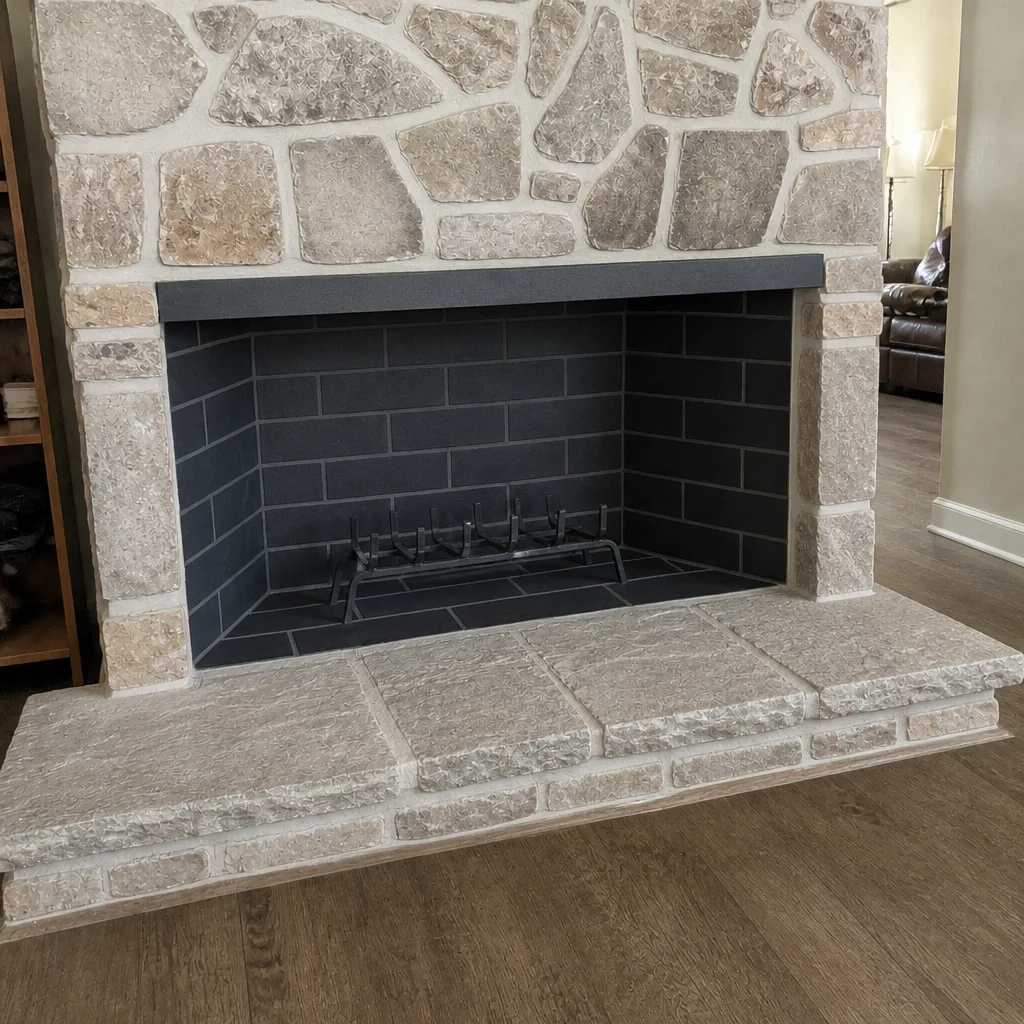
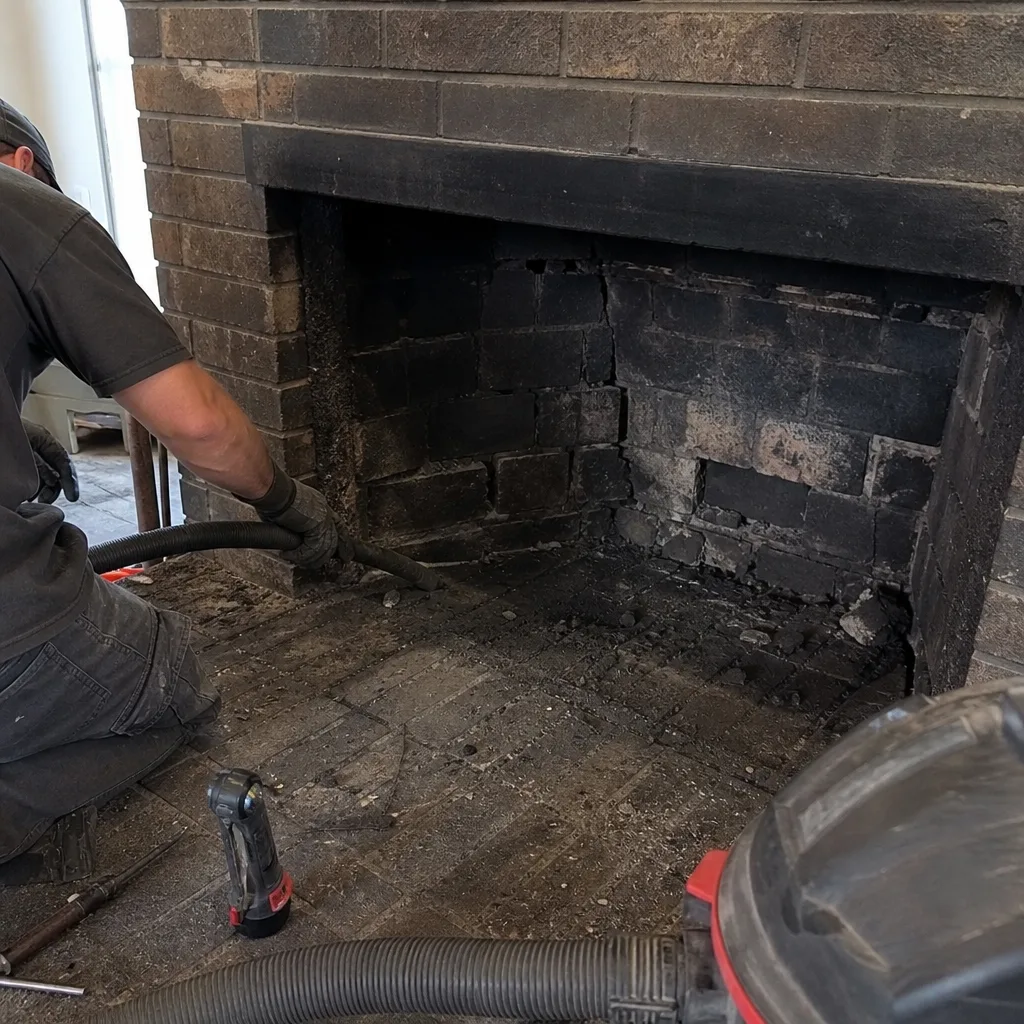 Before
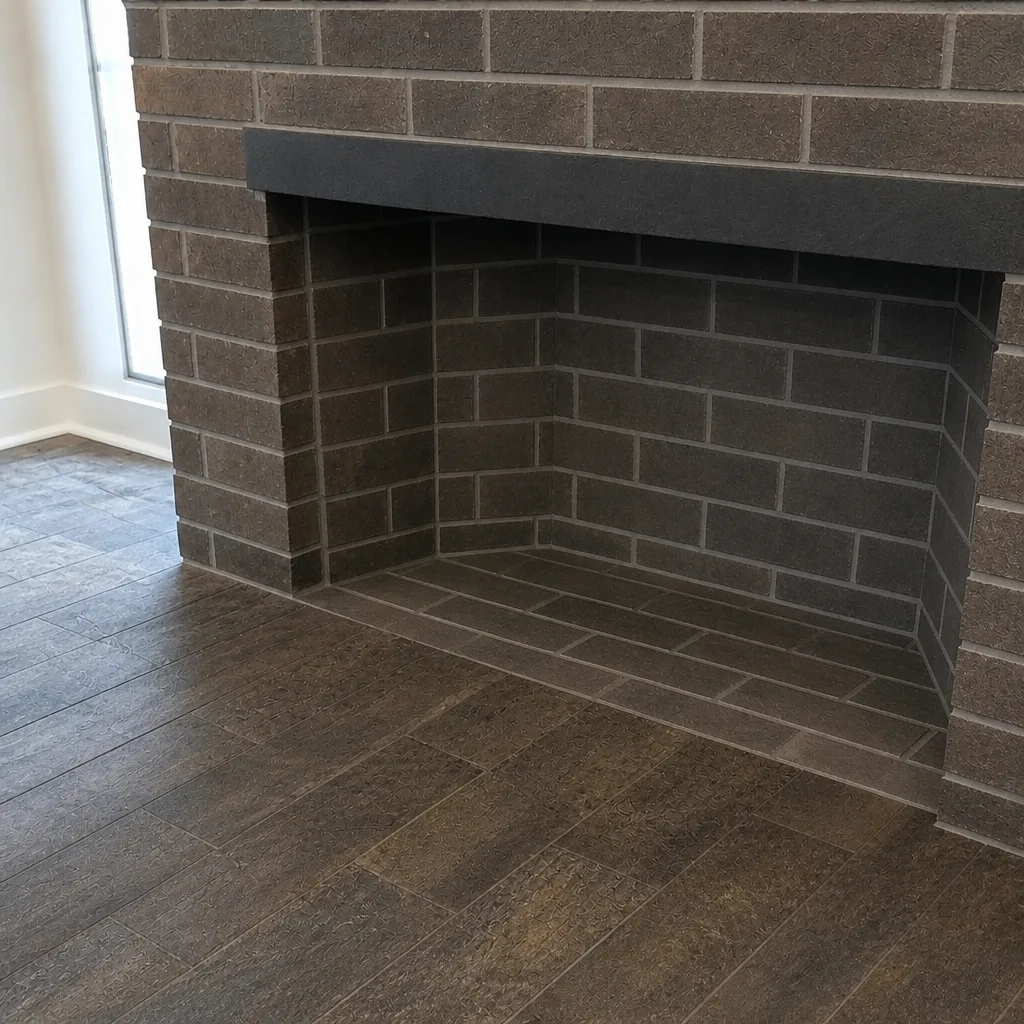 After
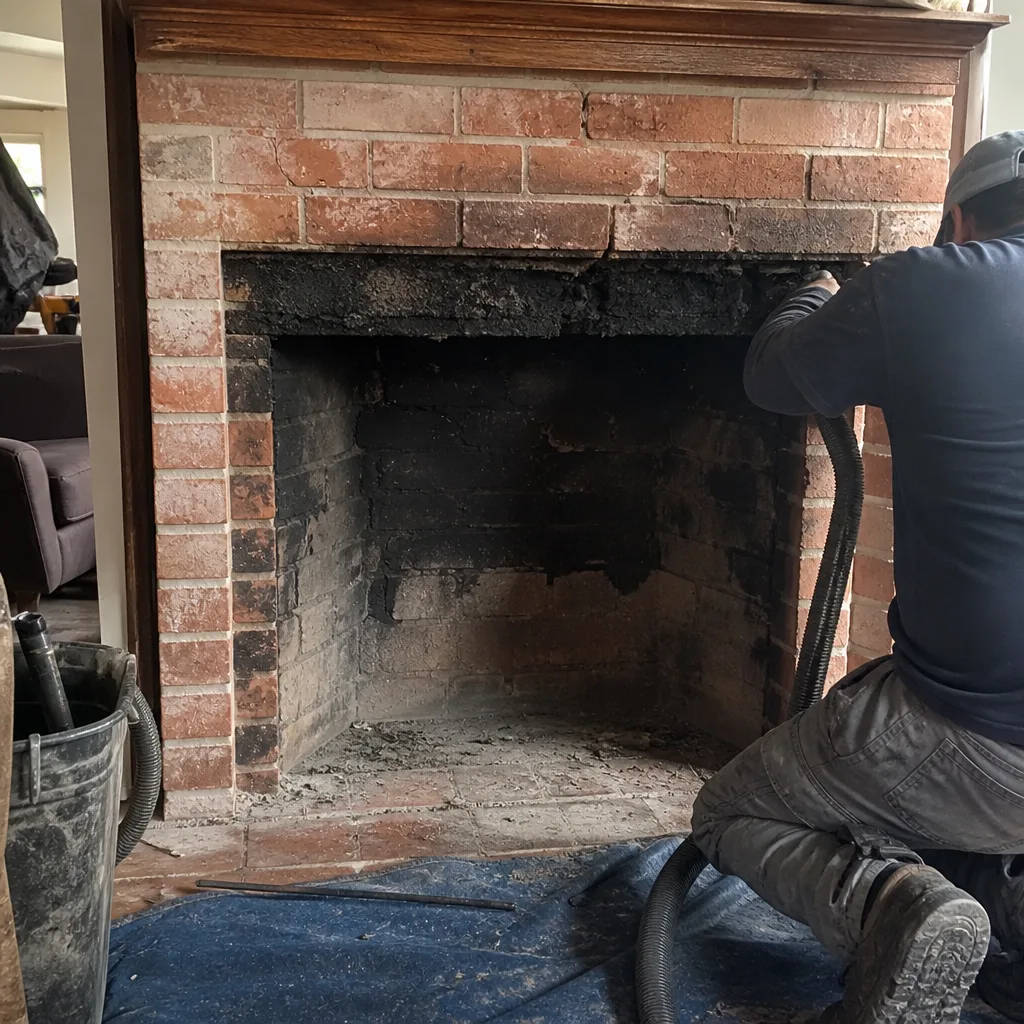
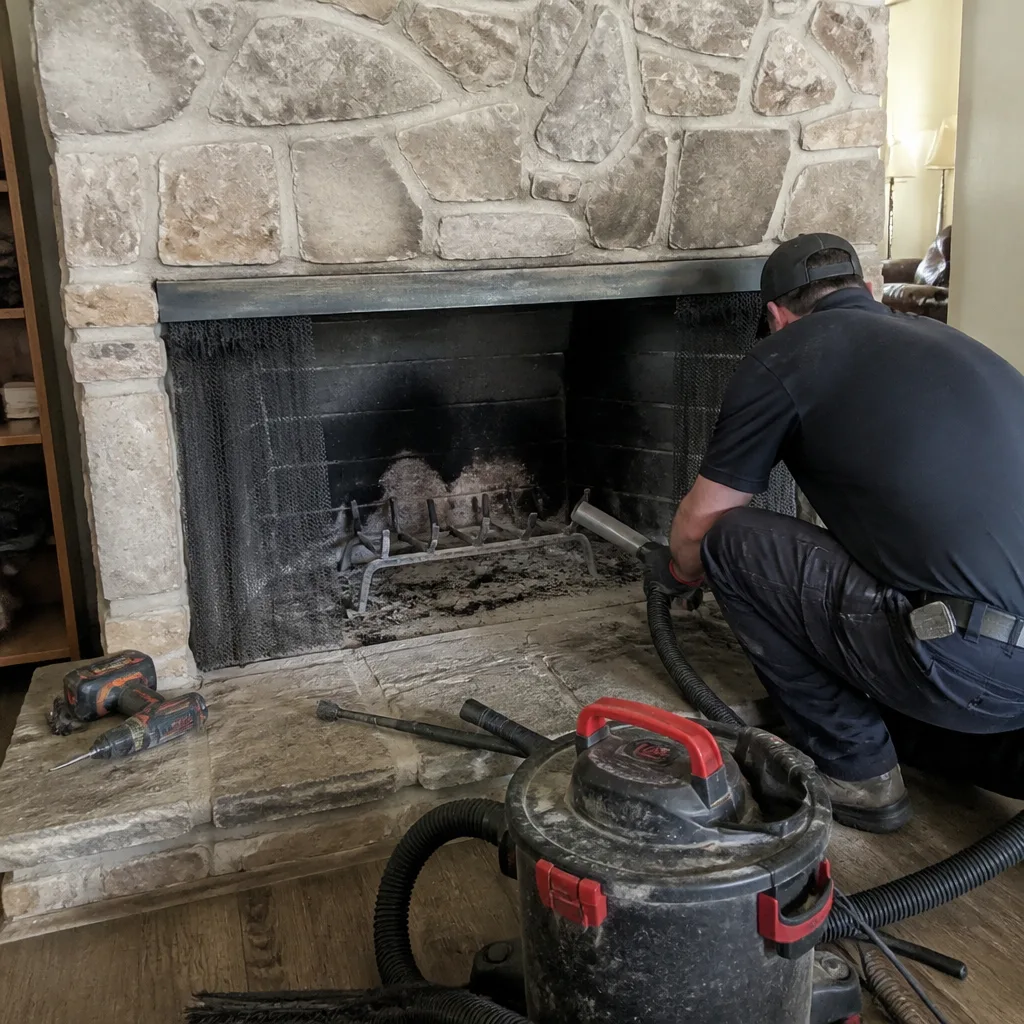 Before
 After
 Before
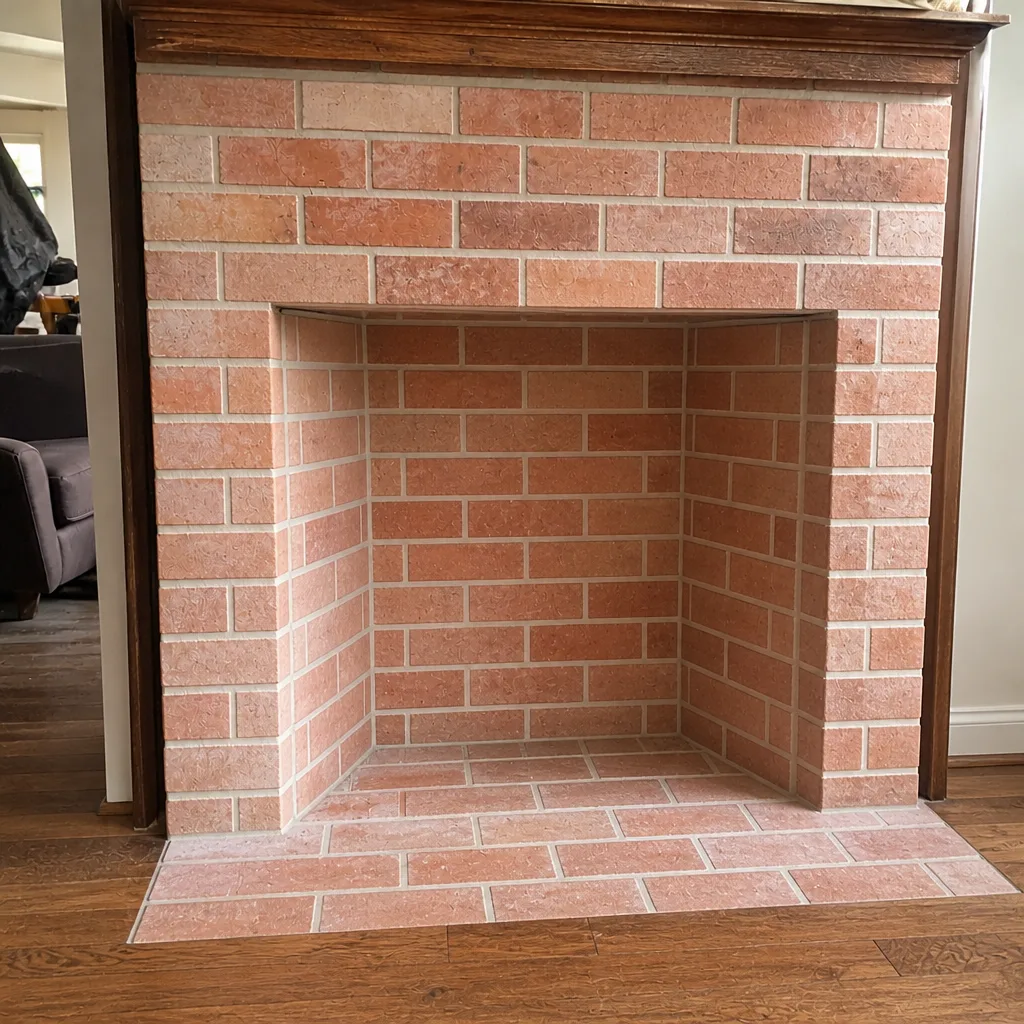 After
When to Call a Professional
Some situations call for a certified sweep rather than a generalist, and some call for one right away. If you’ve just bought a home with a fireplace and no record of a recent inspection, book a Level 2 with a camera scan before you use it. If you smell a strong, acrid odor even when the fireplace isn’t in use, or you see dark, glazed creosote on the flue walls, that’s stage two or three buildup and worth a professional look. If smoke rolls back into the room when you light a fire, negative draft may be the cause. After any chimney fire, even a small one, a Level 2 inspection is standard. And if it’s simply been a few seasons since the last sweep, a qualified visit now is cheaper than a repair later. Lewisville Chimney Sweep offers free estimates in Lewisville. Call (888) 424-2086.
Frequently Asked Questions
No. Texas has no state-level licensing requirement for chimney sweeps, so there’s no state license number to check. That’s why verifying CSIA certification on the public database is the most reliable vetting step available to a Lewisville homeowner. It takes about two minutes and separates certified specialists from generalists.
Pricing is set per job by a written estimate, and it depends on the chimney type, the level of inspection included, and whether a camera scan is part of the visit. Ask for a quote that breaks out each component so you can compare fairly. Call (888) 424-2086 for an exact quote. Estimates are free.
A Level 1 inspection is a visual check of readily accessible portions of the chimney using standard tools, appropriate when nothing about the appliance or fuel has changed. A Level 2 adds a video camera scan of the flue interior and is standard after a home purchase, an appliance change, or a chimney fire. Ask which level your quote includes.
Usually because the contractor doesn’t follow the NFPA inspection standard, or is skipping the inspection to keep the price low. Either way, it’s a red flag. A qualified sweep will name the level and explain what it covers. If the quote is silent on it, ask directly before you book.
Professional-grade materials matter for repairs. A specialist will name brands like DuraFlex for flexible liner systems and HeatShield for ceramic flue resurfacing, along with Olympia Chimney and Gelco for related components. If you can’t get a brand name out of a contractor, they likely don’t have access to properly spec’d materials.
You should receive a written report with photos or video captures of the flue, findings documented by NFPA inspection level, a creosote assessment, any draft observations, and material recommendations with brand specifics where a repair is advised. The report should also state plainly what can safely wait. Call (888) 424-2086 to book a visit. Estimates are free.
The Bottom Line
Hiring a chimney contractor in Lewisville comes down to vetting, because the state doesn’t do it for you. Verify CSIA certification on the public database. Ask the five technical questions and listen for specifics instead of reassurance. Insist on a written report with photos and inspection-level documentation. And don’t let a low rate or a friendly phone voice substitute for a contractor who can explain what’s actually inside your flue. A specialist who can handle sweep, inspection, and repair with professional-grade materials will save you the second repair bill a generalist often creates. The effort up front is small. The difference is real.
When you’re ready to book with a team that works with the materials chimney engineers specify, call Lewisville Chimney Sweep at (888) 424-2086 for a free estimate. We answer 24/7. Fast dispatch from 7am to 7pm, Sunday through Friday.
Written by the team at Lewisville Chimney Sweep.