
Last updated November 15, 2026
 Sweep & inspection
 Caps & crowns
 Flue relining
 Masonry repair
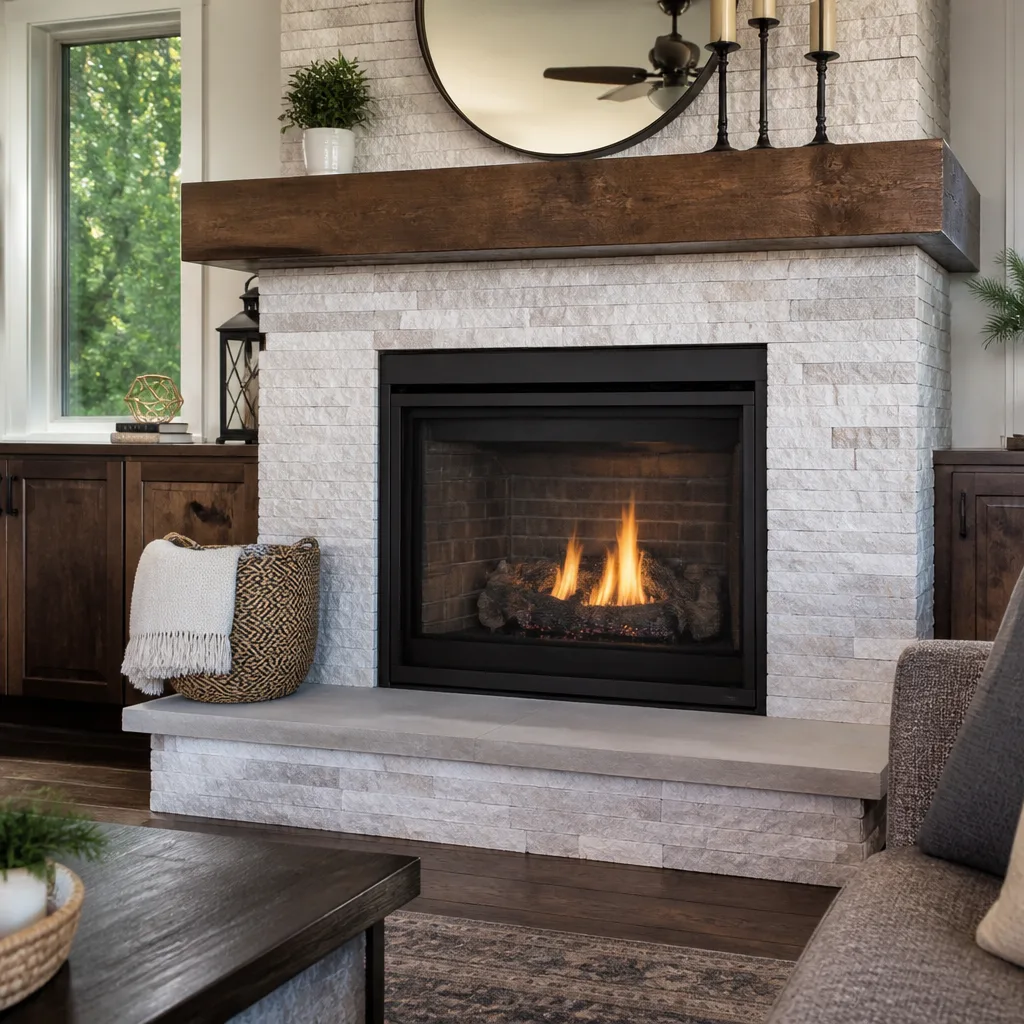 Gas fireplace service
Level 1 sweep and inspection to the NFPA 211 annual standard - flue, crown, cap, and flashing checked and photographed
Chimney sweep logs do not sweep chimneys. They loosen some creosote - which then falls where a brush and vacuum still have to collect it.
Chimney Cleaning Warning Signs: A Lewisville Homeowner’s Reference Guide
A chimney fire doesn’t always announce itself with a roar. Many burn slowly inside the flue at temperatures hot enough to crack liner tiles, and they do it without noise, without smoke spilling into the room, and without any flame you’d ever see from the living room. The only evidence is often a smell you’ve been blaming on something else, or a hairline crack you’d never think to look for. Most homeowners are taught to watch for dramatic symptoms. In our experience, that’s exactly backwards: the signals that matter in a Lewisville chimney are subtle, structural, and readable months before they turn dangerous. This guide teaches you to read your own chimney system the way a technician does, from the firebox to the roofline, so you know what’s cosmetic and what needs attention before your next fire.
Quick Answer
The key chimney cleaning warning signs are an unfamiliar odor from the firebox, cracked or spalling firebrick, rust on the damper or firebox metal, white staining on the brick, a cap or crown that’s cracked or missing, and a fire that’s suddenly harder to light or draws sluggishly. Any one of these points to creosote buildup, water intrusion, liner damage, or draft trouble. If you notice two or more together, it’s worth booking a professional inspection before your next fire.
Styles & brands we work with
- Sweep & inspection
- Caps & crowns
- Flue relining
- Masonry repair
- Gas fireplace service
Table of Contents
- What Your Chimney’s Smell Is Telling You
- Reading the Firebox: Spalling, Efflorescence, and Rust
- Draft Problems as Diagnostic Tools
- Exterior Warning Signs You Can See From the Ground
- Cosmetic Aging vs. Structural Failure
- Creosote Stages and What They Mean for Your Flue
- Lewisville’s Fire Season and Why Timing Matters
- What a Professional Inspection Actually Checks
What Your Chimney’s Smell Is Telling You
Smell is the most underused diagnostic tool a homeowner has, and it’s the one that often catches problems first. Chimney odors aren’t random. Each type of smell generally points to a specific underlying condition, and learning to distinguish them tells you whether you’re looking at simple buildup, water damage, or something that needs a closer look. In Lewisville’s mild winters, a chimney can sit unused for weeks and pick up smells that have nothing to do with fire, so context matters as much as the odor itself.
Musty or damp smells usually mean moisture is getting in. Water can enter through a cracked crown, a missing or damaged cap, or deteriorating mortar, then sit in the flue and mix with creosote or ash to produce a damp, earthy odor that gets stronger on humid days. That musty smell is often the first sign a homeowner has of a water problem, and it’s frequently the thing they’ve been attributing to a basement or an old house.
Acrid or sharp, bitter smells typically point to creosote, especially at higher accumulation stages. Creosote has a distinct, harsh, almost tar-like odor, and it tends to get stronger in warmer weather when the flue is warm and the draft is weak. If the smell is acrid and the firebox shows glaze on the walls, you’re likely looking at stage two or three creosote that needs professional attention.
Sulfurous or rotten-egg smells are less common and more serious. A sulfurous odor can indicate moisture interacting with certain materials in the flue or a blockage trapping decomposing material, and it should never be ignored. It also can signal a gas appliance venting problem if you have a gas insert or a gas fireplace. That’s a life-safety situation, not a “wait and see” one.
Pay attention to when the smell shows up. A smell that appears only during rain points to a leak. One that’s worst on hot, still days points to creosote and weak draft. One that shows up when the fireplace is running points to combustion byproducts not leaving the way they should. The pattern narrows the cause faster than the smell alone.
Why the Smell Gets Worse in Summer
Lewisville summers run hot and humid, and a warm chimney with a cool, weak draft lets odors back into the house. This is a normal season for a chimney to smell, but it isn’t a normal season to ignore one. If the smell is new this year, it’s worth a professional sweep and inspection before fall so the problem doesn’t meet the first fire of the season.
Reading the Firebox: Spalling, Efflorescence, and Rust
The firebox is where you can read the health of your whole chimney system from inside your home, no ladder required. Firebrick, mortar, the damper, and the smoke shelf all give you signals about what’s happening higher up in the flue. Where most homeowners check the firebox for ash, a technician reads it for water, heat damage, and liner failure. This is the section to revisit before each heating season.
Spalling firebrick looks like flaking, peeling, or crumbling brick on the firebox walls or floor. It’s often caused by moisture that has gotten into the brick and expanded during heating, or by thermal stress from repeated hot fires. When firebrick spalls, the protective refractory surface is compromised, and heat can start working on the masonry behind it. A small spall can wait for a scheduled inspection. Deep, widespread spalling needs attention before the next fire.
White efflorescence is that chalky, whitish staining that shows up on brick, especially near the smoke shelf or the damper. It’s a mineral deposit left behind when water moves through masonry and evaporates. Efflorescence itself is harmless, but what it points to rarely is: water is moving through the masonry, and that water can reach the liner, the damper assembly, and the smoke chamber. If you see efflorescence, ask what’s letting moisture in.
Rust on the damper or firebox metal is another moisture indicator. Any metal component in the firebox that’s rusting is telling you there’s enough moisture in the system to corrode steel. A rusted damper can seize open or shut, and a damper that won’t move properly changes how your fire behaves. Rust on the damper should be checked along with the cap and crown on the roof, since the moisture usually starts up there.
A few other firebox signals worth knowing:
- Cracked mortar joints between firebricks, which let smoke and heat reach the masonry behind the firebox.
- Dark streaks or soot patterns on the firebox walls, which can show where combustion gases are escaping rather than heading up the flue.
- A crumbling or disintegrated damper gasket or assembly that no longer seals.
- Ash that stays damp long after the fire is out, which points to a water problem.
These firebox signals are the reason a sweep without an inspection misses things. The sweep cleans the flue, but a firebox check is where liner problems tend to get caught early.
Draft Problems as Diagnostic Tools
Draft is your chimney’s ability to pull smoke up and out, and it tells you more about the health of your system than almost any other symptom. When draft fails, you’ll notice it in one of three forms, and each one points to a different underlying issue. Learning to tell them apart is a genuine skill, and it will save you from calling every draft complaint the same thing.
Downdraft is when air pushes down the chimney and into the room rather than up and out. It often shows up as a cold draft coming from the fireplace when there’s no fire, or a whoosh of smoke when you first light one. Downdraft is usually caused by a chimney that’s too short for the surrounding roofline, an obstructed cap, or a pressure difference in the house. It’s common in homes where the chimney terminates near a taller roofline or an adjacent tree, and it can be worse on windy days.
Sluggish draw or weak draft is when smoke drifts slowly up instead of rising, and the fire is hard to light and burns low. Sluggish draft usually points to a partial blockage, an oversized flue for the appliance, or heavy creosote narrowing the flue. It can also follow a change in the appliance, like adding a gas insert to a flue that was sized for wood. A flue that’s too large loses the heat it needs to drive a strong draft, the same way a room-sized doorway lets heat escape a small room.
Smoke spillage is when smoke comes into the room, at the fireplace opening or through the damper. That’s the most urgent of the three and often the easiest to notice. Spillage can come from a blockage, a damaged liner, a closed or broken damper, or a negative pressure problem in the house tied to exhaust fans and tight construction.
A Simple Draft Check You Can Do Safely
On a cool day, hold a lit match or a thin strip of paper near the open damper with the fireplace door open, and watch whether the smoke or the flame is pulled up and into the flue. If it drifts back into the room or sits still, that’s a draft problem worth investigating. Do not do this with a fire already burning, and do not do it if you smell gas. If the flame pulls strongly and the smoke rises, the draft is at least functioning on that day. This isn’t a substitute for a professional inspection, but it’s a useful yearly check.
Exterior Warning Signs You Can See From the Ground
You can read a lot about a chimney without ever climbing a ladder, and some of the most telling warning signs are on the outside of the house. In Lewisville, the combination of heat and periodic heavy rain does a specific kind of work on masonry, and it tends to show up in a few repeatable places. Grab a pair of binoculars and walk the yard.
Staining patterns on the brick come in a few recognizable forms. Vertical white streaks mean efflorescence and water moving through the masonry. Dark streaks often point to soot escaping around a failed seam or flashing. Rust-colored or brown stains near the top of the chimney typically mean the metal in the cap, crown, or flashing is corroding and leaching onto the brick below.
Deteriorating mortar joints show up at specific courses on the chimney. Mortar tends to fail first near the top of the chimney, where it gets the most weather, and just below the crown. Look at the joints between the bricks: if the mortar is receding, crumbling, or sanding off when you touch it, that course is failing and needs repointing. Once the joint is gone, moisture gets behind the brick and the damage spreads downward.
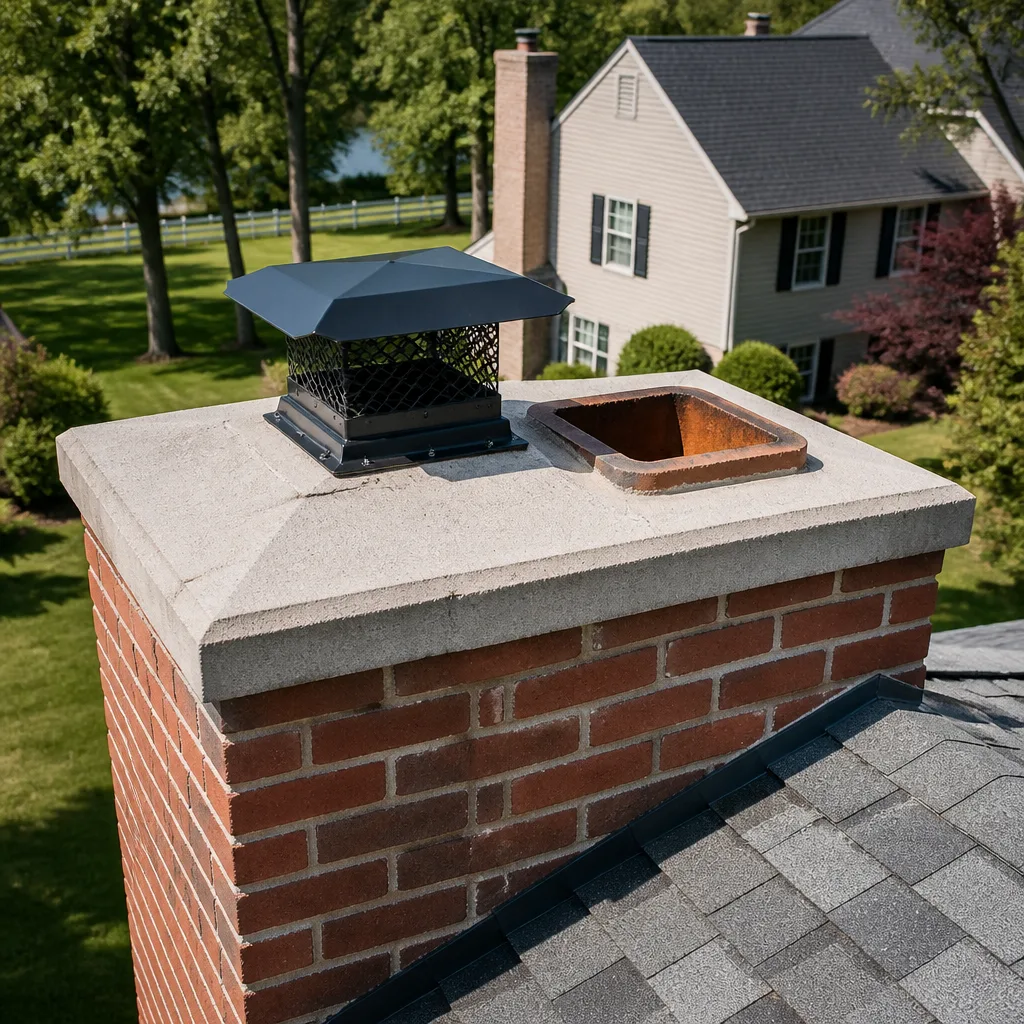
Cap and crown damage is one of the most important things to spot. The crown is the concrete or masonry slab at the very top of the chimney, and the cap is the metal or mesh cover on the flue. A cracked crown lets water into the body of the chimney below the roofline, which is exactly where you don’t want it. A missing or rusted cap lets rain, birds, and squirrels into the flue itself. A cap that’s tilted, rusted through, or missing a piece is a warning sign that deserves attention.
Two more exterior checks worth adding to the walk:
- Look for a leaning or tilting chimney. A chimney that’s separating from the house or leaning is a structural concern and should be looked at promptly.
- Check the flashing where the chimney meets the roof. Failed flashing lets water into the roof and then into the chimney, and it often shows up first as staining on the neighboring shingles.
These ground-level checks are the reason we tell homeowners to look up before they call. If you can point to a specific stain, joint, or cap issue, the inspection starts with a head start.
Cosmetic Aging vs. Structural Failure
The hardest judgment in chimney care isn’t spotting problems. It’s deciding which ones can wait and which ones can’t, and a lot of homeowners end up either ignoring real damage or paying to fix things that were cosmetic. The dividing line comes down to whether the problem threatens the barrier between combustion and structure, or whether it’s just wear on the outside surface.
Cosmetic aging:
- Minor surface staining on brick that isn’t from active water intrusion.
- Light, even soot coloration inside the firebox.
- Surface weathering on exterior mortar that hasn’t started to recede.
- A few flakes of flaking paint on exterior trim.
Structural warning signs that shouldn’t wait:
- Spalling or crumbling firebrick in the firebox.
- White efflorescence or rust on the damper, which means moisture is actively inside the system.
- Cracked, spalling, or heavily deteriorated mortar joints on the exterior.
- A cracked crown, a missing cap, or failed flashing.
- Creosote glaze at stage two or three inside the flue.
- Smoke spillage into the room during a fire.
A useful rule for the middle ground: anything that’s on the barrier between fire and structure can’t safely wait, and anything that’s purely surface wear can. Firebrick, liner, damper, smoke chamber, and cap all sit on that barrier. Surface staining and cosmetic brick aging do not. If you’re unsure which side of the line a problem falls on, that’s the moment to have it looked at.
What Progresses Slowly and What Gets Worse Fast
Some problems are stable for years; others get worse with each fire. Efflorescence from a slow, small leak can sit for a season or two before it does real damage. A cracked crown or failing cap, in contrast, gets worse every time it rains, and a spalling firebox gets worse every time you burn. Knowing which is which tells you how urgently to act.
Creosote Stages and What They Mean for Your Flue
Creosote is the byproduct of wood combustion that condenses on the flue walls, and its stage determines both the fire risk and the cleaning difficulty. Stage one is a flaky, light soot that brushes off easily. Stage two is a crusty, harder deposit that takes more aggressive cleaning. Stage three is a glazed, tarry, hardened shell, and it’s the stage where a flue fire risk becomes real. The same wood that produces stage one can produce stage three under different burn conditions, which is why we recommend professional cleaning and inspection rather than a “looks fine” judgment from a flashlight.
What drives creosote up the stages in a Lewisville home:
- Burning unseasoned wood, which produces more smoke and less heat.
- Smoldering, low-heat fires, which leave more unburned compounds on the flue walls.
- A restricted or inconsistent draft, which lets those compounds settle instead of being carried away.
- A capped or restricted flue that holds moisture and can push creosote toward the glazed stage faster.
- Long gaps between cleanings, which let each deposit build on the last.
What stage three creosote means for your flue: the deposit has to be removed before the flue can be safely used, and in some cases the cleaning itself will reveal that the liner under it was damaged long before the creosote got that bad. Glazed creosote is also a leading reason a flue can look fine from the outside while the inside is a genuine fire risk. If you’ve been burning wood and haven’t had the flue cleaned in a season or more, this is the stage to check for.
The good news is that creosote at any stage is a maintenance problem first and a fire risk second, and a sweep can remove all three stages with the right tools. Where stage three hides a liner problem underneath, the repair side of the job comes into play, which is where a specialist with the right materials matters.
Lewisville’s Fire Season and Why Timing Matters
Lewisville’s winters are mild, which means fire season here is more about the occasional cold snap than a long, steady burn. But that mild climate makes timing more, not less, important: the fires you do burn are often the ones the chimney isn’t ready for. A long idle season followed by the first fire of the year is the classic way a warning sign turns into a problem.
Here’s how the timing usually plays out in a Lewisville home:
- Late summer: odors get stronger, and small signs are easiest to note. This is the season to look at what’s happened over the year.
- Early fall: the first cool evenings arrive, and homeowners light their first fire. This is where a creosote problem and a weak draft meet.
- Midwinter: the coldest weeks. This is when a chimney that wasn’t ready has its first real test.
- Spring: fire season ends, and any damage done over the winter is now easier to spot, especially from the ground.
A sweep and inspection before the first fire of the season is the natural rhythm here. It fits around the warm months, catches problems while the chimney is idle, and means the first fire of the year is a test of your readiness, not a test of your luck. The same rhythm applies across the region, which is why our Lewisville neighbors generally schedule a sweep before the weather turns cool rather than after a problem shows up in the firebox.
What the Mild Climate Does to a Chimney
Mild winters mean fires are less frequent but often less disciplined: a homeowner might burn a few fires in a season and assume the flue is clean. Heavy humidity and periodic rain do the water-intrusion side of the work, and a chimney that sits for weeks between uses gives moisture more time to reach the liner. A mild climate doesn’t spare a chimney from damage; it changes the shape of it.
What a Professional Inspection Actually Checks
A professional inspection is more than a look up the flue with a flashlight. It’s a systematic read of the whole system, and knowing what it covers is the best way for a homeowner to know what they’re paying for. When we run an inspection, it follows the same set of checkpoints each time, because a chimney problem hides in the gaps between them.
What a thorough inspection evaluates:
- The firebox and firebrick for spalling, cracking, and heat damage.
- The damper and smoke chamber for rust, seize, and negative pressure signs.
- The flue itself for creosote stage, cracking, and liner integrity, checked from the inside where possible.
- The smoke shelf and any evidence of efflorescence or moisture.
- The cap, crown, and flashing from the roof level.
- The exterior brick and mortar for staining, spalling, and joint deterioration.
- The appliance connections, if you have an insert or a gas setup.
A smaller but important distinction: an inspection done as part of a sweep is often a quick once-over, while an inspection done as its own service takes the time to record what’s found. We offer inspections as a standalone service partly because that’s the right way to find a creosote problem, a damaged liner, or a draft issue that a five-minute sweep can miss. When a problem turns up, the next step is normally the chimney sweep, which handles the cleaning itself. Our technicians have up to 14 years of experience, which means the read of the firebox and the flue is based on pattern recognition, not just a checklist.
When the inspection reveals a liner problem, the repair conversation moves to materials. We work with professional-supply brands like DuraFlex for flexible stainless liner systems and HeatShield for ceramic flue resurfacing, and the difference between a properly specified material and a generic one shows up years later. That’s the case for using the same materials chimney engineers specify: they’re the ones that hold up to the conditions the inspection turned up.
Common Mistakes to Avoid
- Waiting for smoke or fire before acting. Most chimney fires are silent, and smoke spillage is often a late signal rather than an early one. The subtler signs in the firebox and on the brick are the ones that should call you to action.
- Treating a sweep as the same as an inspection. A brush cleans the flue, but it doesn’t tell you whether the liner, damper, or crown are sound. Schedule a real inspection, not just a cleaning.
- Blaming every smell on the house or the season. If the smell appears in warm weather or after rain, that’s a chimney signal, not an old-house problem. Note when it appears, and mention it when you call.
- Assuming a mild Lewisville winter means the chimney doesn’t need a yearly look. Fewer fires but long gaps between them is exactly the pattern that lets moisture and creosote do their work unseen.
- Burning unseasoned wood because it’s what’s available. Wet wood is the fastest way to push creosote from stage one to stage three. Season your wood before you burn it.
- Skipping the ground-level walk. Staining, mortar joints, and cap damage are visible from the yard, and catching them early is often what turns a small repair into a small repair. Look up before you call.
- Ignoring the cap because it’s out of sight. A rusted or missing cap lets water and animals into the flue, and a cracked crown feeds moisture straight into the body of the chimney. Check them, or have them checked.
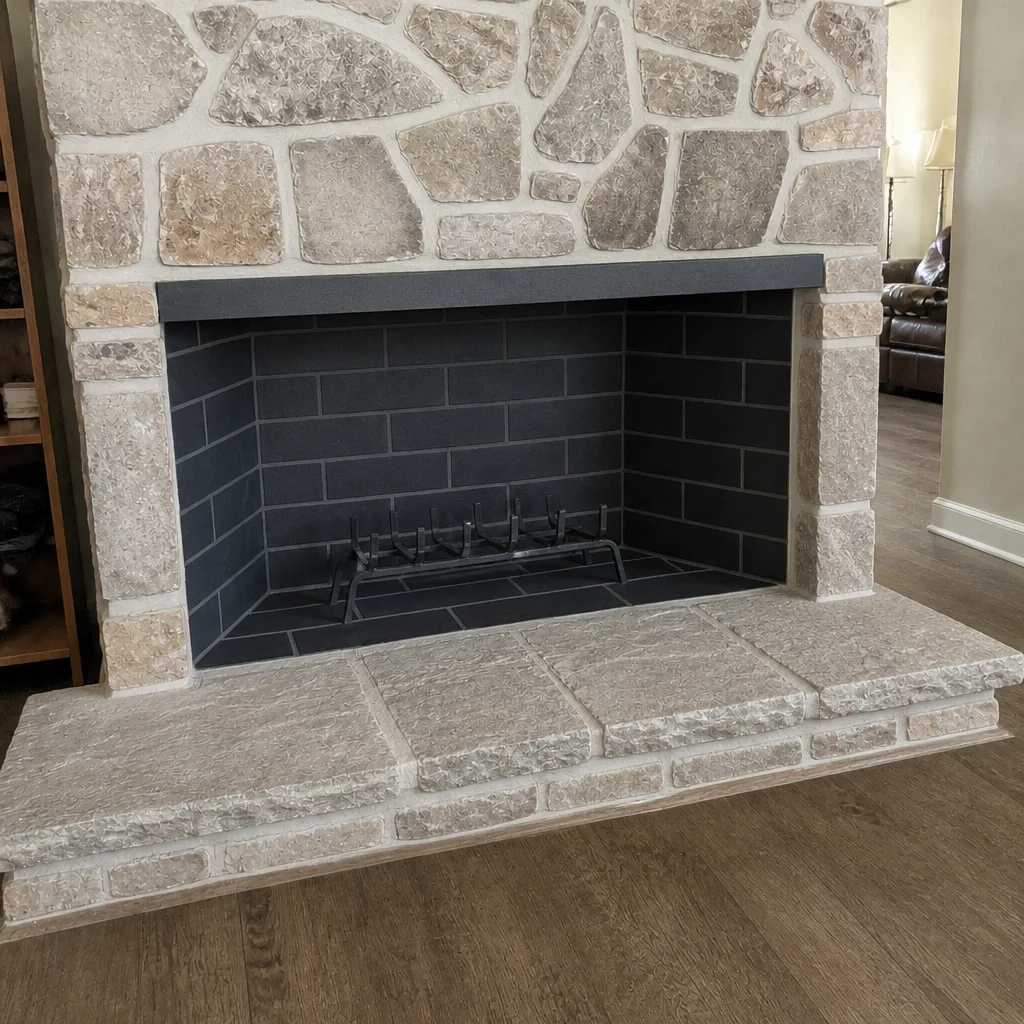
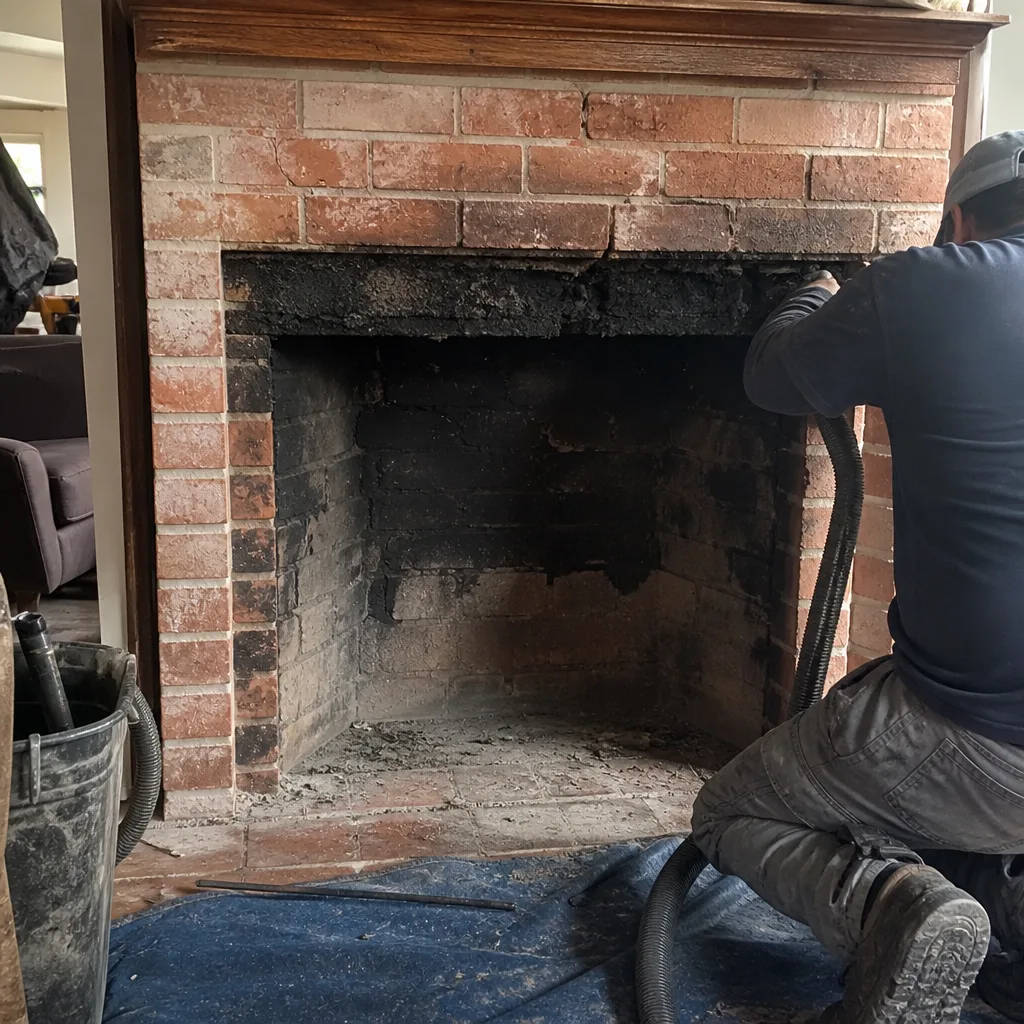
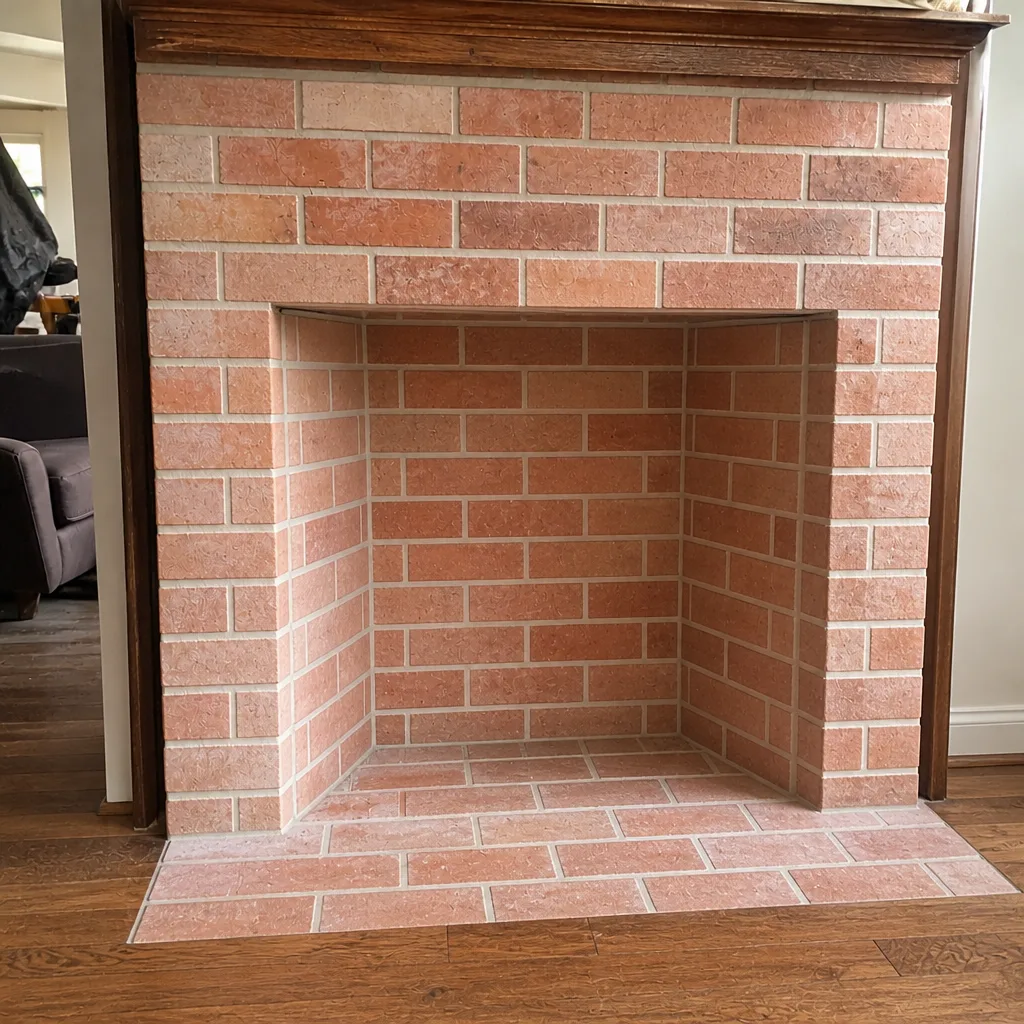
See the difference
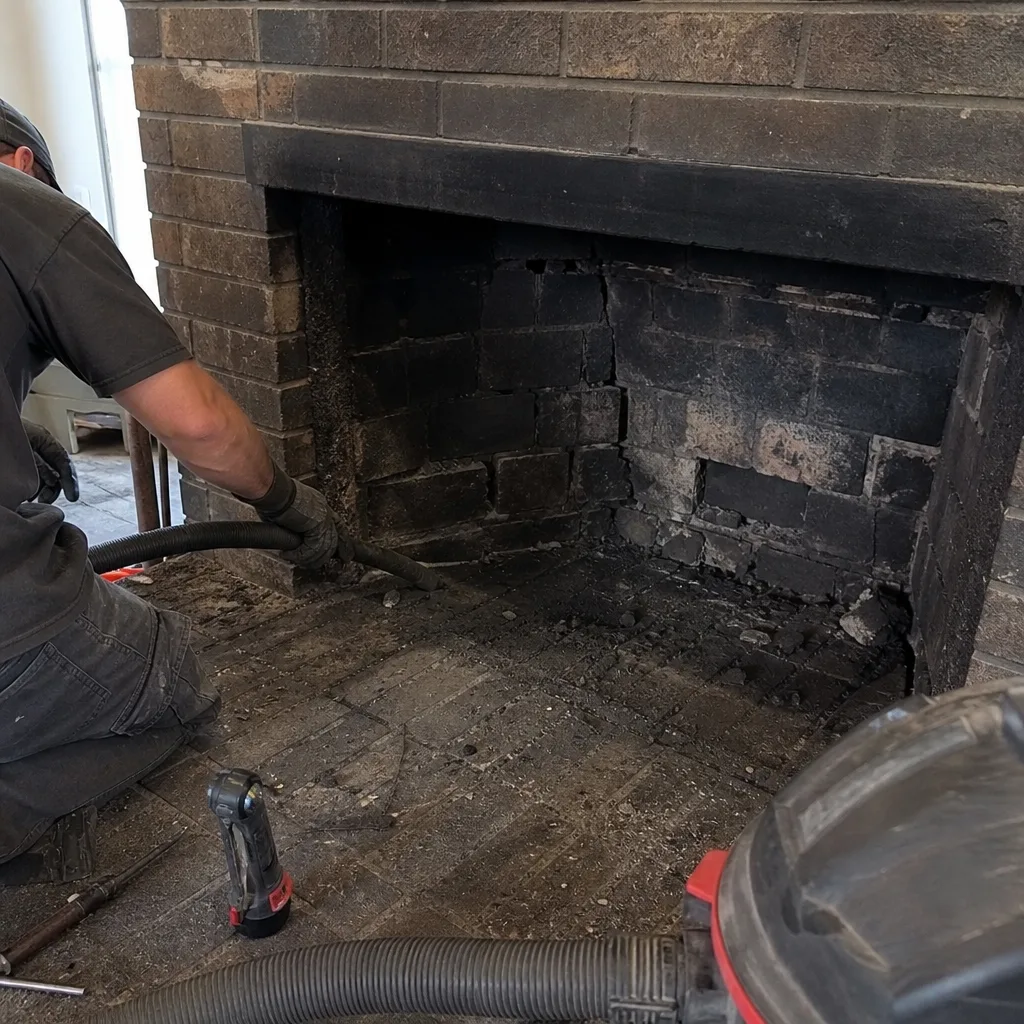 Before
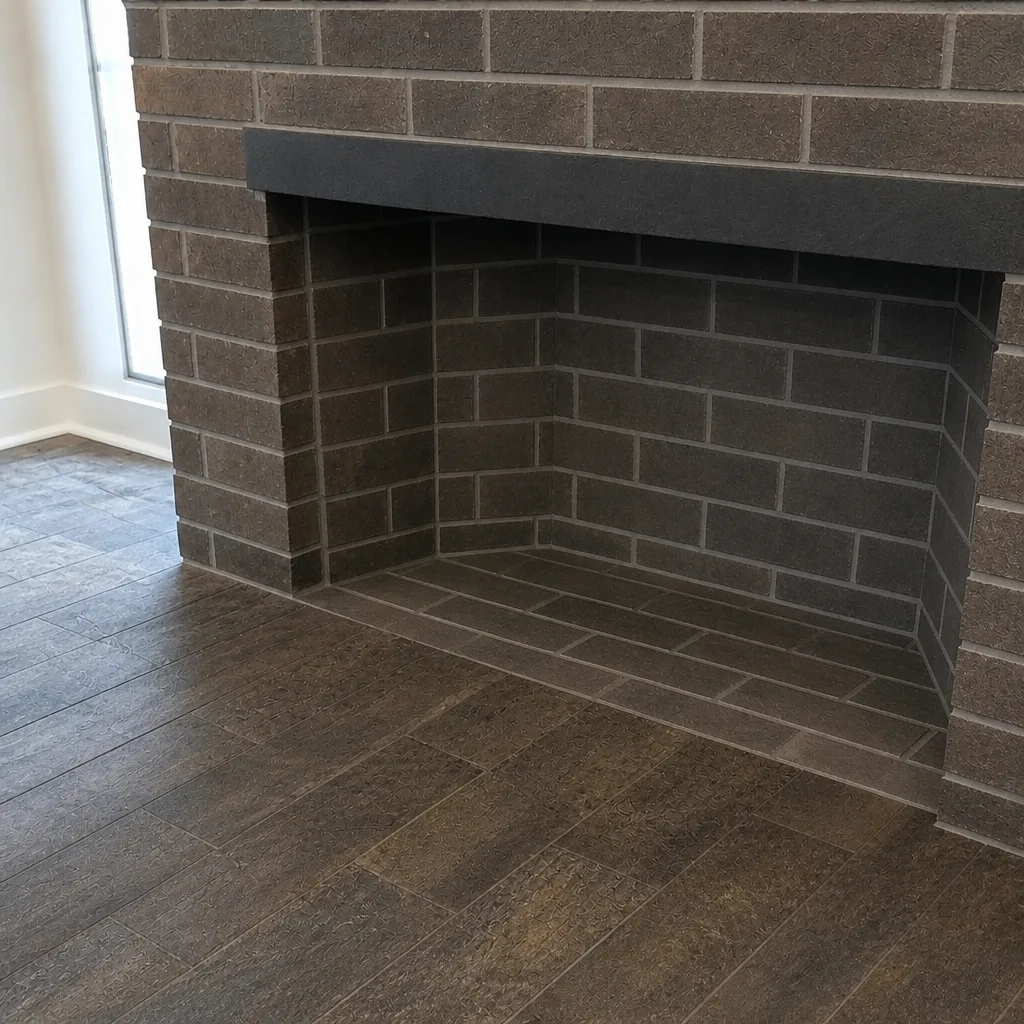 After
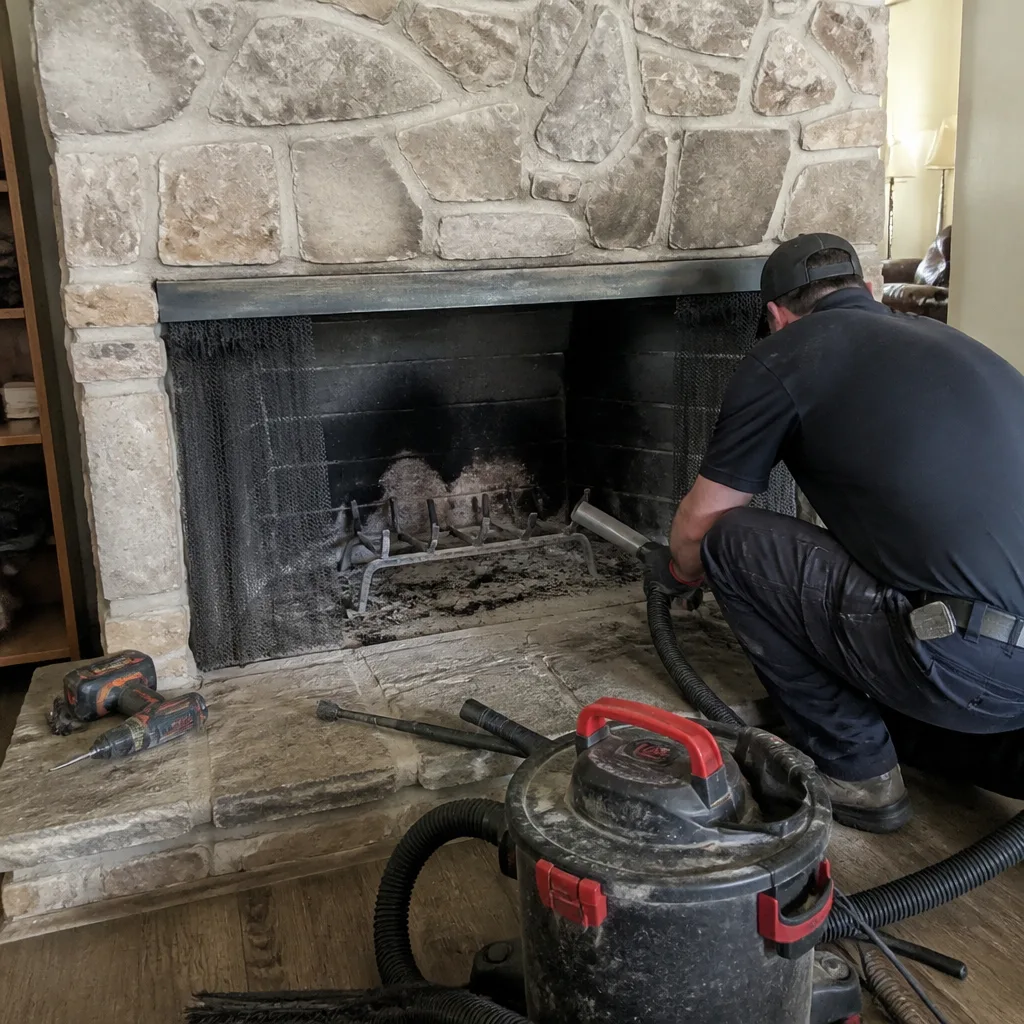 Before
 After
 Before
 After
When to Call a Professional
Call a professional when you see two or more warning signs together, when you notice a chalky efflorescence or rust in the firebox, when you see a cracked crown or a missing cap, or when the smell in the house has changed and you can’t pin it on anything else. Call before your first fire of the season if you can’t remember the last time the flue was cleaned, and call immediately if you smell gas or see smoke spilling into the room. Lewisville Chimney Sweep offers free estimates in Lewisville, and our chimney repair service handles everything from a cap replacement to a liner issue without subcontracting. We answer 24/7. Call (888) 424-2086. Fast dispatch from 7am to 7pm, Sunday through Friday.
Frequently Asked Questions
A typical chimney sweep in Lewisville is priced per job by a written estimate, and the estimate is free, so the most reliable way to know is to have it looked at. Cleaning and inspection are separate services, and it helps to ask for both up front. Call (888) 424-2086 for an exact quote. Estimates are free.
Most wood-burning chimneys are swept about once a year, and more often if you burn frequently or notice the warning signs in this guide. In Lewisville’s mild climate, a yearly sweep before the first fire of the season is the natural rhythm. If you’ve gone more than a season without a cleaning, schedule one.
Not always, and you shouldn’t take a liner replacement on faith. A liner is recommended when the inspection actually shows a crack, a failed seam, or a breach that lets combustion products through. We work with DuraFlex and HeatShield specifically because the right repair can sometimes be resurfacing rather than full replacement. Ask to see the evidence before you decide, and call (888) 424-2086 if you want a second read.
Creosote keeps building on the flue walls, and at stage two and three it becomes a real fire risk that a flue fire can convert into a liner problem. Beyond fire risk, moisture finds its way into any weak points and the damage spreads. Skipping a sweep doesn’t make the problem disappear; it just moves it inside the flue where you can’t see it. Schedule an inspection instead of guessing.
Yes. A musty or damp smell is one of the clearest signs of water getting into the chimney, usually through a cracked crown, a missing cap, or failing flashing. Rust on the damper or white efflorescence on the smoke shelf points the same way. If the smell gets worse on humid days or after rain, have the exterior checked.
Yes. A sweep and inspection before the first fire catches buildup and damage while the chimney is idle, and it means the first fire of the year is a test of your readiness rather than a test of your luck. Book it early in the fall and remember that a sweep is a booked visit, not a same-day fix. Lewisville Chimney Sweep offers free estimates, so call (888) 424-2086 to get on the schedule.
The Bottom Line
The signs that matter most in a Lewisville chimney are the quiet ones: an unfamiliar smell, a spalling firebrick, a chalky stain on the smoke shelf, a rusted damper, a cracked crown, a draft that’s gone sluggish. Learn to read them the way a technician does and you’ll catch most problems while they’re still a maintenance item. Check the firebox, walk the yard, watch the draft, and know the difference between cosmetic aging and a structural warning. We’re Lewisville Chimney Sweep, and our full sweep-to-repair service means you don’t have to coordinate between two contractors when a warning sign turns into a job. Call (888) 424-2086. We answer 24/7. Fast dispatch from 7am to 7pm, Sunday through Friday. Estimates are free, and nothing gets recommended without evidence you can see for yourself.
Written by the team at Lewisville Chimney Sweep.