
Last updated November 15, 2026
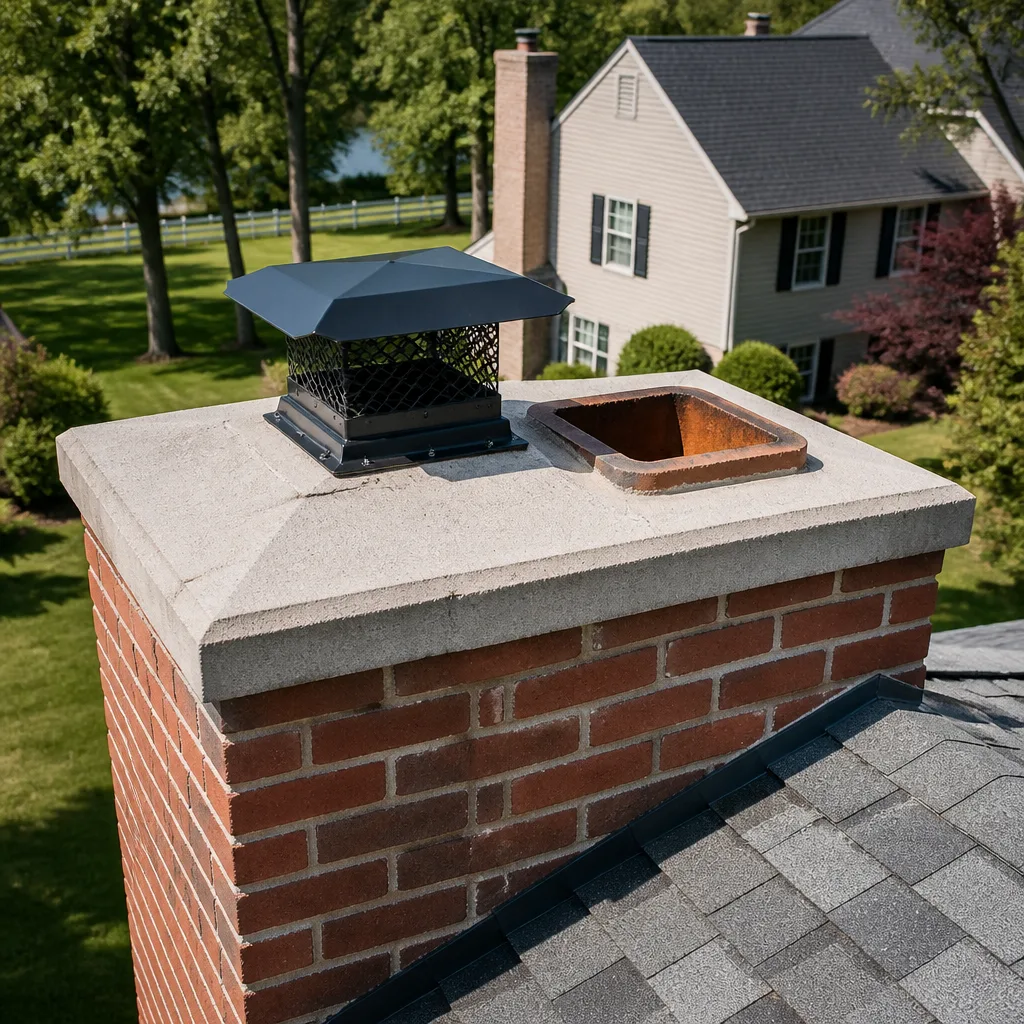 Sweep & inspection
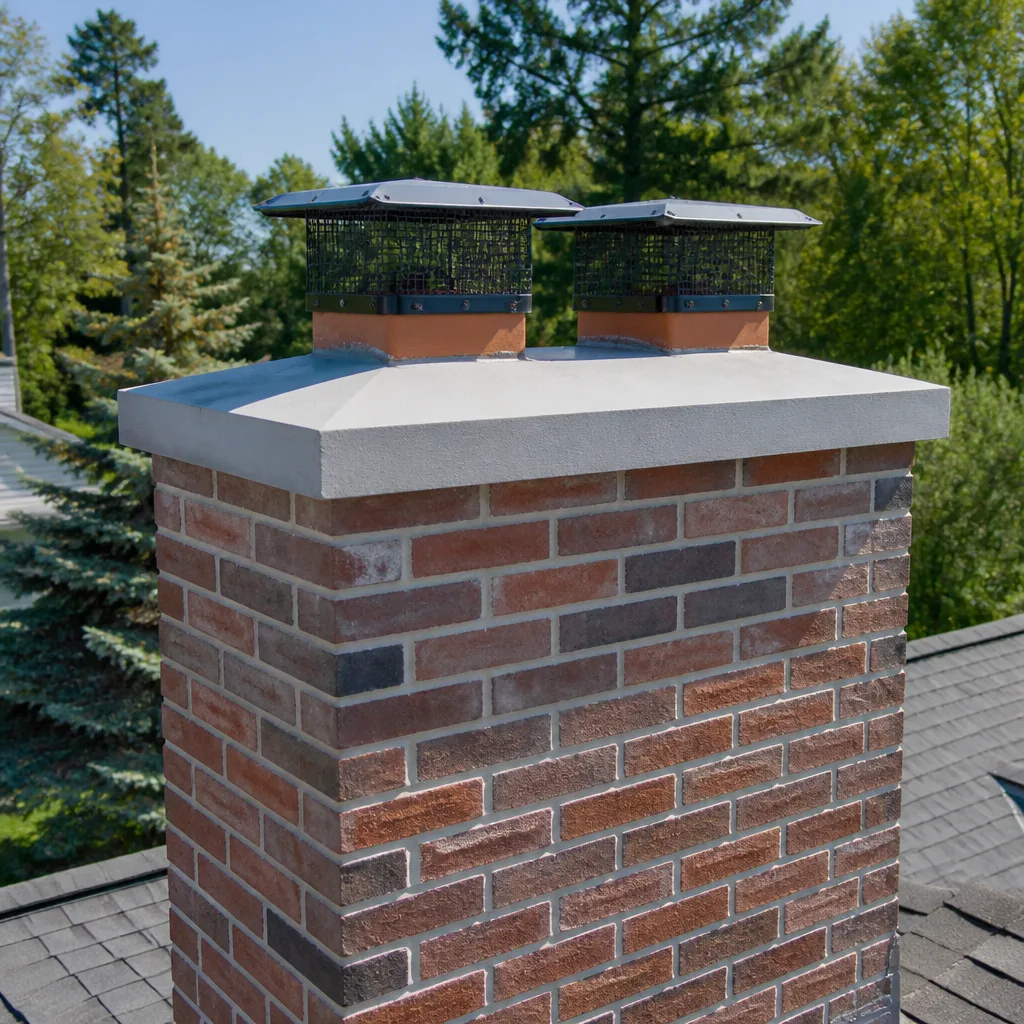 Caps & crowns
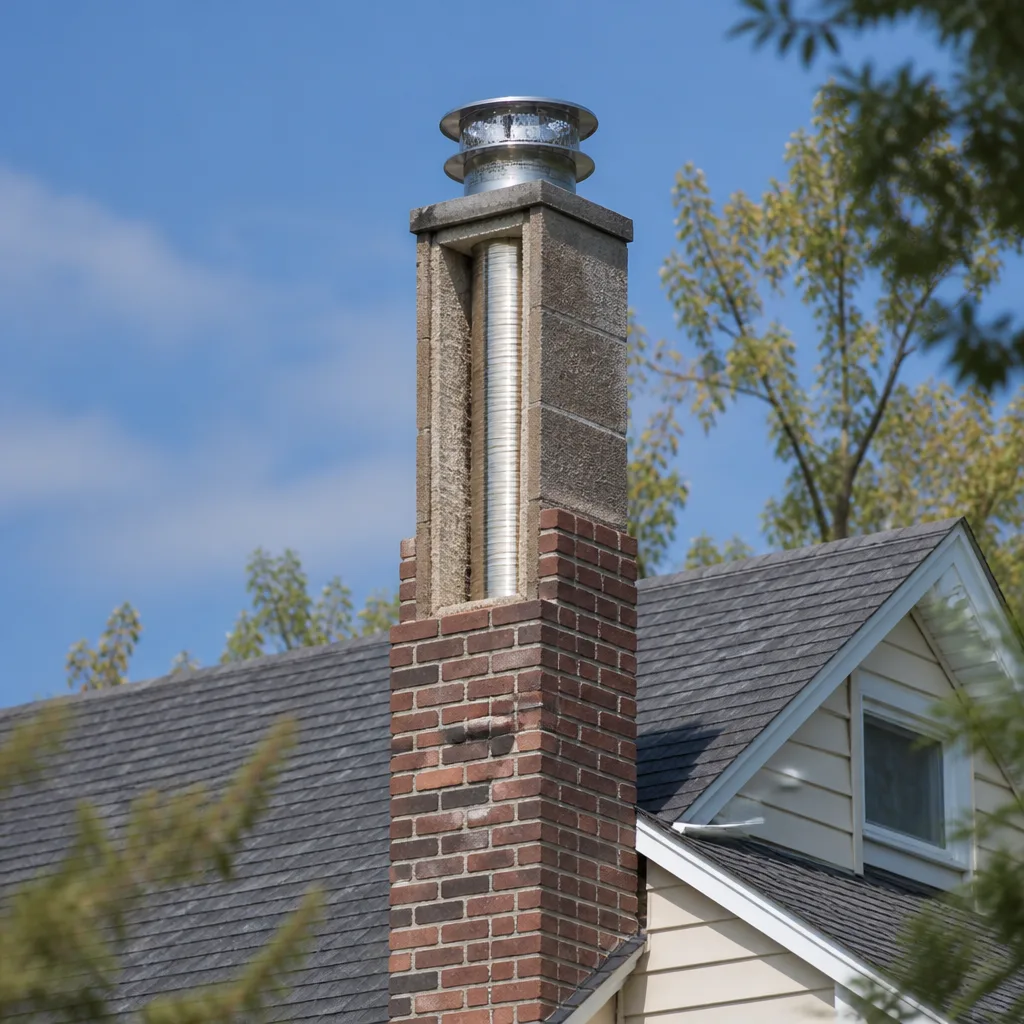 Flue relining
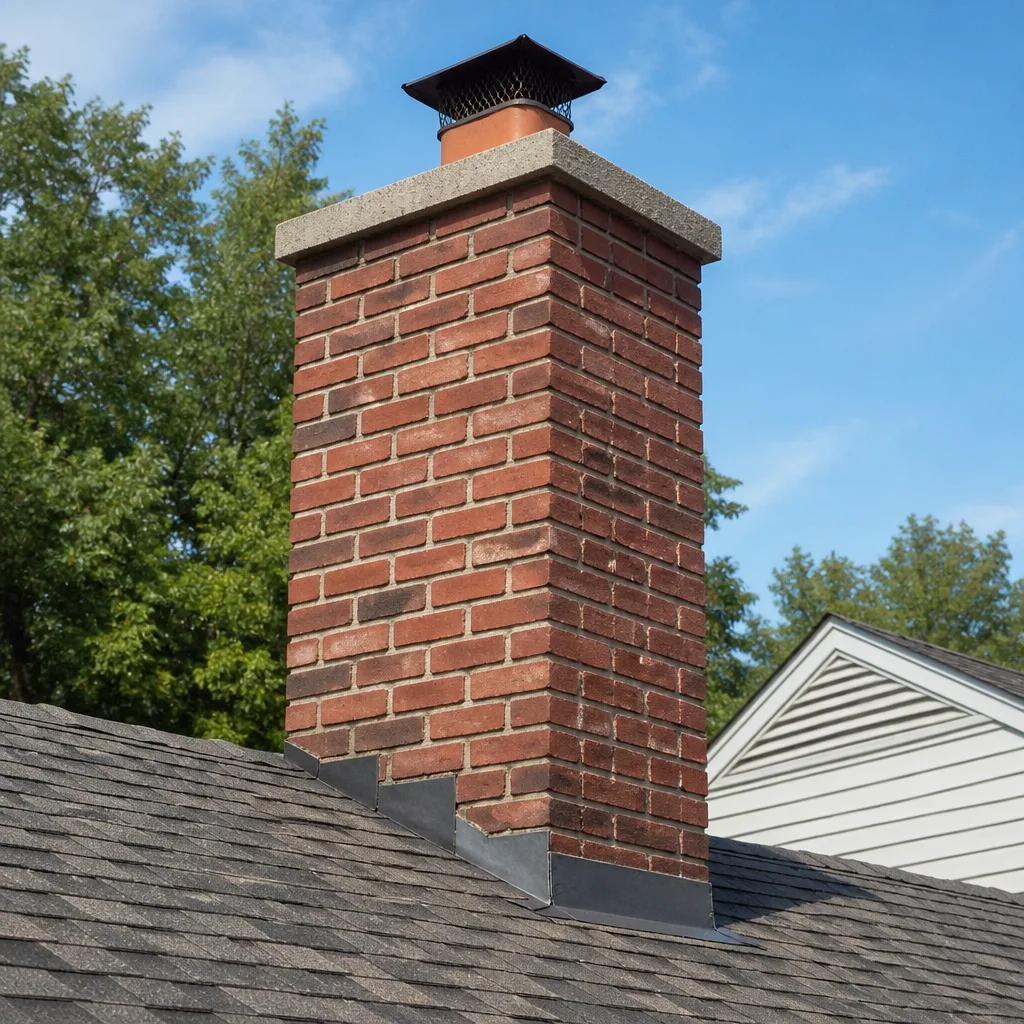 Masonry repair
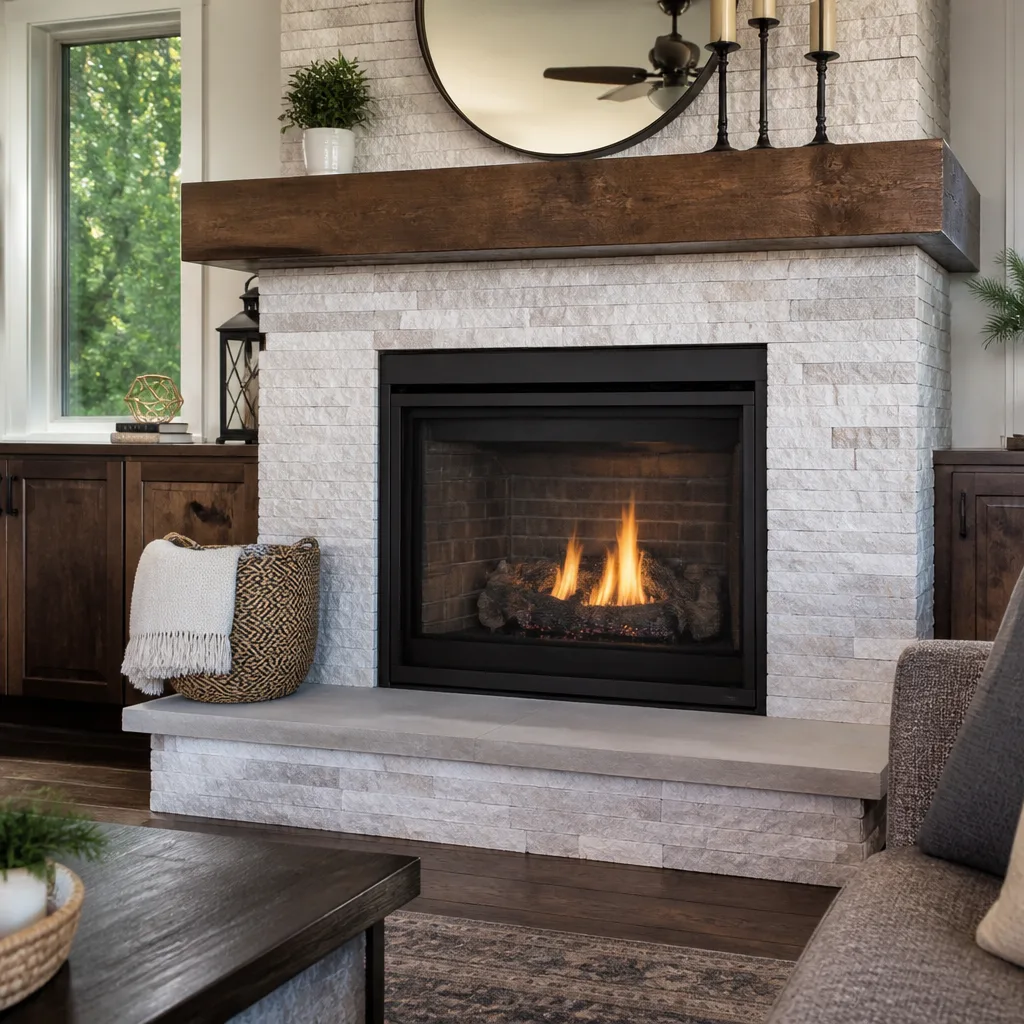 Gas fireplace service
Level 1 sweep and inspection to the NFPA 211 annual standard - flue, crown, cap, and flashing checked and photographed
Chimney sweep logs do not sweep chimneys. They loosen some creosote - which then falls where a brush and vacuum still have to collect it.
Chimney Sweep Troubleshooting in Lewisville: Common Problems and How to Fix Them
Smoke rolling into your living room usually sends you straight to the damper. That’s the instinct. But in the majority of backdraft complaints we troubleshoot, the damper is fine. The real cause sits 10 to 20 feet up the flue, where a partial obstruction or a negative-pressure condition is fighting every fire you build. A damper adjustment won’t touch either one. This guide translates the physical signs you can see inside your firebox, the smoke, the odor, the staining, into their actual upstream causes, so you know which problems you can safely handle and which ones need a camera and a trained eye. Lewisville homes have their own quirks, and we’ll cover those too.
Quick Answer
Most chimney problems homeowners try to fix at the firebox actually originate in the flue: creosote buildup, partial obstructions, deteriorated liner joints, or negative air pressure pulling smoke back down. Start by matching your symptom to its cause, clear only what’s genuinely safe to clear, and book a professional inspection for anything involving the flue interior, the liner, or persistent smoke rollout. In Lewisville, the expanding clay soil under many fireboxes adds a structural wrinkle that looks like normal wear but isn’t.
Styles & brands we work with
- Sweep & inspection
- Caps & crowns
- Flue relining
- Masonry repair
- Gas fireplace service
Table of Contents
- Symptom-to-Cause Map: What Your Fireplace Is Telling You
- Why Smoke Rolls Into the Room (And Why It’s Usually Not the Damper)
- Creosote Stages and What They Do to Your Draft
- Negative Pressure in Tightly-Sealed Lewisville Homes
- How Lewisville’s Clay Soil Attacks Firebox Masonry
- DIY-Safe Fixes vs. Jobs That Need Professional Tools
- Odors and Staining: Reading the Clues
- The Inspection Baseline Every Chimney Needs
Symptom-to-Cause Map: What Your Fireplace Is Telling You
Your fireplace is a diagnostic instrument whether you meant it to be or not. Every puff of smoke, every lingering smell, every dark streak on the brick points to a specific mechanical condition upstream. Learn to read the map and you’ll know whether you’re looking at a five-minute reset or a job that needs a camera dropped down the flue.
Here’s the translation table we use, laid out as a list because that’s how it’s easiest to scan:
- Smoke rolls out the top of the opening when you light the fire: cold flue, negative pressure, or a partial obstruction near the top. Rarely the damper.
- Fire burns but draws weakly or lazily: undersized flue for the firebox opening, or creosote narrowing the passage.
- Smell of soot or smoke when there’s no fire: draft reversal pushing flue gases back into the room, often pressure-related.
- Dark staining above the firebox or on the face brick: chronic smoke spillage that’s been happening long enough to deposit.
- White, chalky deposits on masonry: moisture moving through the brick, which in Lewisville often traces to soil-driven movement at the base.
- Crumbs of mortar or brick on the firebox floor: spalling, and in North Texas that word deserves its own section.
- Strong smoke smell that returns after a cleaning: the sweep removed what it could reach but the flue interior still has a condition worth inspecting.
Notice what’s missing from that list: “call a chimney sweep.” That’s deliberate. Half of these symptoms have a DIY component you can responsibly handle, and the other half don’t. The rest of this Lewisville guide draws that line clearly.
Why Smoke Rolls Into the Room (And Why It’s Usually Not the Damper)
Smoke rollout happens when the pressure inside your firebox is higher than the pressure in the room, and the smoke takes the path of least resistance. A damper sitting wide open still can’t create a pressure differential. It only controls the opening. So adjusting it can’t fix a problem that’s coming from three other directions.
The three real culprits, in order of frequency in this area:
- Cold flue (thermal inversion at startup). A masonry chimney that hasn’t been used for a season is full of cold, dense air. Warm smoke hits it and stalls, then backs up. A preheat (a rolled newspaper torch held near the damper) often solves this before you ever light kindling.
- Obstruction in the flue. Nesting material, a collapsed liner tile, or heavy creosote physically narrows the passage. The smoke can’t move fast enough to evacuate the firebox.
- Negative pressure in the house. This gets its own section below because it’s the sneakiest one.
If smoke rollout happens only on the first fire of the season and clears once the chimney warms, it’s usually the cold-flue problem and worth a preheat next time. If it happens every time you light, or gets worse as the fire grows, that’s a flue problem, not a damper problem. When rollout repeats, a camera inspection is the honest next step, and it’s part of any chimney sweep we perform in Lewisville because the sweep and the inspection belong together.
Creosote Stages and What They Do to Your Draft
Creosote isn’t just a fire risk number. It’s a physical restriction that changes how your flue behaves, and the three recognized stages affect draft very differently. Knowing which stage you’re looking at tells you whether a brushing will restore your draw or whether you’re facing a condition that brushing alone won’t clear.
Stage 1 is a light, flaky soot that wipes off easily. It narrows the flue slightly but rarely changes draft noticeably. Stage 2 is a crusty, hardened deposit that’s started to bond to the flue wall. It reduces the effective diameter of the flue, and on a cool or short flue that lost diameter is exactly what chokes a fire. Stage 3 is the glazed, tar-like coating that has to be mechanically removed, and it’s the stage that most changes how a flue reacts to a fire being lit: at this point the smoke has nowhere to go and the pressure inside your firebox wins.
Every fire you build on top of stage 2 or stage 3 creosote adds more, and the deposit gets harder. That’s the honest reason to sweep on a schedule rather than reactively: the deposit is easier to remove and less impactful on draft the sooner it comes out. When we sweep in Lewisville, the camera goes down after the brush, because a sweep tells you how much came out but only the camera tells you what’s left.
Third-degree creosote is the fire-hazard category. If your fire has been burning poorly and the flue walls look tarred, don’t push through it. Call for a professional evaluation before the next fire.
Negative Pressure in Tightly-Sealed Lewisville Homes
Newer Lewisville homes are built tight. Spray foam, house wrap, weatherstripping, modern windows: all of it is doing exactly what it’s supposed to do for energy efficiency, and all of it is making your chimney’s job harder. A chimney needs to pull combustion air from somewhere. In a tight house, that “somewhere” is often the same room where someone just turned on the dryer, the bath fan, or the kitchen exhaust.
Here’s what negative pressure does to a chimney. It inverts the pressure differential your fire relies on. Instead of the flue pulling air up and out, the flue becomes a passage for the house to pull air down and in. Your chimney can be spotless and still behave like it’s blocked, because the block is invisible: it’s an air balance problem, not a physical obstruction.
Signs you’re dealing with negative pressure rather than a dirty flue:
- Smoke rollout happens when exhaust fans are running, not every fire.
- Smell returns in the evening or when the house is closed up.
- The flue draws fine when a nearby window is cracked, and poorly when it’s shut.
- Rollout gets worse on windy days.
What actually helps: running a nearby exhaust fan less, cracking a window near the fireplace for the first 10 minutes of a fire, and (for a lasting fix) having a professional assess your combustion air supply. That’s the kind of pressure diagnosis we do during an inspection, and it’s why “just sweep it” doesn’t resolve every smoke complaint.
How Lewisville’s Clay Soil Attacks Firebox Masonry
The clay soil under much of North Texas is expansive. It swells in wet seasons and shrinks in dry ones, and that seasonal movement transmits upward through a home’s foundation and into the base of a masonry chimney. Homeowners see the result at the firebox and assume it’s normal aging.
The typical sign is spalling: small flakes and chips of brick or mortar joint appearing in the hearth or on the firebox floor. Narrow cracks trace along the masonry, sometimes hairline, sometimes wider after a particularly wet-to-dry swing. A chalky white staining called efflorescence can show up where moisture has moved through the brick and dried on the surface.
Some of that is cosmetic. Some of it is not. A hairline crack in the firebox brick is different from a separation between the firebox smoke chamber and the masonry around it. One is dressed and sealed. The other is a path for smoke and hot gas, and it needs proper repair. If your chimney has visible spalling in more than one place, or if a crack has widened, the safe answer is professional evaluation rather than a caulk tube.
Masonry problems in Lewisville also affect the chimney liner, particularly older clay tile liners with cracked joints. That’s where materials matter. A HeatShield ceramic flue resurfacing can restore a clay liner by sealing the joints and relining the interior without pulling the whole liner, and it’s a job that requires knowing what you’re looking at. Repairs at this level belong under our chimney repair scope, and they’re the reason a sweep and an inspection done together save you from finding cracked joints six months later.
DIY-Safe Fixes vs. Jobs That Need Professional Tools
Plenty of chimney troubleshooting really is homeowner work, and being honest about which fixes are safe is more valuable than telling you everything requires a pro. Here’s the line, as we draw it:
Safe for you to handle
- Clearing obvious debris from the firebox floor and the damper area.
- Resetting a damper plate that’s stuck open or closed with gentle hand pressure and a flashlight inspection.
- Removing ash (cold, fully extinguished) from the ash pit or firebox.
- Preheating a cold flue before a fire.
- Opening a window near the fireplace to relieve negative pressure at startup.
- Visually inspecting the firebox, damper, and any exposed masonry for obvious cracks or debris.
Needs professional tools and a trained eye
- Anything above the damper. That’s the flue interior, and you can’t reliably inspect what you can’t see.
- Camera inspection of the liner and the smoke chamber. A flashlight from below shows you maybe 10% of the interior.
- Assessing the liner for cracks, joint separation, or deterioration. Liner condition decides whether a fire is safe to burn, and it’s not a guess.
- Liner sizing and draft calculations. Undersized or oversized flues cause chronic smoke problems, and the fix depends on precise measurements.
- Removal of stage 2 or stage 3 creosote. Professional brushes and the right technique are what glazed deposits actually respond to.
- Firebox or chimney masonry repairs, especially spalling from soil-driven movement.
- Any combustion air or pressure assessment beyond opening a window.
The rule of thumb we give homeowners is simple: if the fix requires seeing inside the flue, or measuring something accurately, it’s a professional job. If it’s a reset or a clearance, try it first.
Odors and Staining: Reading the Clues
A persistent smoky smell when there’s no fire is one of the most misdiagnosed chimney conditions, because the cause almost never lives at the firebox. Odors fall into three practical categories:
- Draft reversal. The flue is acting as an inlet rather than an outlet, and each cycle of warm and cool pushes a puff of sooty air back into the room. The fix is a pressure correction, not a scrub.
- Residual creosote smell. Even after a good sweep, stage 2 or 3 deposits in unreachable spots can carry a smoky odor, especially on warm or humid days. That smell is a signal the flue needs a closer look, not a bottle of air freshener.
- Moisture against masonry. Water moving through brick from a chimney cap or flashing issue pushes an earthy, sooty smell inward. This is why a professional inspection checks the exterior, not just the flue.
Staining follows the same logic. Dark deposits above the firebox opening tell you smoke is spilling, and you already know from the rollout section what that points to. Chalky white staining is moisture-related. Soot that travels up the outside face of the chimney is usually a draft or a flue-to-masonry gap rather than a cosmetic burn.
None of these are emergencies in themselves. But any of them on top of a fire is worth a professional evaluation before the next burn, and any of them without a fire can usually wait for a scheduled inspection.
The Inspection Baseline Every Chimney Needs
You don’t need to schedule an inspection to solve every problem in this guide, but you do need one to know what your chimney’s starting condition is. Without a baseline, every future symptom is guesswork.
The inspection we recommend covers five things: a camera view of the full flue from damper to cap, the condition of the liner (tile joints, cracks, gaps), the firebox and smoke chamber masonry, the damper and its operation, and the exterior chimney (cap, crown, flashing, and masonry condition up top). It’s a standalone service, not a sales pitch attached to a cleaning. That distinction matters because most chimney sales pressure comes from inspections that only happen as part of a sweep.
The output should be a written report you can read and understand, with photos of any problem areas. If a liner is fine, you should hear that it’s fine. If a firebox has cosmetic spalling, you should hear the difference between “dress and seal” and “plan for repair.” And if something is deteriorating but not urgent, you should hear when it’s safe to wait.
We work with professional-grade materials from DuraFlex, HeatShield, Gelco, Olympia Chimney, and others, and the reason that matters at inspection time is simple: what a repair requires should be decided by what the chimney actually needs, not by what the nearest supplier happens to stock. Material literacy is what keeps recommendations honest.
If you’d like to schedule that baseline for your Lewisville home, we can quote it accurately from the parameters of your specific chimney. Estimates are free. Call (888) 424-2086. We answer 24/7. Fast dispatch from 7am to 7pm, Sunday through Friday.
Common Mistakes to Avoid
- Blaming the damper for smoke rollout first. A damper adjustment is harmless, but it treats the wrong problem in most backdraft cases and delays the diagnosis that would actually fix it.
- Burning a fire to “burn off” glazed creosote. That’s the opposite of what happens. Stage 3 creosote doesn’t burn off, it raises the fire risk, and the right move is removal.
- Treating spalling masonry in Lewisville as normal aging. Some spalling is cosmetic, but the soil-driven kind usually isn’t, and a caulk-and-paint fix on a widening crack is the mistake that turns a small repair into a big one.
- Burning with a cracked or deteriorated liner. A liner isn’t decoration. It keeps combustion gases inside the flue. If the liner condition is unknown, get it inspected before the next fire.
- Assuming a swept chimney is a clean chimney. Sweeping tells you what came out. Only an inspection tells you what’s left. Doing one without the other leaves a blind spot.
- Blaming the flue when the problem is the house. In a tight Lewisville home, a blocked-feeling chimney is often a pressure problem, and no amount of brushing changes it.
- Waiting for the first cold week to call. Chimney inspection is a scheduled service, and booking early keeps your first fire from being the first test.
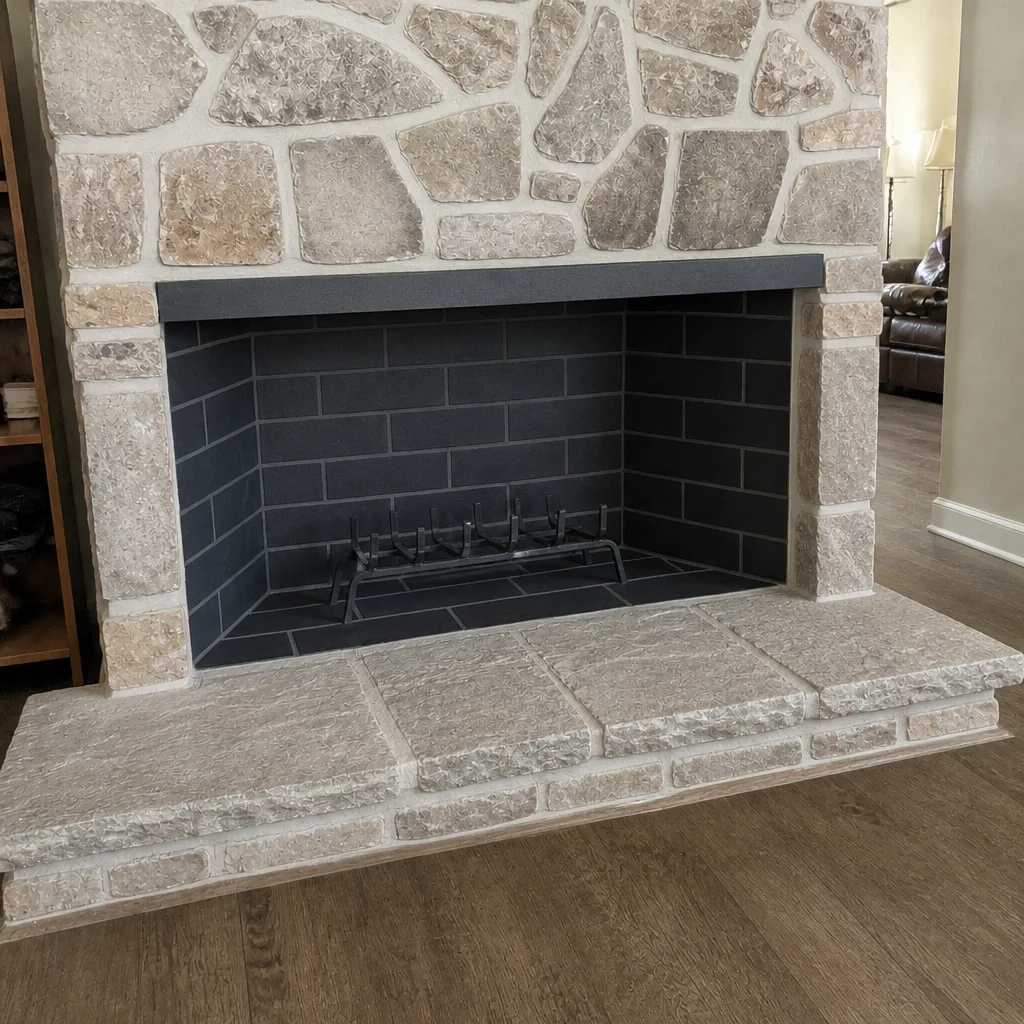
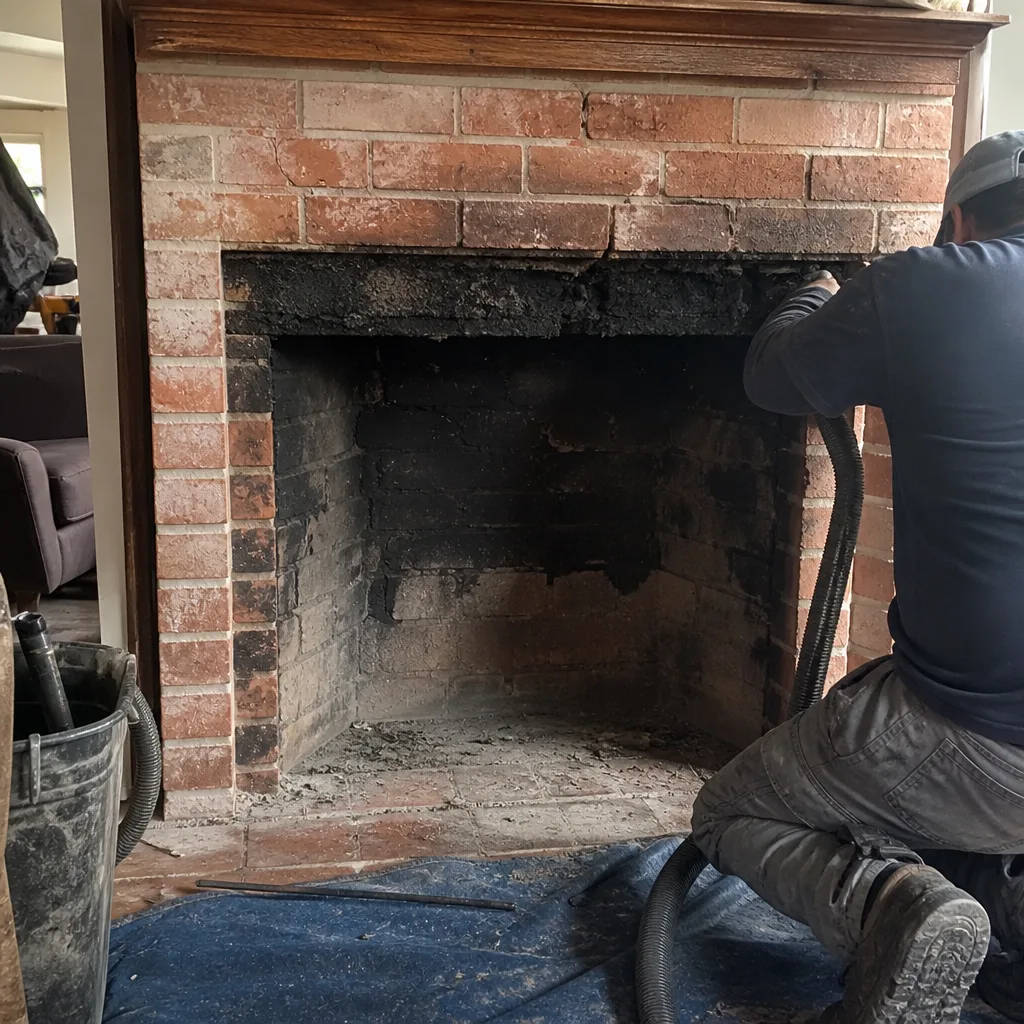
See the difference
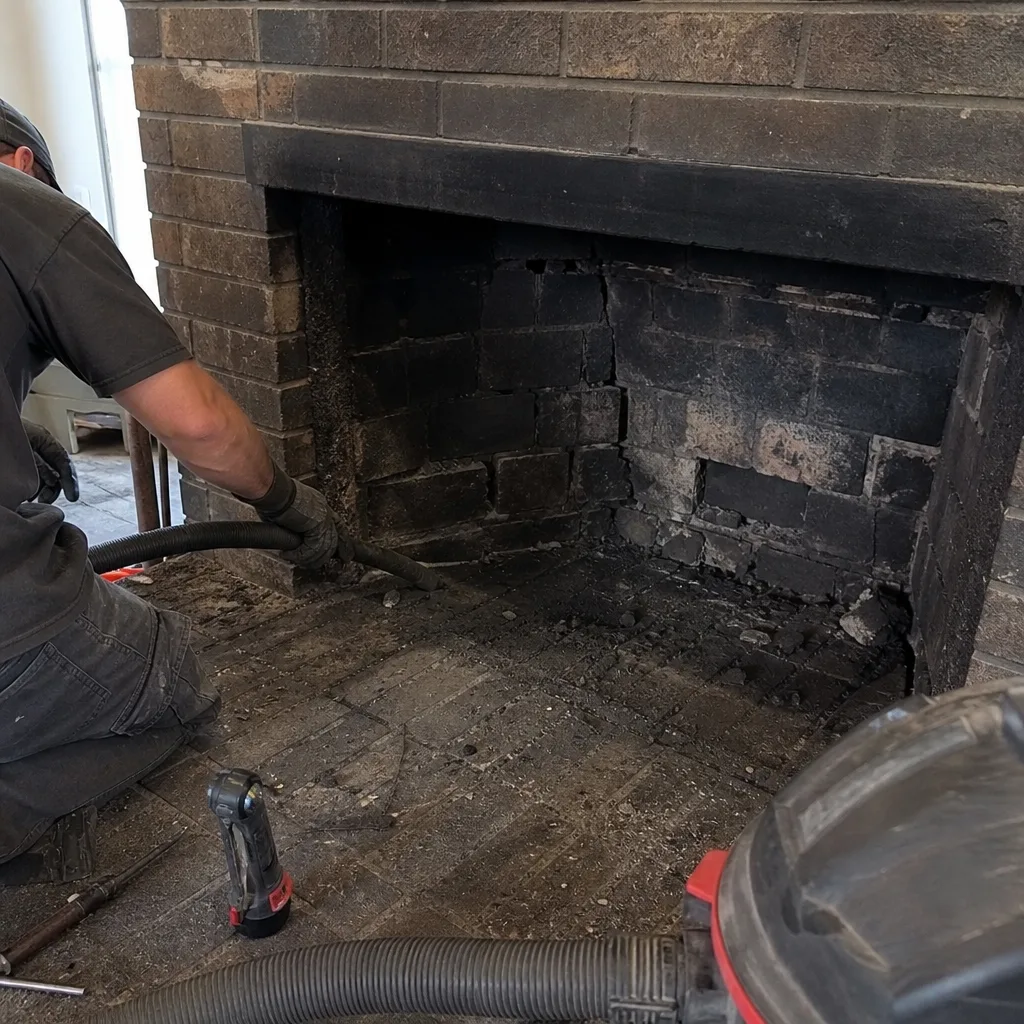 Before
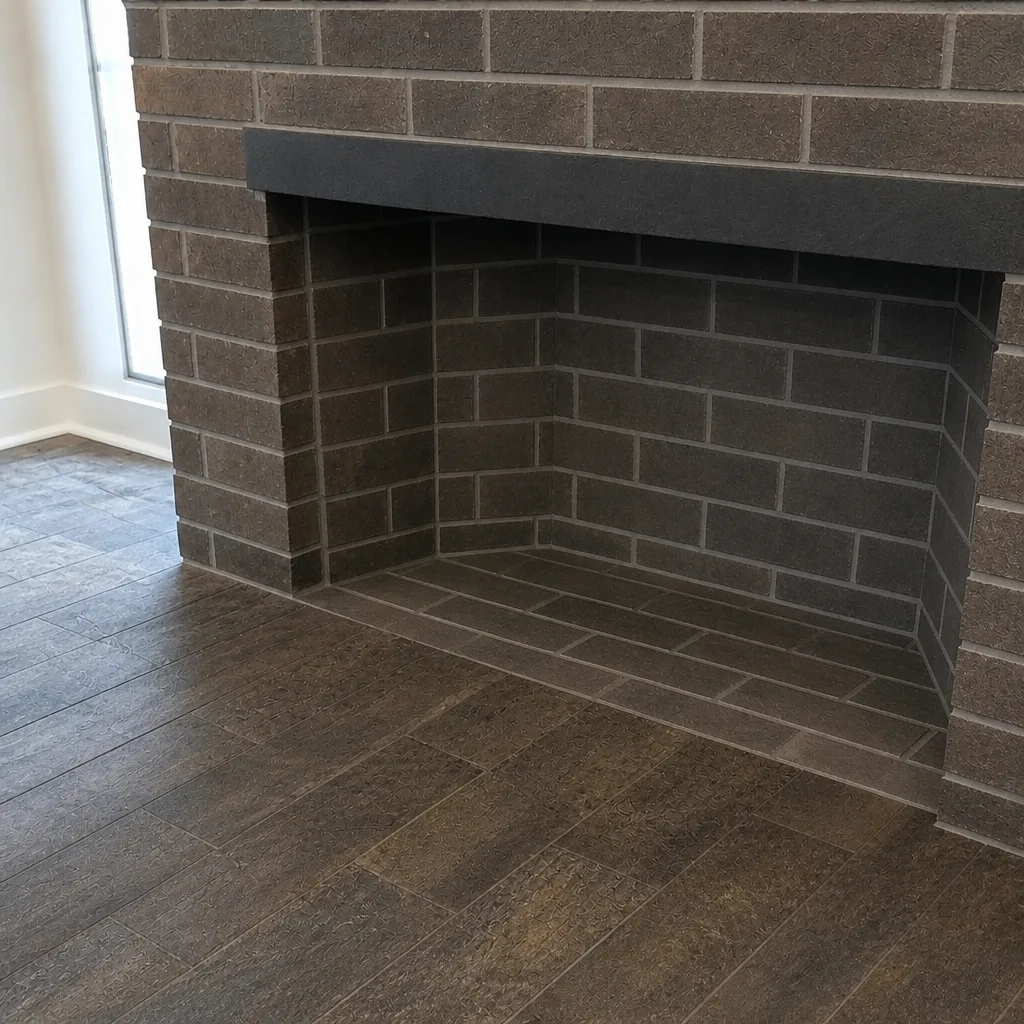 After
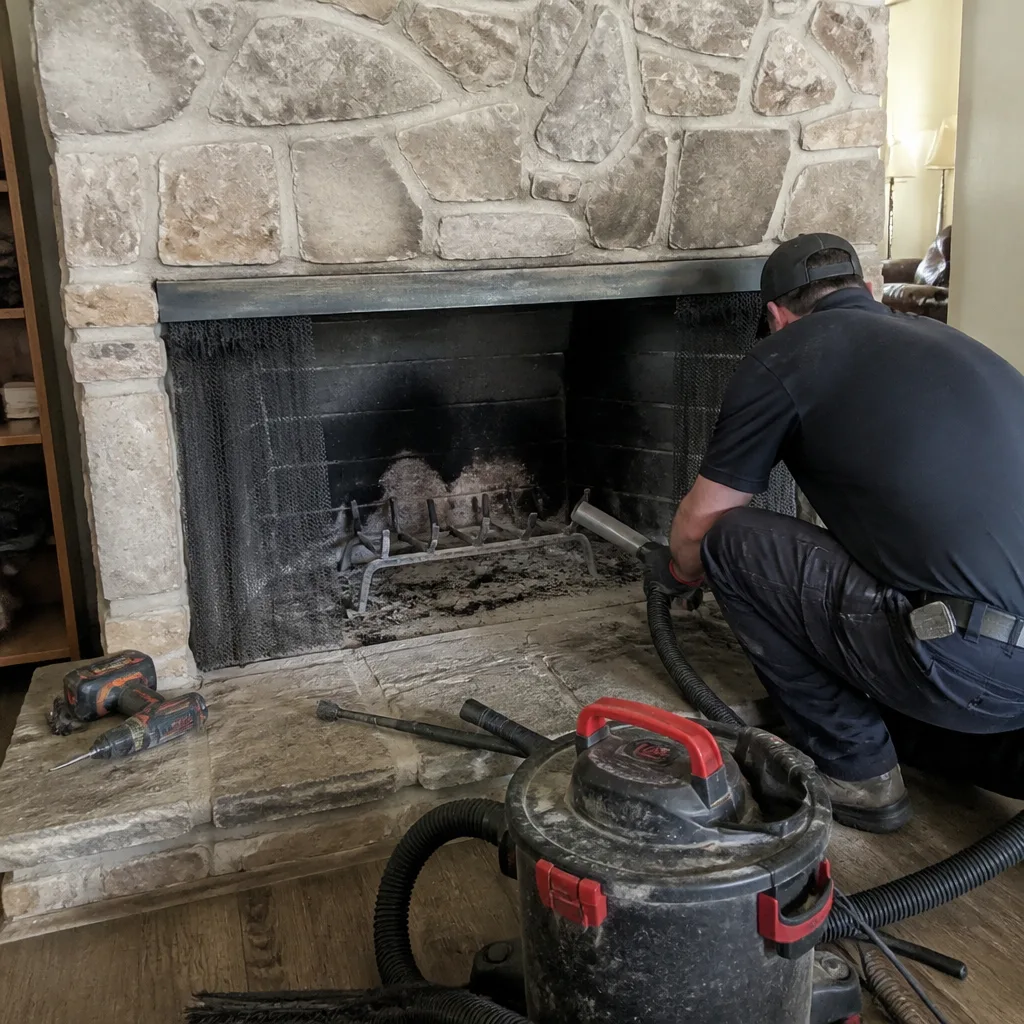 Before
 After
 Before
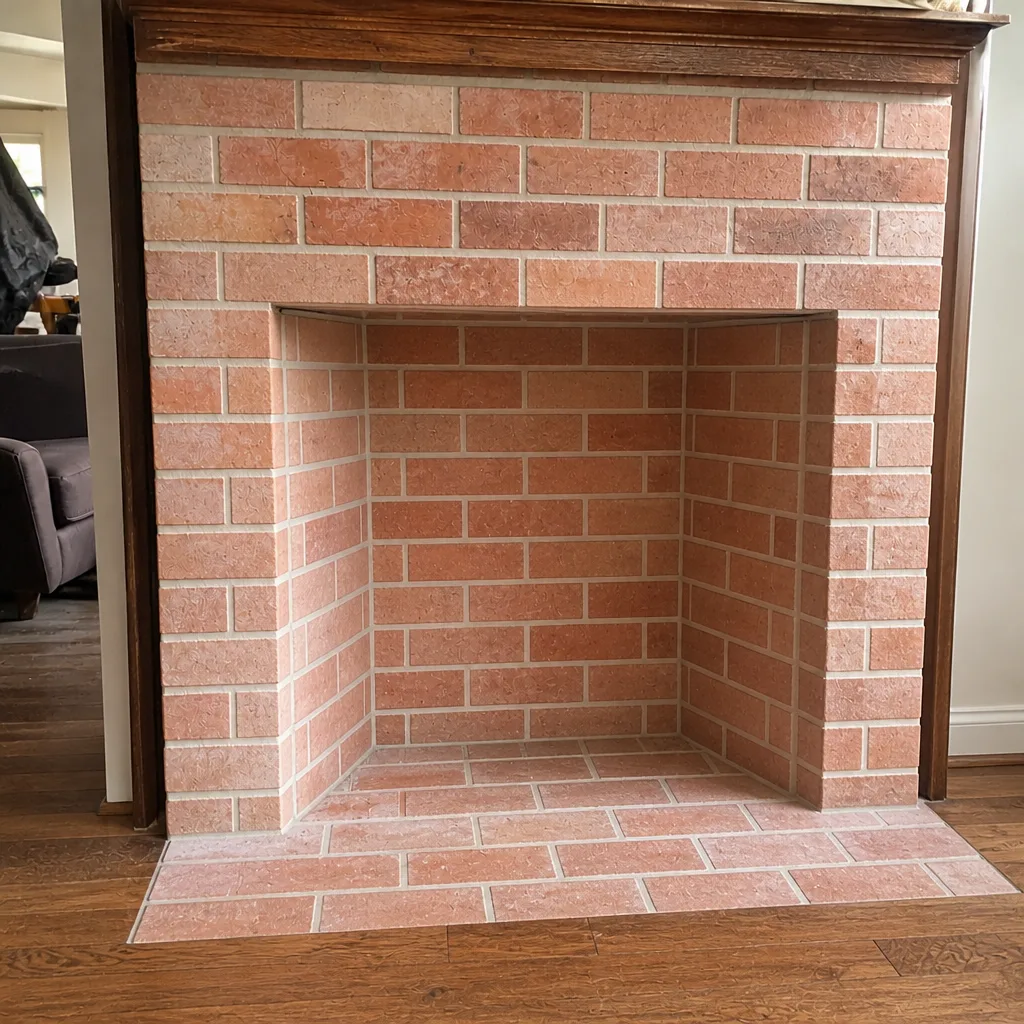 After
When to Call a Professional
Call a professional if any of these describe your fireplace: smoke enters the room every time you build a fire, or gets worse as the fire grows; a smell returns after a cleaning; you see crumbly mortar or spalling in more than one spot; the flue is restricted and you’ve never had an inspection; you’ve burned heavily through the season without a sweep; or your house is tight and you’ve had unexplained draft trouble. None of those should be a guess. A Lewisville chimney sweep with a camera can tell you in one visit what’s actually inside the flue. Lewisville Chimney Sweep offers free estimates in Lewisville, call (888) 424-2086. We answer 24/7. Fast dispatch from 7am to 7pm, Sunday through Friday.
You can also read more about the Lewisville areas where we work and what to expect on a service visit.
Frequently Asked Questions
The three most common causes are a cold flue at startup, a partial obstruction in the flue (nesting material, collapsed liner tile, or heavy creosote), and negative pressure in the home pulling air down the chimney. In newer, tightly-sealed Lewisville homes, the pressure cause is especially common. A camera inspection during a sweep usually identifies which of the three you’re dealing with. Call (888) 424-2086 for an exact quote, estimates are free.
Most wood-burning fireplaces should be swept annually, and more often if you burn heavily through the winter. Lewisville’s mild winters don’t mean less creosote buildup, it means fewer fires but sometimes longer burn seasons with cooler-than-ideal draft, and cool draft builds creosote faster. If you can’t remember the last sweep, schedule one. Call (888) 424-2086 for a quote.
A sweep and an inspection answer different questions. The sweep removes creosote and debris. The inspection tells you what condition the liner, firebox, and masonry are in, and whether anything upstream needs attention. Most chimney problems that show up as smoke or odor start with what the inspection reveals. A sweep without an inspection is a guess. Call (888) 424-2086, estimates are free.
It’s real, and creosote stage matters. Stage 2 creosote narrows the effective flue diameter, which is enough to change how a marginal flue draws. Stage 3 glazed creosote can restrict a flue badly enough that the fire struggles. Cleaning stages 1 and 2 restores most impacted drafts. If your draft is still weak after a professional sweep, the problem is likely sizing or pressure. Call (888) 424-2086 for a proper evaluation.
That white, chalky deposit is usually efflorescence, which means moisture has moved through the brick and dried on the surface. The source could be a failing cap, flashing, or the seasonal movement of expanding clay soil against the chimney base. It’s not a fire hazard by itself, but it’s a real clue worth investigating. An inspection will tell you where the water is coming from. Call (888) 424-2086, estimates are free.
Not all spalling is. Small cosmetic chips in the firebox brick are common and usually harmless. The conditions that need professional attention are widening cracks, separated masonry around the smoke chamber, and spalling that shows up in more than one location. When in doubt, an inspection gives you a straight answer. Call (888) 424-2086. We answer 24/7. Fast dispatch from 7am to 7pm, Sunday through Friday.
The Bottom Line
Most chimney problems show up at the firebox, but they originate in the flue, the liner, the pressure balance of the house, or the masonry base. Read the symptom, match it to the cause, and only reach for the tools you’re qualified to use at the firebox. Everything else goes to a professional with a camera and the material knowledge to fix it correctly. In Lewisville, the expansive clay soil adds a spalling risk that looks like normal wear and usually isn’t, and tight modern construction means a clean chimney can still draw badly. Do both halves of the service, the sweep and the inspection, and you’ll never be guessing about what’s going on inside your flue. When you’re ready for a Lewisville Chimney Sweep, we’re one call away.
Ready to book a sweep with inspection? Call (888) 424-2086 for a free estimate. We answer 24/7. Fast dispatch from 7am to 7pm, Sunday through Friday. Estimates are free, the price is set per job by the written estimate, and any repair recommendation comes with camera evidence you can see for yourself.
Written by the team at Lewisville Chimney Sweep.